END OF YEAR: BOAT & EQUIPMENT ANALYSIS
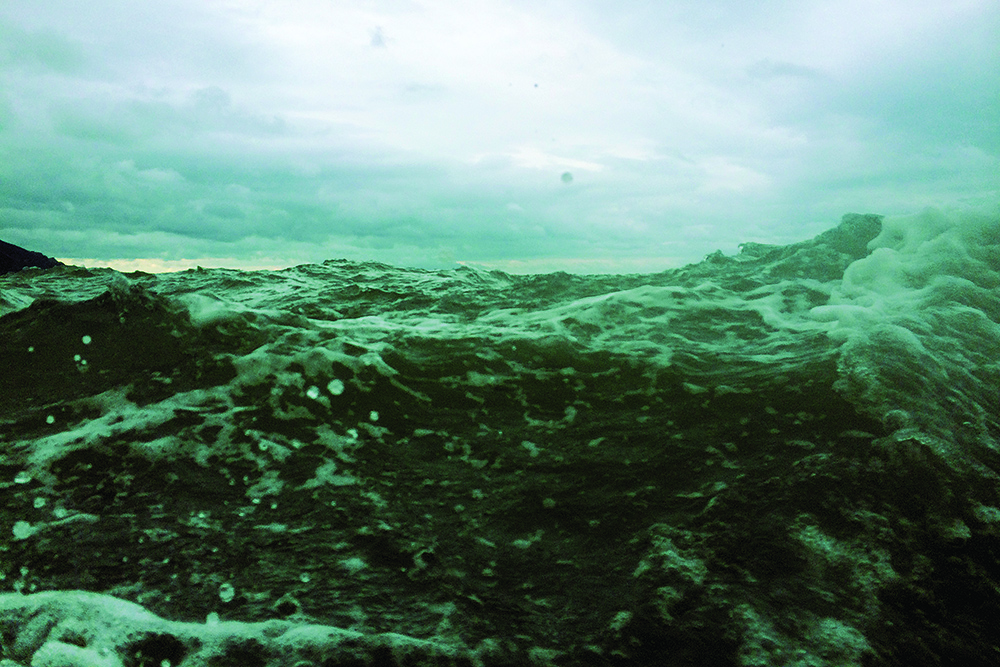
The Raymarine hybrid touch screen GPS plotter (e7 Hybrid Touch) literally went crazy thanks to the amount and force of flying water hitting its screen. The subsequent shock loadings also appeared to play their part in interfering with the unit’s ability to perform. One minute the faltering chart displayed a position somewhere west of the British Isles, the next it was careering out over the Bay of Biscay and down to La Coruña! It was mad, and in fact it only ever showed even the smallest degree of detailed cartography for less than 15 minutes over the course of the entire three days at sea. In my experience, touch screen technology is not compatible with open boats expected to operate in rough weather. The Raymarine depth transducer also broke from its mountings on this second day.
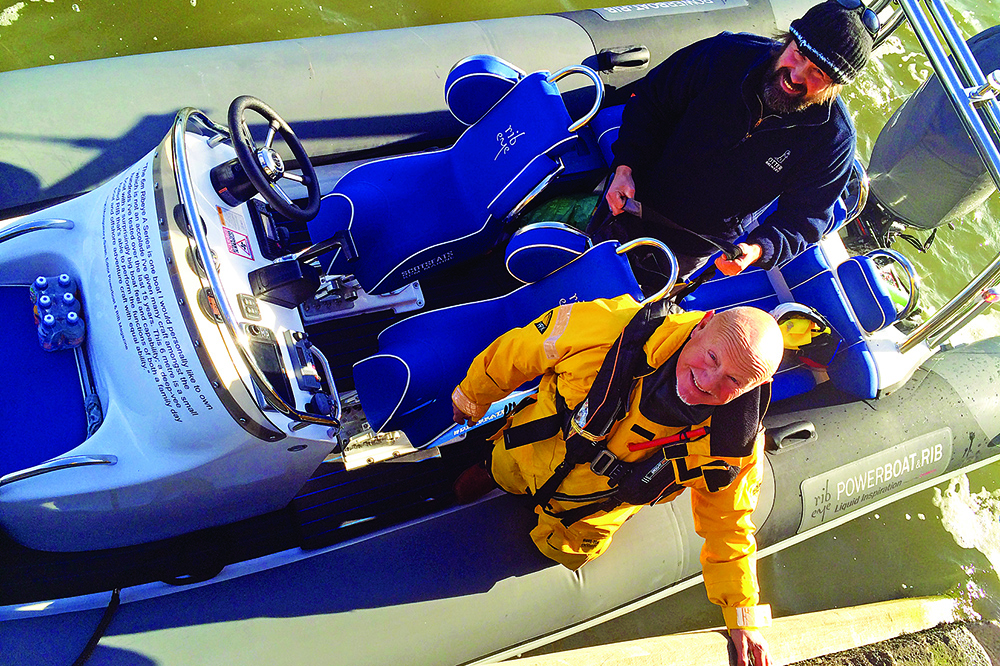
The Scot seats (type: single jockey seat S3J) could not be used as they continually ‘bottomed out’ on the hardest landings – even though before departure they had been tensioned up by Ribeye to their max. The degree of lateral movement they allowed was also too great to keep one secure, and the rearward angle of the backrest was likewise too great to provide the support needed. Because of the width of the seat base, it meant the user had to spread his legs in an awkward fashion, and so even standing became difficult.
Along with the natural grip and underfoot qualities of the Advanced Marine Decking, a product that not only transforms a boat’s appearance but also excels in both dry and wet conditions, we found the shock mitigation decking produced by Wolf Shock to be exceptionally effective at taking the sting and bite out of the deck shock. This uncomplicated addition, which we simply laid down on the deck for the helmsman and navigator to stand on, worked brilliantly at removing the usual jarring and strain to knees and legs. Simple and very effective.
The Bennett trim tabs (M80EIC trim and dash control package) were also nothing short of brilliant in their reliability and effectiveness. They allowed the boat to be corrected laterally in any sea state and afforded us the means to punch into the steepest sea without the bow flying wildly. I would not have another boat without this product, or one like it, being fitted. These trim tabs (the smallest in the range that Bennett produce) have the ability to transform the performance of a craft – even a moderate-sized RIB such as this Ribeye 6m A Class.
The Raymarine VHF (VHFe) performed well, and its simple, easy-to-use control panel, along with its speaker clarity, made it a very likable item of equipment.
Though the ICOM ICM423 VHF with its DSC facility and ‘state of the art’ functionality proved as robust and reliable as ever, the screen continually fogged, which meant the LED display could not be read. A relatively small annoyance, you might think, but a problem such as this can have more serious repercussions. For example, because the user can’t see the screen clearly, he peers forward in an effort to try to read the display. At that precise moment, the boat hits a wave hard and the crewmember in question smacks his face on the console. Broken nose, smashed teeth, bust lip … believe me, I’ve seen it all! Accidents so often occur or are attributable to what, on the face of things, may appear innocent annoyances in themselves – but their knock-on effect can be much more serious.
The SeaStar steering system made the task of helming the vessel a pleasure. The value of a good and reliable steering system cannot be overemphasised.
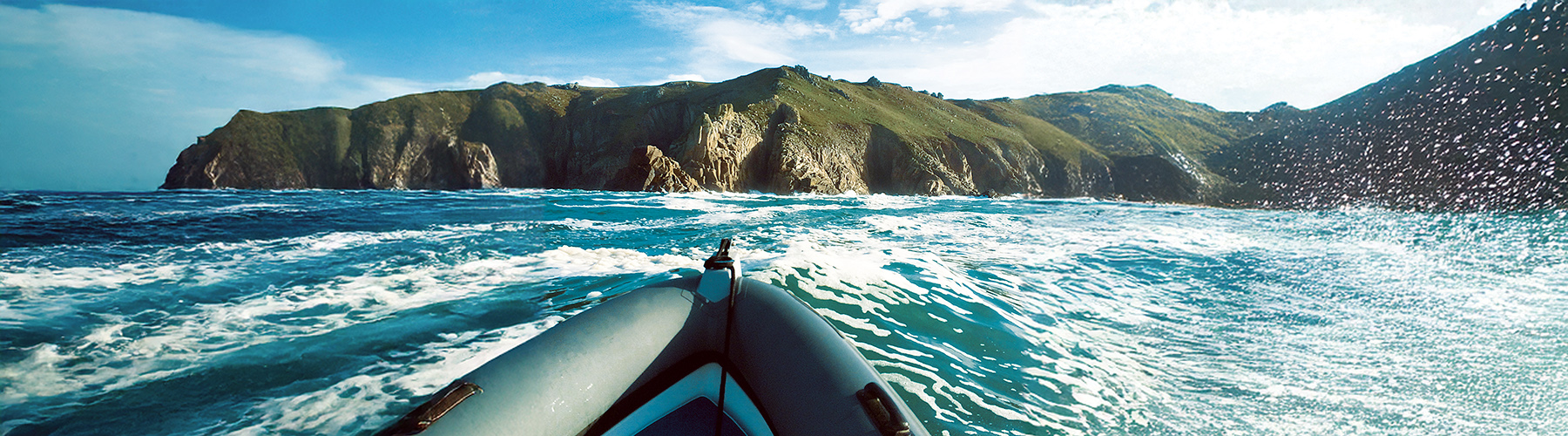
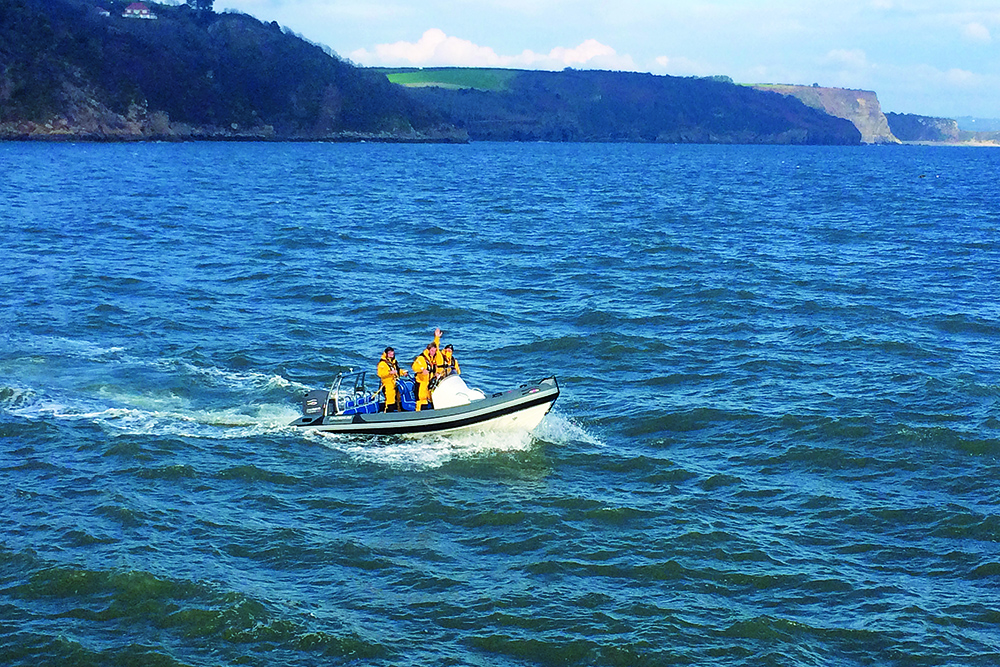
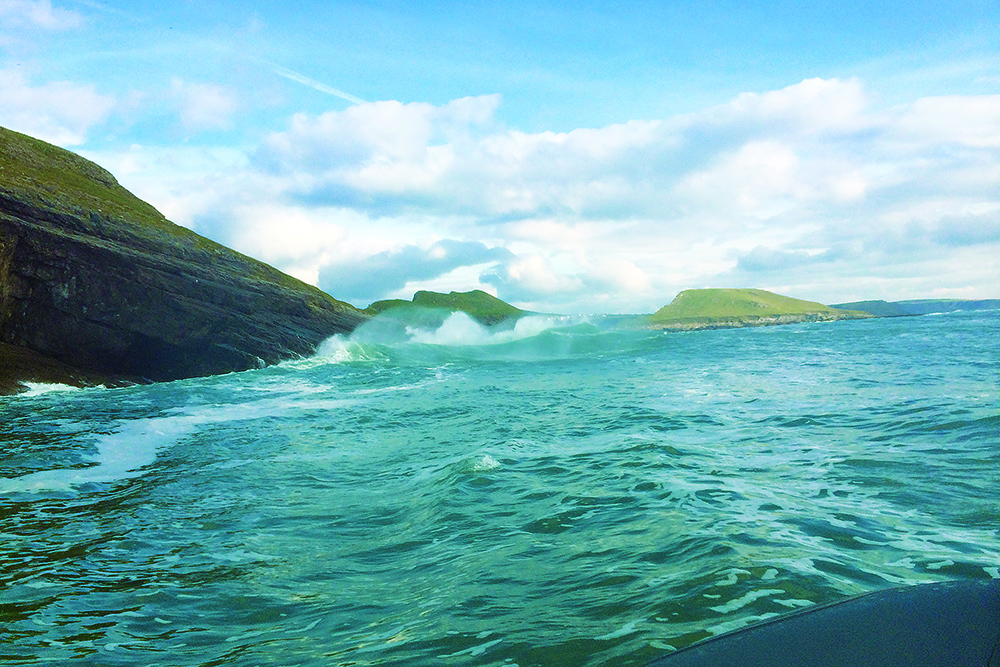
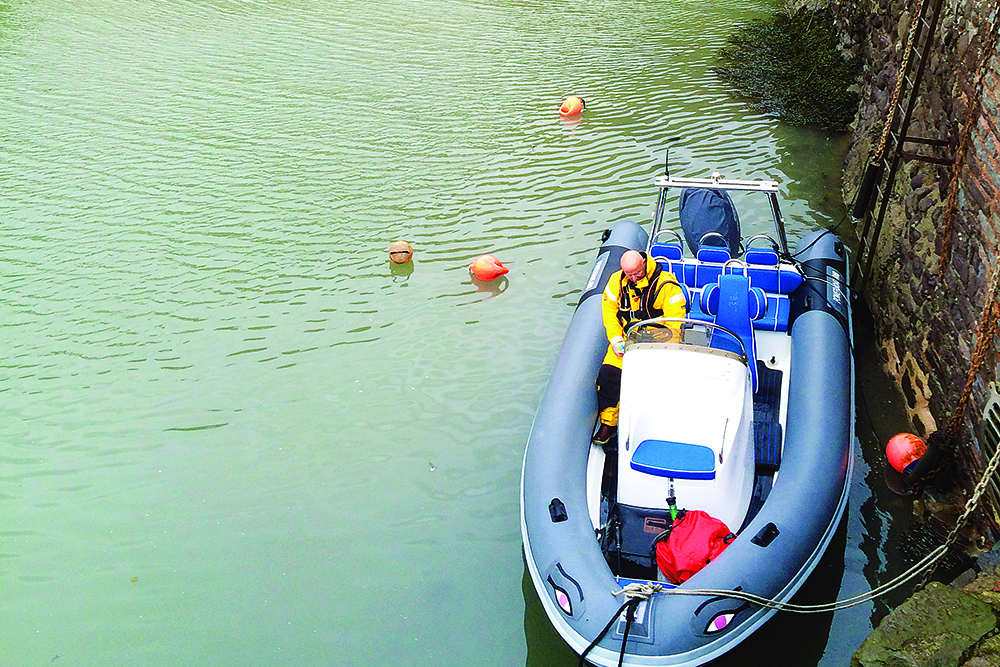
As for the boat itself, though the ride was a wet one, Liquid Inspiration handled the seas in an immensely capable fashion, especially for a boat of her size. Complemented by the Yamaha 150 4-stroke (F150 AETL) never missing a beat and its 18″ stainless prop gripping the water like a leech, this 6m RIB really showed her worth. (The Yamaha outboard cruised at anything between 1 and 2 litres a mile, depending on RPM and sea condition variances.) Not once did the boat stuff her nose amidst even the deepest trough or shortest sea. Aided by the trim tabs and responsive steering gear, she landed true and performed well in every sea state encountered, which inspired confidence among all on the boat. I rate this Ribeye A Class hull as one of the finest 6m hulls on the market. Furthermore, all her fixtures and fittings held up to the punishment meted out to them. Nothing in terms of the boat’s anatomy failed. The only addition we all agreed would have been welcomed was BMX-type tube grips to the stainless grab rails – particularly with offshore adventuring in mind. Wet, shiny, cold steel does not make the best surface for clutching onto hour after hour!
I should also say that Land & Marine Trimmers Ltd’s upholstery work on this boat, coupled to the Silvertex seating fabric chosen, was superb and meant that at no time, even after the wettest ride, did any of the seats become saturated or absorbent. I could neither fault this material nor the standard of upholstery.
To my disappointment and annoyance, though, my HPX Musto drysuit did not fare so well and leaked badly down the chest area. But despite trying to ascertain why this was occurring, I couldn’t find any evidence of a fault. I could only assume that the flying water and rain were getting in through the suit’s front horizontal zip. If the conditions had been colder, this would have been a real problem. Plus, doubling as a survival suit would have meant that if I had gone in the ‘drink’, my life expectancy would have been severely reduced. (‘No bad thing,’ I hear you say …!) But it was particularly annoying as I’d only had the suit serviced by Musto/Hammond a little over a year ago.
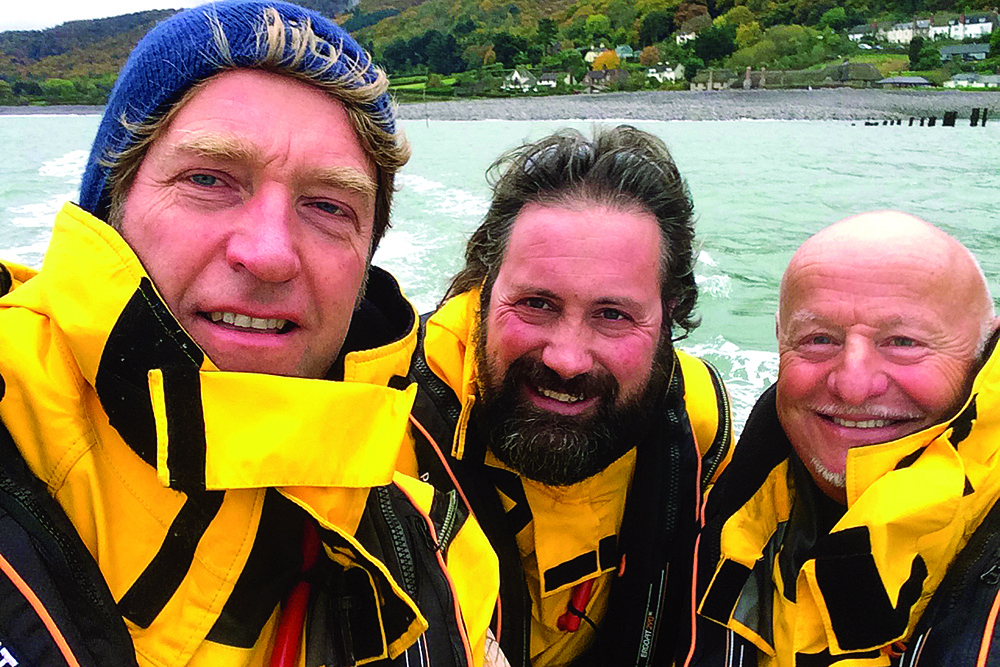
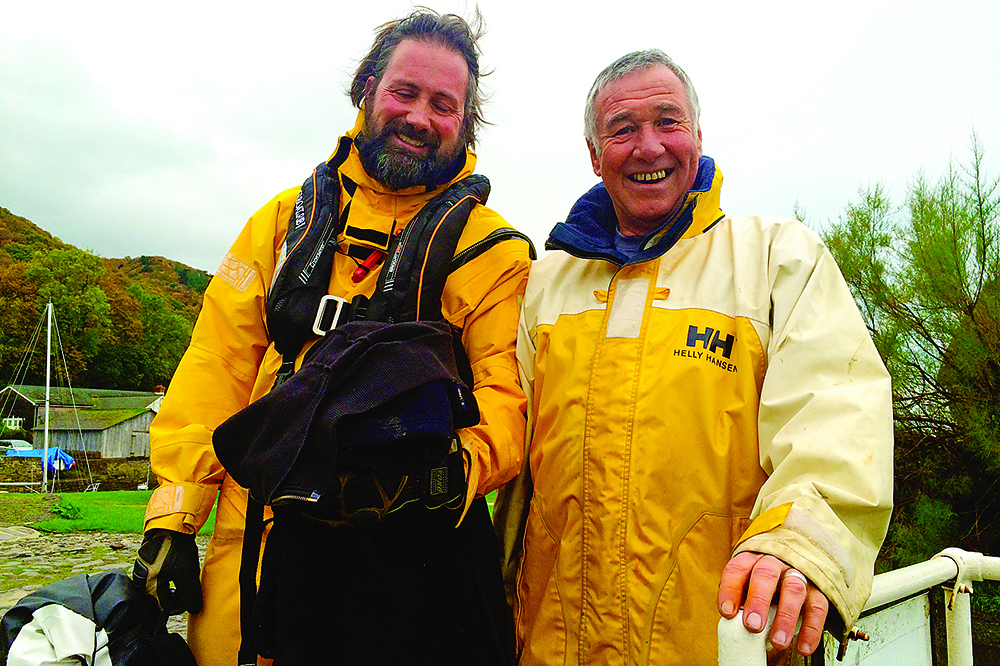
The Crewsaver Ergofit Lifejackets all three of us wore are the finest, most developed lifejackets we have used to date. Besides the many features these modern offshore jackets possess and their superb quality of construction, they are a joy to wear, as they hang comfortably on the shoulders as opposed to wrapping around the neck as many other designs are tailored to. In other words they live up to their name and though I also am a fan of the Seasafe product range, for offshore boating, I don’t there is a finer jacket on the market than the Ergofit.
Another very likable product we’ve been using this season is the fabric engine cover from Outboard Covers Ltd. We supplied our logos and the cover was custom-designed for us specially, and besides the smart appearance it gives the boat, it provides great protection for the engine cowl and its paintwork.
The often overlooked ‘poor cousin’ to the boat is, of course, the dear old trailer. I have owned and used some absolute horrors in the past, but I can confirm that the single-axle roller SBS trailer that partnered our Ribeye this year has performed very well indeed. Well made, very ‘trailerable’/well balanced, durable – a product that despite its many ‘dunkings’ over the course of the season has never given us the slightest hint of trouble. So, for sparing us the so often common annoyance of seized wheels this year, I say three cheers for SBS!
Lastly, my Lifedge waterproof iPhone case worked well, and in fact, all the photography and the video we shot for this feature, like most of the cruising features published this year in PBR, came courtesy of this winning combination. All I would say, from a user’s perspective, is that like any touch screen, once wet, the screen cannot be used. It has to be dried first before being able to operate the face of the phone in the normal way. Though not the most heavy-duty product on the market, I have nonetheless found the Lifedge waterproof phone case to be a very sound product.