Back to Basics Part 3: Understanding tides for safe powerboating

In part three of the Back to Basics series, Paul Glatzel explains how tides work, why spring and neap tides matter, and how tidal height and stream affect safe and enjoyable boating.
25 Jan

Edited January 25, 2024

Powerboat and RIB

Content by Paul Glatzel

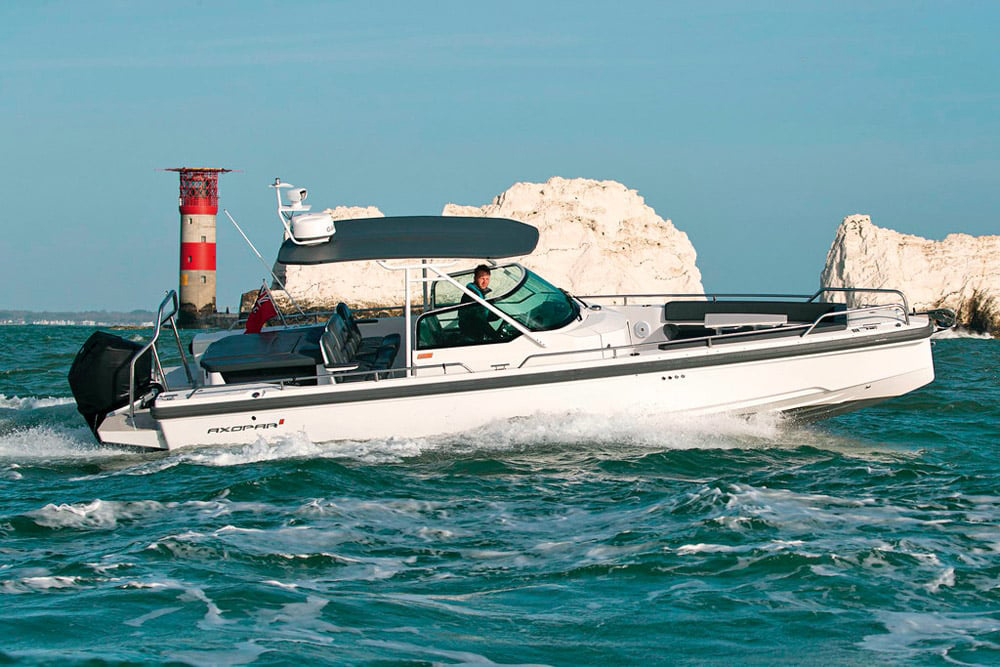
Axopar adventure boat running close to the Needles lighthouse, Isle of Wight, with visible tidal flow and standing waves around the headland

Share this Article

Introduction to Tides and Navigation

Back to Basics Part 3: Tides In the third part of this ‘Back to Basics’ series, Paul Glatzel discusses tides and where we can obtain the essential information needed … Welcome to the third in this ‘Back to Basics’ series of articles. Previously we’ve looked at charts/chartplotters and the information we can find in these to help us have the most enjoyable and safest time afloat. Charts of all types are only of any use, though, if we also have access to tidal information and can interpret our charts to determine how these tides will affect us.
What causes tides?

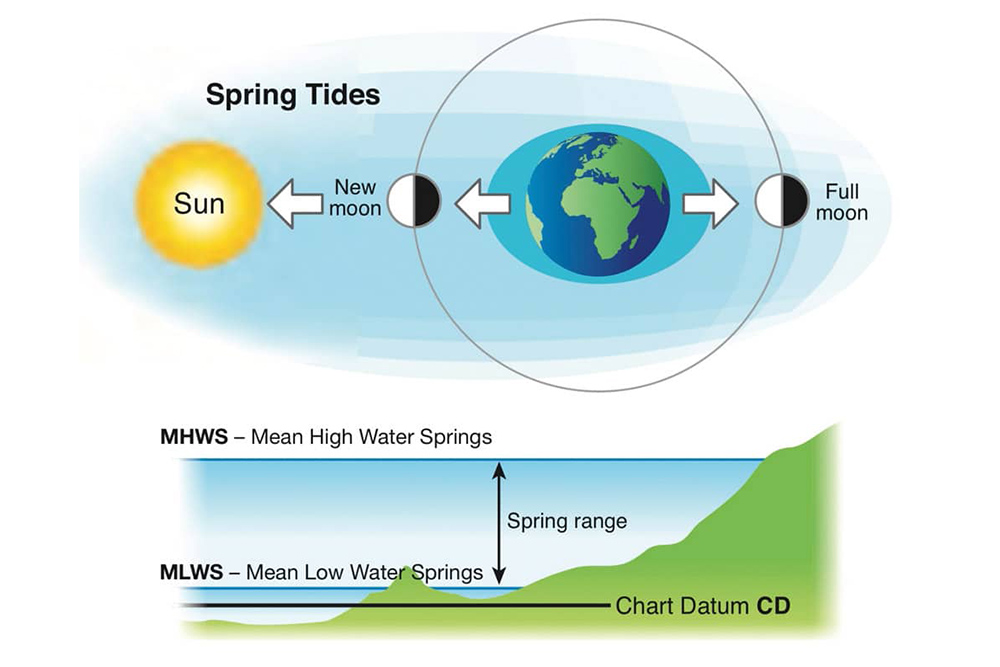
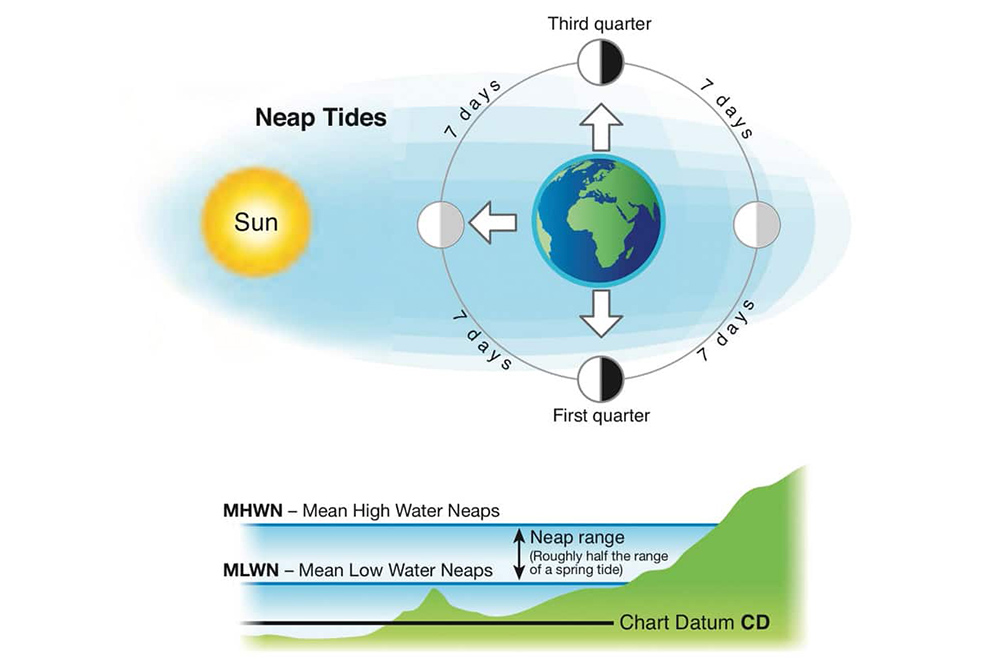
Before we look at where we can obtain tidal information, let’s remind ourselves about the basics. Tides are a product of the interaction between the sun, the moon and the earth. Each month we get what are called spring tides and neap tides. Spring tides give us the highest highs and the lowest lows, and so too the greatest range. Neap tides are not quite as high and not quite as low, so they have a smaller range than springs. In fact, the neap range tends to be about half that of springs.

Spring tides and neap tides explained

As we will discuss later, this means that with springs we see twice the movement of water that we get at neaps, so the horizontal speed of movement of water is roughly twice that at neaps. Spring tides occur with the sun, moon and earth all pulling together to create these highest highs and lowest lows. Note that the spring range is roughly twice that of neaps, which are not quite as high and not quite as low. Every two weeks we get spring tides with neaps between these.

Diagram explaining spring tides, showing sun, moon and earth alignment with MHWS, MLWS, spring range and chart datum
Diagram showing neap tides, with sun, earth and quarter moons, plus reduced tidal range between MHWN, MLWN and chart datum

Advertisement

South Coast & Green Tech boat show advert showing Book your free tickets

Using charted depths with tidal height

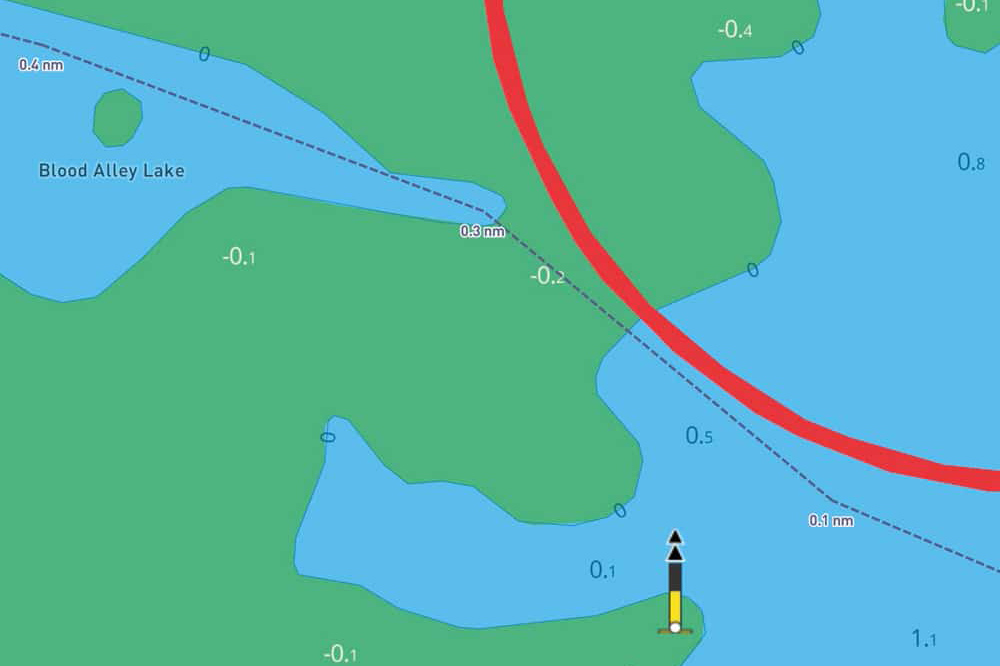
Chart extract of Blood Alley Lake showing shallow drying areas, charted depths, buoyage and a recommended transit route

Here we want to transit from the bottom right-hand corner, north of the cardinal mark, and into ‘Blood Alley Lake’ following the dotted line. Let’s imagine we checked the tides and at the time we wish to transit we have 1.5m of tide. The numbers in the blue area are what we call charted depths and are the minimum depth of water we will ever experience in those locations.

Tidal flow, seabed effects and wind against tide

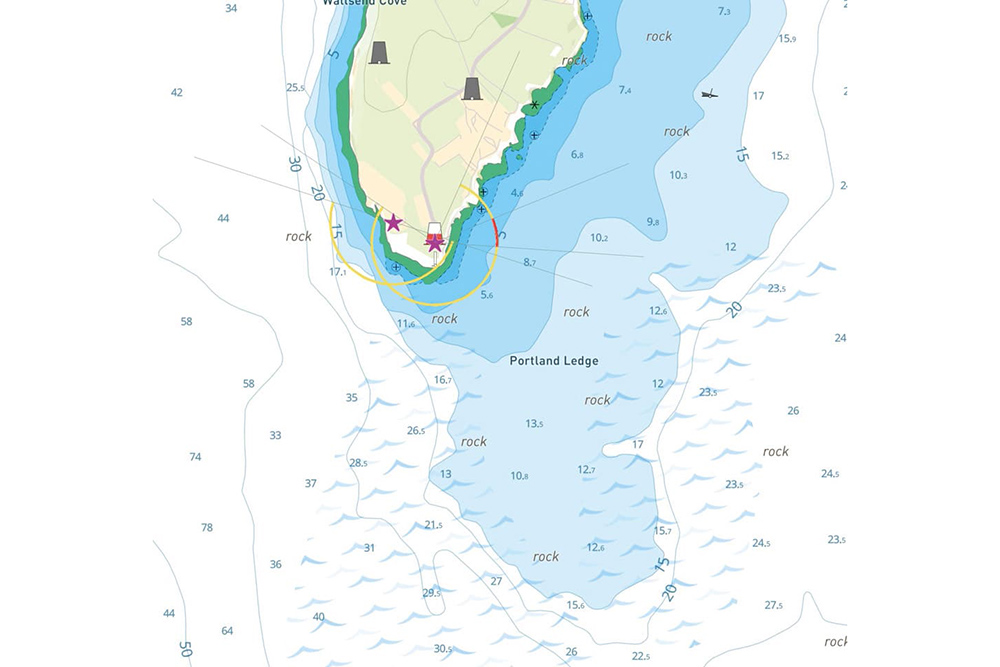
Chart around Portland Bill showing rapid depth changes, tidal overfalls and hazardous areas influenced by strong tidal streams

Advertisement

  • Pantaenius insurance advertising banner with No Nonsense, Get a Quote, No policy cancellation fees, No policy admin fees, no monthly instalment fees.
  • Boatfests 2026 advert

Here we see the area off Portland Bill. Let’s imagine the tide is flowing left to right. As the tide flows towards the area in blue, the charted depth is 58m. This decreases really quickly to as little as 10m south of the Bill. As we cannot compress water, it does two things:

  1. It speeds up over this shallower area, and

  2. it kicks up to create standing waves above the shallower area.

Therefore, if we are boating through here when the tide is flowing fastest, even with no wind we can get very rough conditions. Now add in the wind. Let’s imagine it is blowing from the east. We then get wind against tide and potentially extremely tough, challenging and dangerous conditions.

How tides affect boat handling and safety

So how do tides affect us as boaters? The most obvious way is the depth of water where we want to go and whether there is enough to operate in. So we start with 2.6m (the 1.1m charted depth + 1.5m tide), but this reduces to 2.0m (0.5m + 1.5m). The green area is an area that dries at this lowest level of tide, but adding the tide means we have 1.3m of depth (1.5m – 0.2m). So is it safe to pass over this area? Maybe! It all depends on the draught of your vessel. If the vessel draws 0.75m, we should have 0.55m of clearance. Do we, though? It may be that the area hasn’t been sounded for years, but it could be that it’s soft sand or mud and trimming the engine up and taking it slowly will reduce the chances of problems. A rising tide would be good too. These are all factors to consider.

Understanding tidal streams

The other key factor is the horizontal flow of water and how this affects our boating. We call the horizontal flow tidal stream. At the simplest level, tide can act behind us and speed us up, on our bow and slow us down, or on our beam and push us off course – perhaps dangerously so. The bit often overlooked, though, is how the stream interacts with the seabed or coastal features and how this may impact our comfort and safety afloat.

Planning safe passages using tidal information

To make a safe passage there is therefore a need to interpret a chart to identify areas that can be affected by the stream, and then to identify the tidal stream rate and direction to predict the conditions that you may face. So in summary, tides and tidal information can play a critical part in us understanding where we can go and what conditions we may face when there. The massive moves forward in apps and websites make getting this information extremely easy, so it’s straightforward to obtain the information you need and to get it really cheaply. As with anything boating orientated, we’ll all have our own preferences, so try a few apps and see which you prefer.

So where is the best place to obtain the information we need to understand tidal heights and also the horizontal stream?

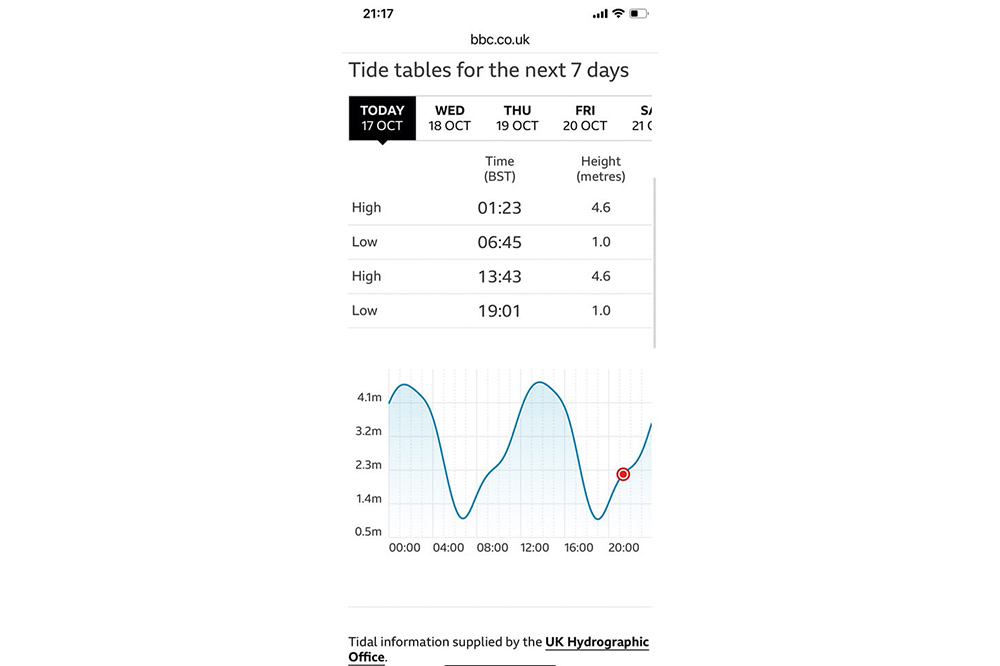
BBC tide table page showing daily high and low water times with a tidal height curve for the next seven days
BBC Website The BBC website has a simple section for tides and is free.

Advertisement

Nordkapp_MPU_Dec25
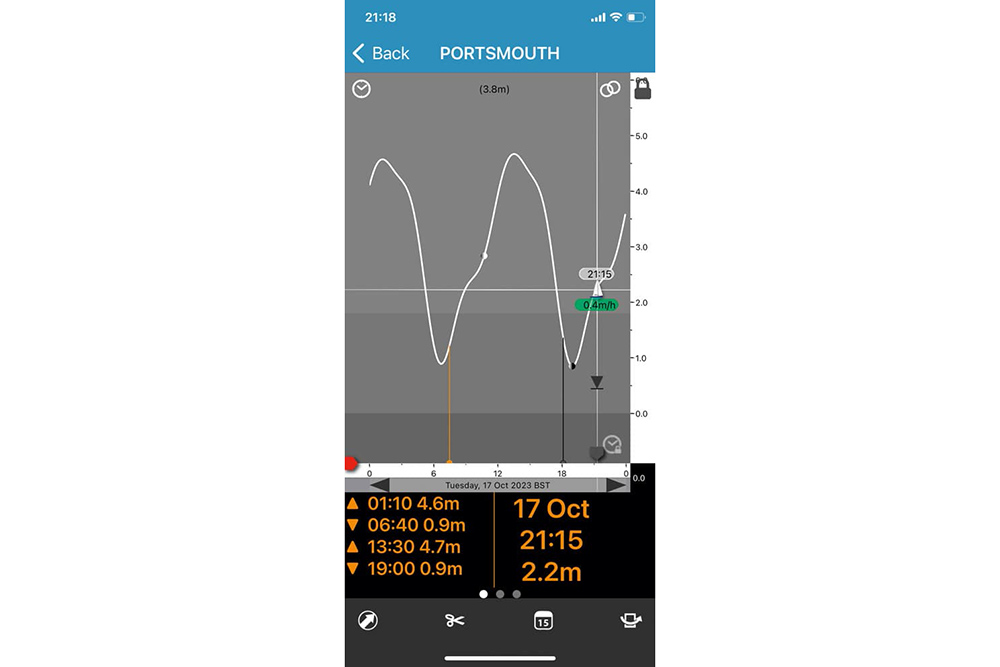
Mobile tide app display for Portsmouth showing tidal height curve, current water level, stream speed and high and low water times
Imray Tides Planner This is great and offers a whole year’s worth of countrywide data for only £6.
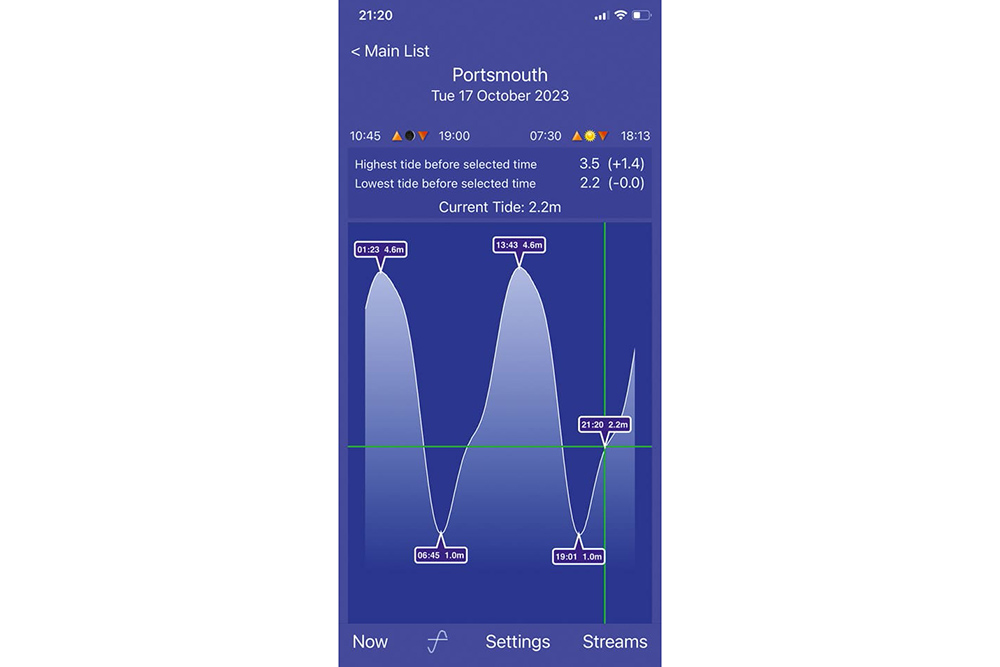
Tide app screen for Portsmouth showing daily tidal curve, high and low water times and current tidal height
Absolute Tides This is another simple-to-use app for about £3 a year.
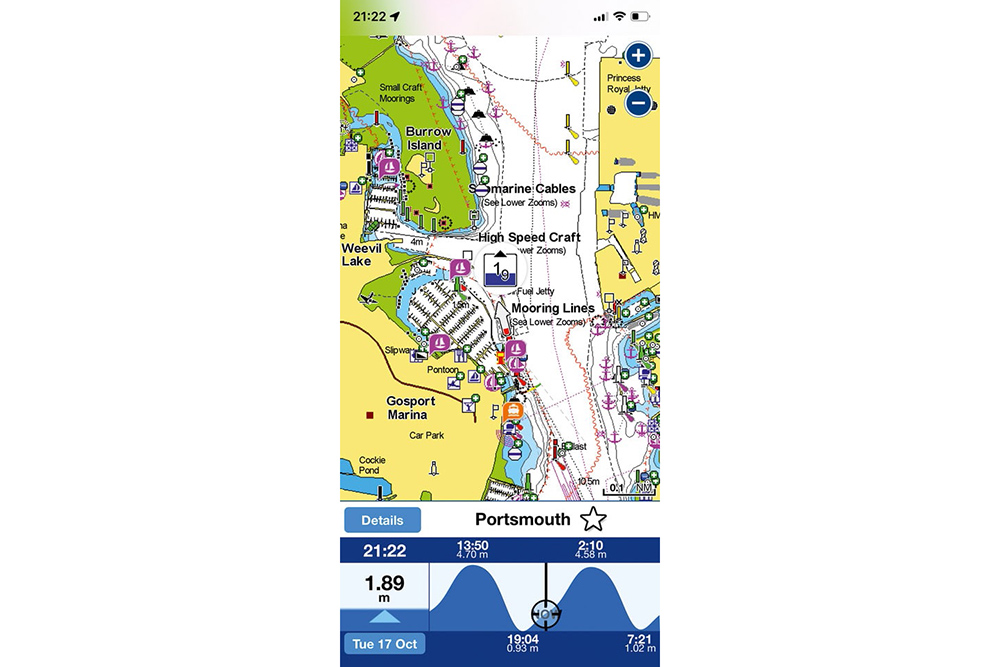
Electronic chart of Portsmouth Harbour with marina details, navigation marks and a tidal height graph displayed below
Navionics The Navionics app has tides built into the chart package.
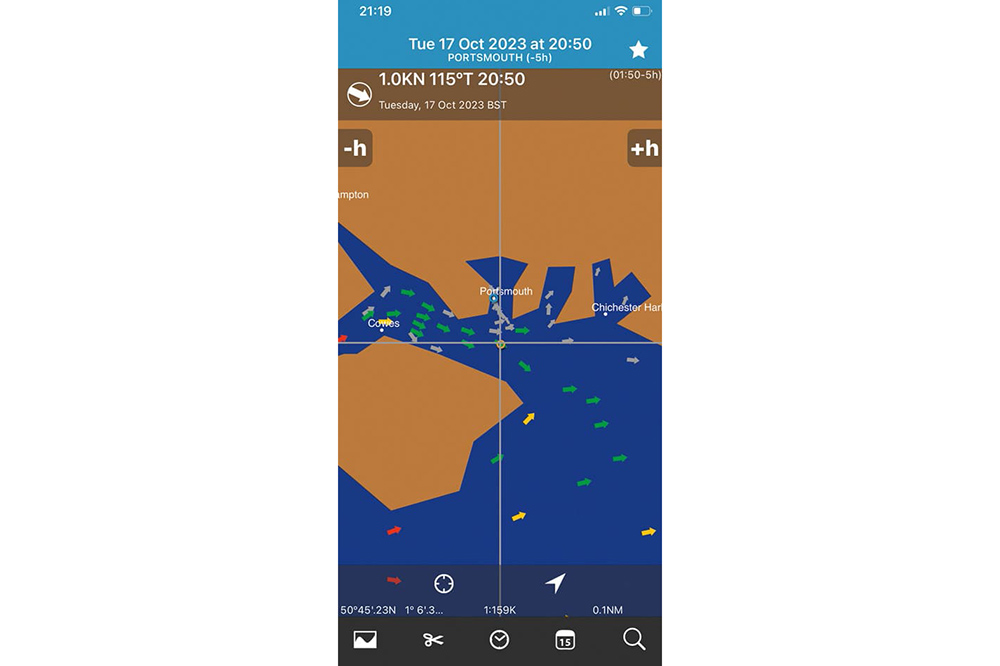
Tidal stream app view of Portsmouth Harbour showing current direction and speed arrows at a selected time
Imray Tides Planner The Imray Tides Planner app has an extension for tidal stream.
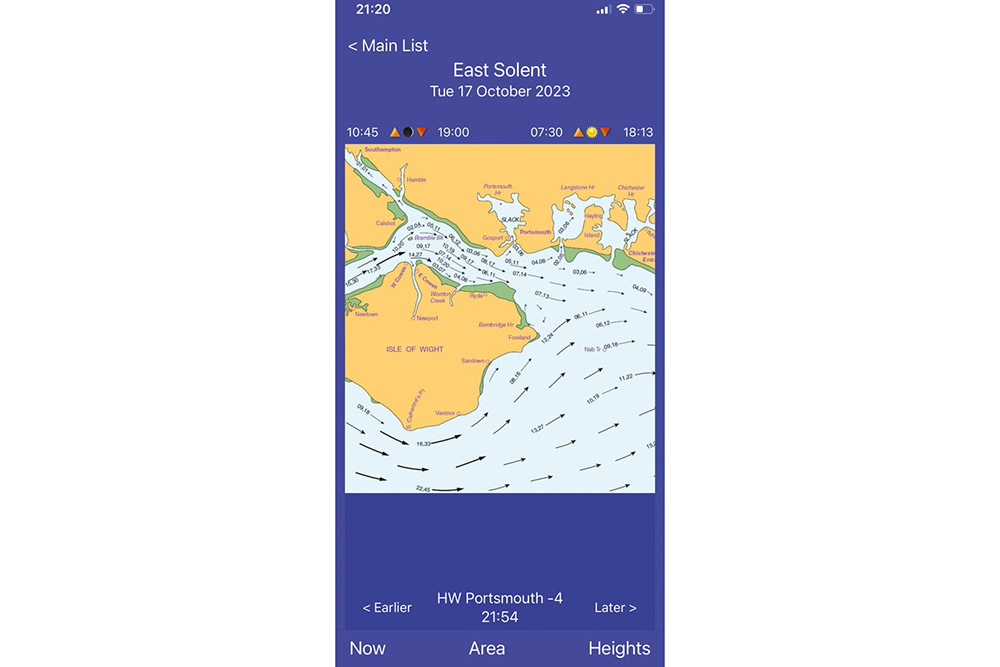
Tidal stream atlas for the East Solent showing current direction and rate arrows relative to Portsmouth high water
Absolute Tides The Absolute Tides app uses a traditional approach with a tidal stream atlas.

Advertisement

South Coast & Green Tech boat show advert showing Book your free tickets
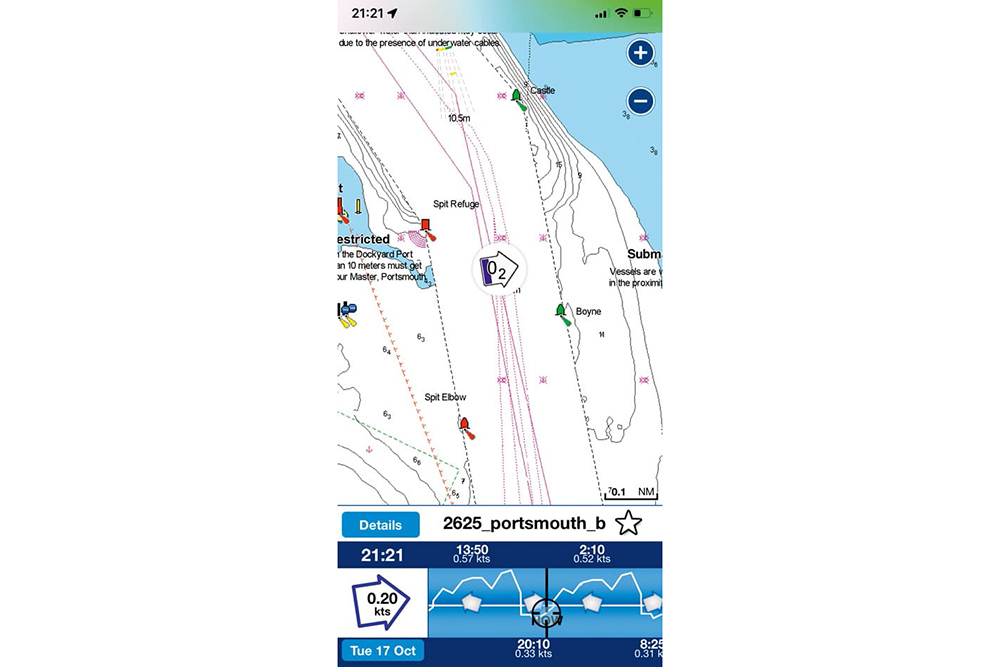
Electronic chart of Portsmouth entrance showing buoyage, restricted areas and tidal stream speed data overlaid
Navionics chart The Navionics chart app shows tidal stream in a clear way too

Keep safe and have a great time afloat!

Powerboat and RIB

Paul Glatzel

Tuition Writer | RYA Instructor | Author of RYA Powerboat Handbooks | Powerboat & RIB

Advertisement

South Coast & Green Tech boat show advert showing Book your free tickets
  • Boatfests 2026 advert
  • Pantaenius insurance advertising banner with No Nonsense, Get a Quote, No policy cancellation fees, No policy admin fees, no monthly instalment fees.
Nordkapp_MPU_Dec25

You might also like