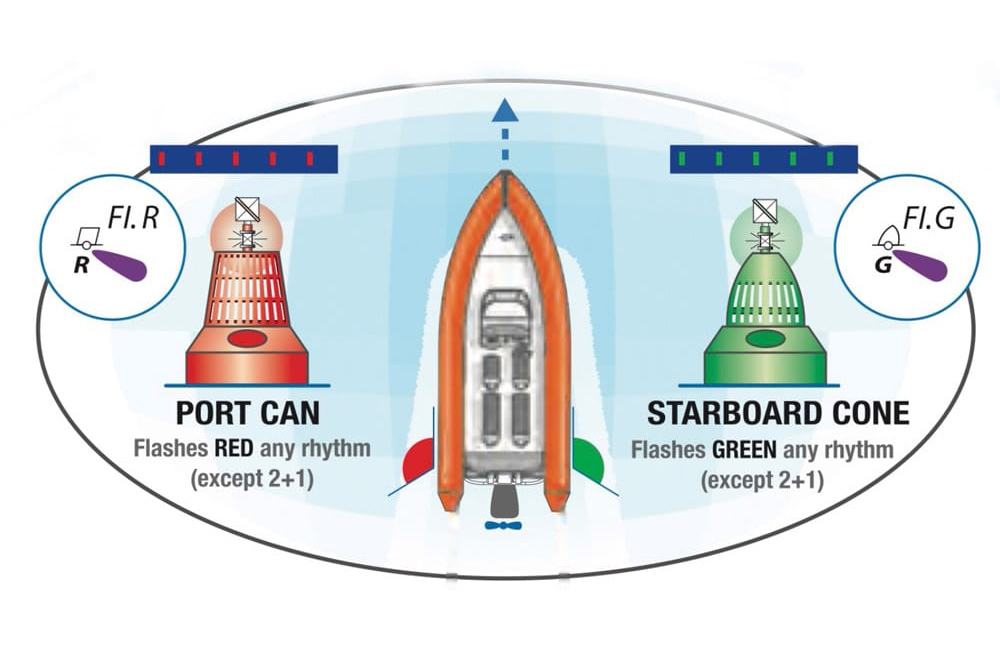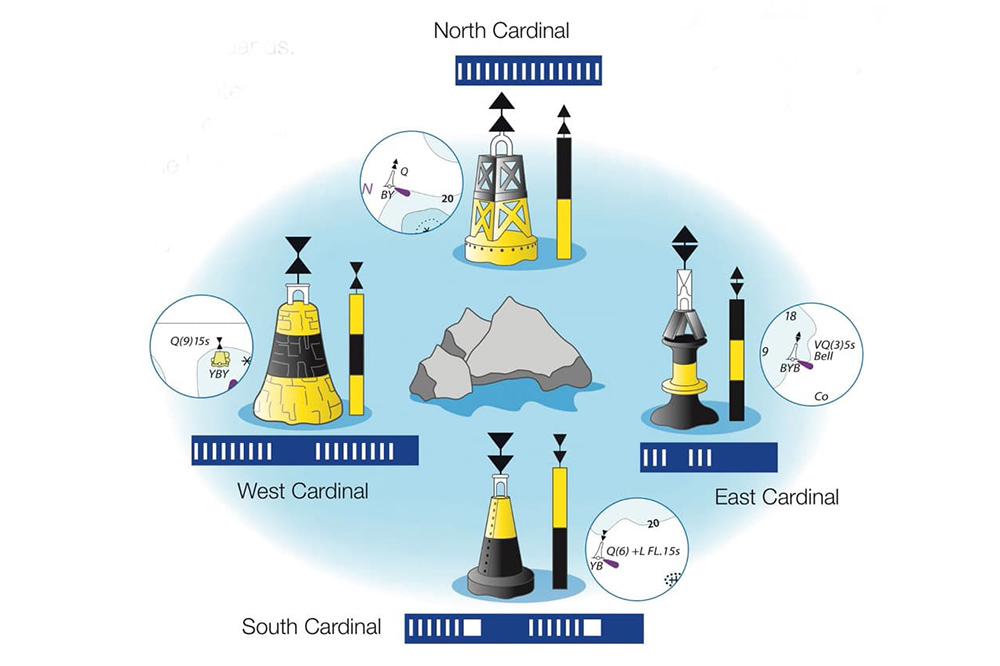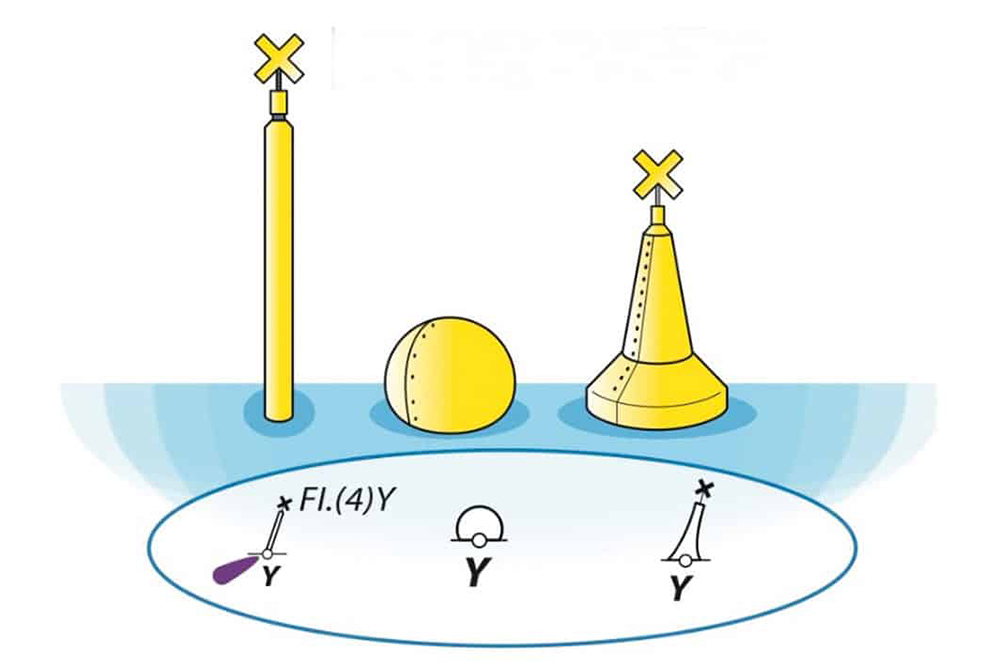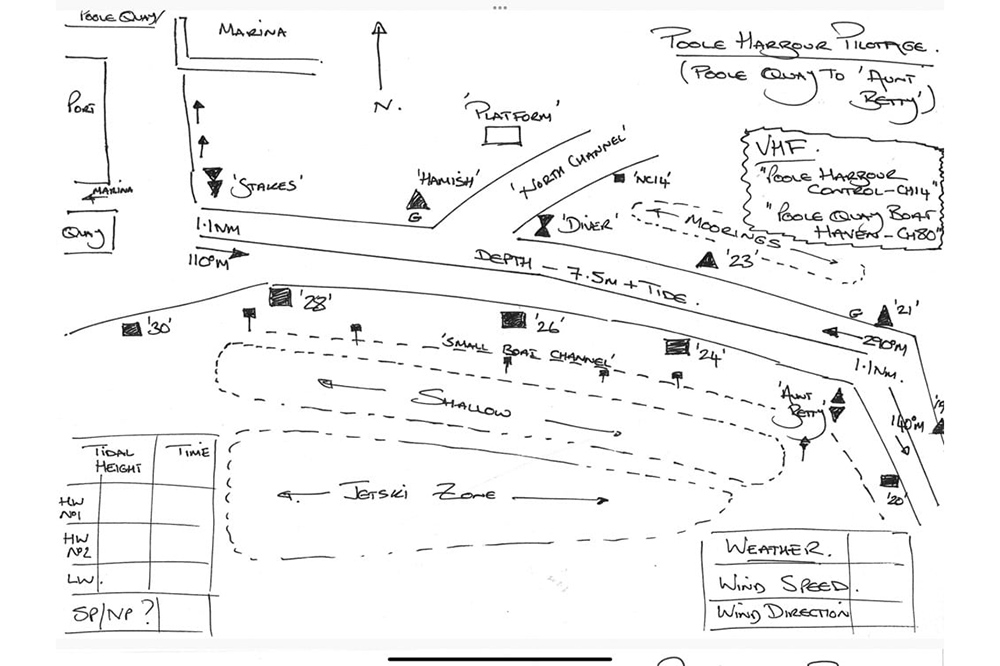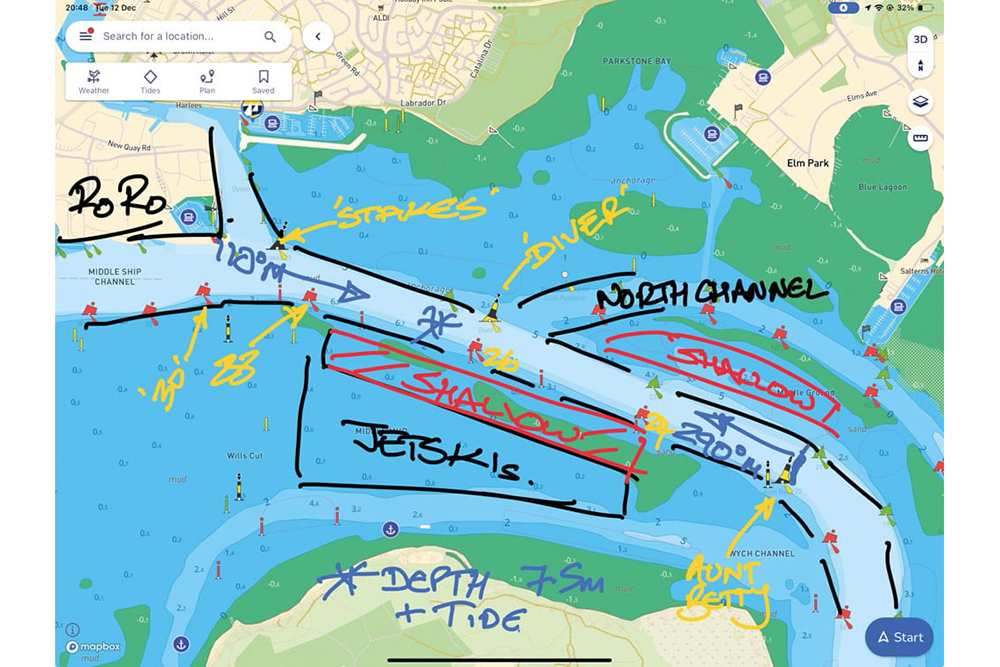

To leave our port or harbour, it’s helpful to produce what’s called a ‘pilotage plan’. A pilotage plan is a plan that identifies the key features that you are going to see as you exit your harbour or estuary, and the process of producing one helps you to learn about, and understand, the trip you are about to make.
Items such as buoyage, structures, buildings ashore and even depths can all be used to help you exit safely.
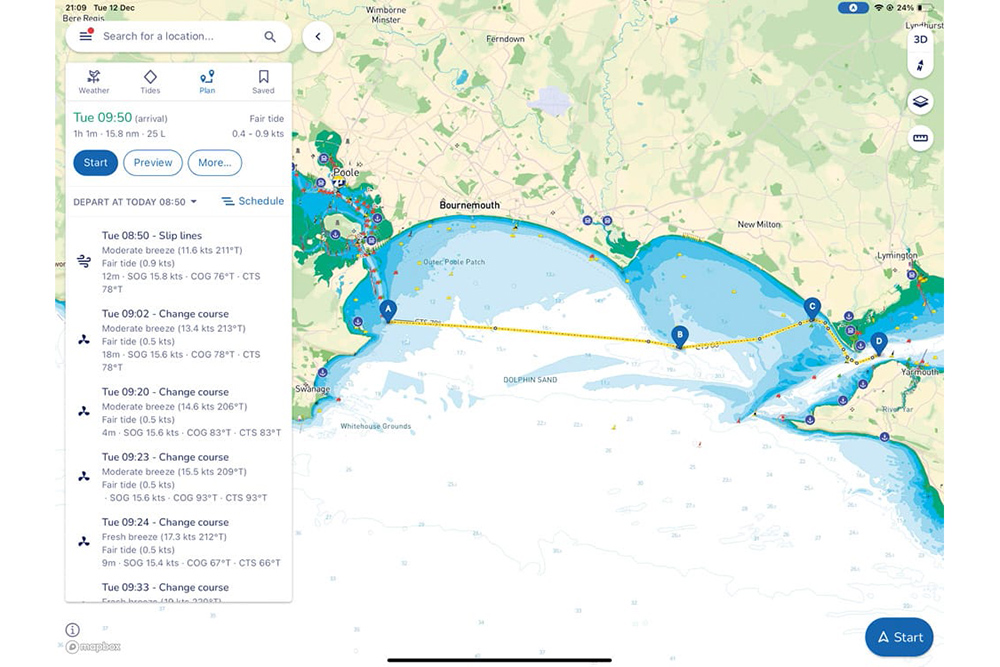
Using your chartplotter also works well, and you could enter a ‘route’ to follow. The danger with doing this through a harbour or estuary, though, is twofold: firstly, that the concentration needed to follow a route in a potentially busy area may draw attention away from what’s going on outside your boat, thus risking a collision situation; and secondly, that in the narrow channels of a port or harbour, any element of GPS-related error could inadvertently lead you outside the channel and perhaps aground.
Using a chartplotter makes total sense, however, and being able to glance often at an updating image of where you are is a massive benefit. It’s all about having a multilayered approach to navigation.