Back to Basics Part 5: Boat handling tips

In Part 5 of our Back to Basics series, Paul Glatzel explains the fundamentals of boat handling in marinas, covering wind effect, tidal flow, ferry gliding and close-quarters turning techniques to build skipper confidence.
25 Apr

Edited April 25, 2024

Powerboat and RIB

Content by Paul Glatzel

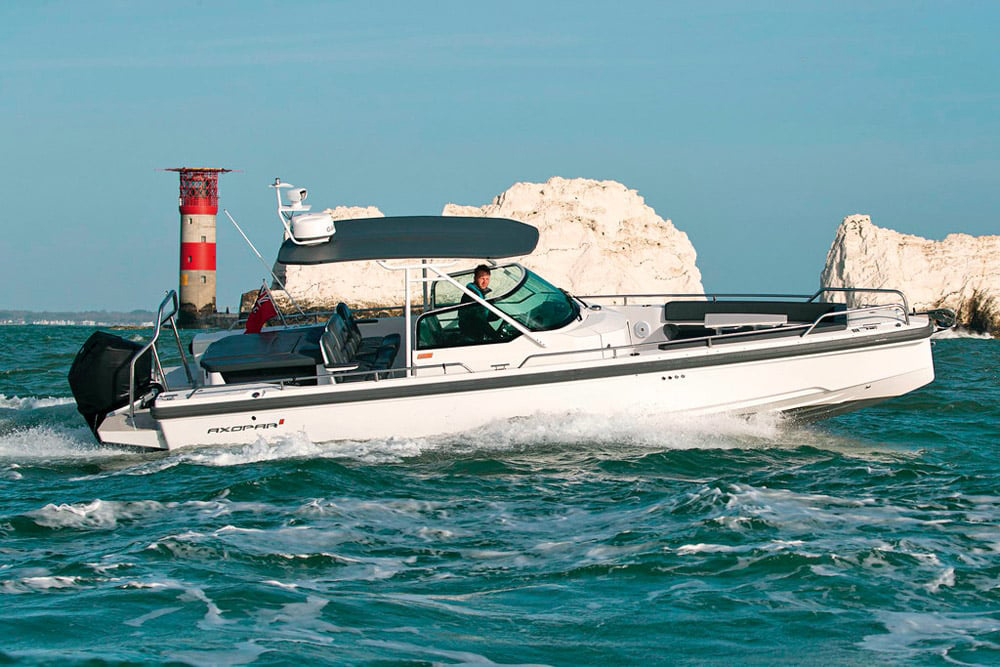
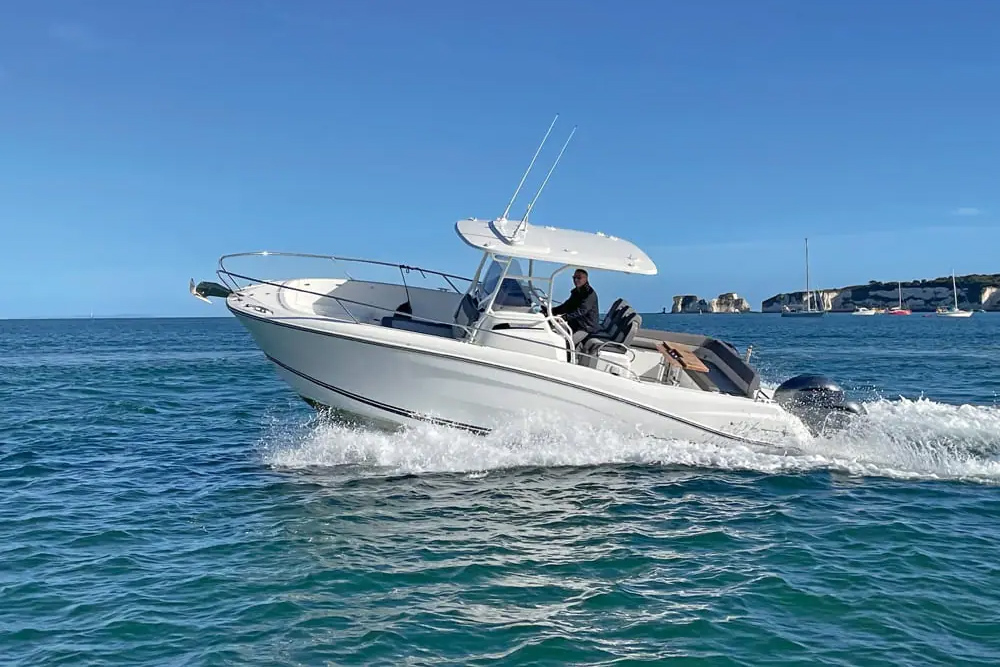
White centre console powerboat on plane, helmsman seated at the wheel, coastal cliffs and anchored yachts in background.

Share this Article

Understanding boat handling in marinas

In the fifth part of this Back to Basics series, Paul Glatzel looks at the vital issue of handling your craft.

In previous articles, we’ve covered what you need to know to safely get afloat – charts, tides, the COLREGs and a bit on planning. Let’s now have a look at how to be as good as you can be in those marina situations that can sometimes be somewhat stressful.

Being competent in marinas and close to other boats takes two things: firstly, an understanding of how to handle your vessel, how the wind affects it, what tide/stream does to it, and how to work with and use these elements to control the boat; and secondly, plenty of practice.

Spend some time in a marina and you’ll see plenty of skippers having a really challenging time. Of course, we all have moments where it just goes wrong and we get caught out, but most of the time, I’d argue, the challenges arise as a result of not really having a clear appreciation of how your boat will react and then what the plan is to achieve the objective you have – generally getting into a particular berth.
How wind affects your boat in close-quarters handling

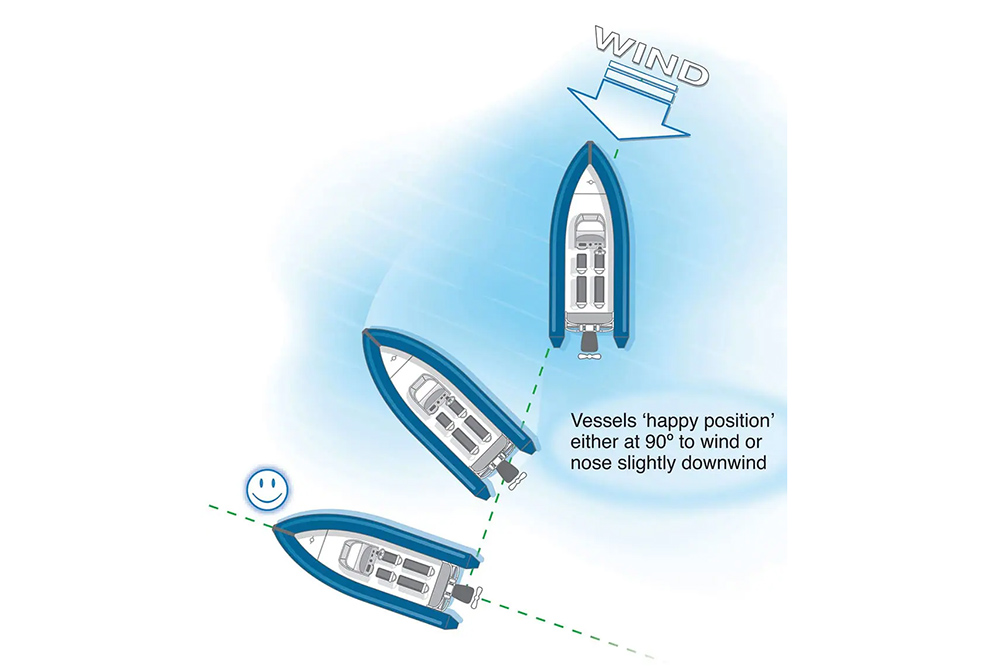
So let’s start with the wind. Ask yourself a question: if you point your bow directly into the wind, what will happen? Does the boat drift backwards with the bow staying pointed to the wind? Does it rotate round to lie side on to the wind? Or does it rotate through 180 degrees to leave its stern pointing towards the wind?

When I ask this question of the boaters I train, relatively few say the boat will end up beam on, which is what in fact it will do 100% of the time. This is what we’d call the boat’s ‘happy place’. Understanding this characteristic is key to being able to handle a powerboat in a close-quarters situation, as the whole time you’re helming your boat it’s fighting you to come to the side on position.

How fast this rotation occurs will vary from boat to boat, and it will also vary according to how you have set your boat up. For example, lots of ‘canvas up’ can both speed up the rotation and slow it down – which it is will depend on where you are pointing relative to the wind direction, and the design of your boat. (See Fig.2)

Diagram showing a powerboat rotating beam on to wind, illustrating the vessel’s ‘happy position’ at 90 degrees.
Fig. 2: Boat's happy place

Knowing how the wind affects your boat allows you to both plan to use this characteristic and of course to be able to compensate for it if necessary.

Using tide and stream to your advantage when berthing

The other feature that can obviously have a significant impact is tide (or stream). Some locations will be affected by the ebb (going out) and flood (going in) of the tide, whereas river/estuarial locations may have flow called ‘stream’, which is always in one direction. This flow will push your boat towards or away from obstacles; it is like wind – something both to be aware of and to use.

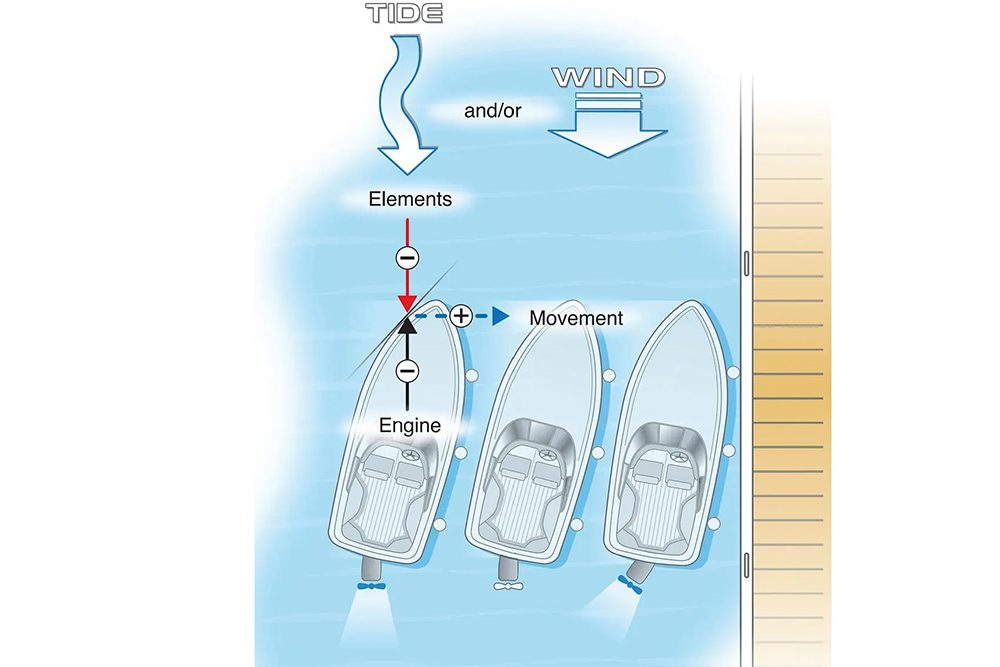
The technique that works really effectively where there is flow is ‘ferry gliding’. Just as its name suggests, you will see ferries using this technique when they cross a flowing river. They angle their bow slightly off the tide, with the effect that the flow has a force pushing the vessel backwards and also sideways. Using throttle and steering carefully allows the skipper to balance this rearward force so that all that’s left is the sideways movement.

This is a cracking technique, so why not give it a try the next time you are boating in an area with some water flow. It works equally well whether you have your bow or stern into the tide, but you can also do it with wind on the bow or the stern too. (See Fig.3)

Advertisement

Nordkapp_MPU_Dec25
Illustration of ferry gliding technique, showing wind and tide forces balancing engine thrust for sideways marina movement.
Fig. 3: Ferry gliding

Turning your boat in a tight marina space

So if we have an understanding of how we can work with wind and tide, let’s look at having the ability to turn your boat in a small space – a key element of being happy in a marina situation.

We’ll begin with a single-engined outboard/sterndrive vessel. We teach a method called ‘steer then gear’ when we are interested in generating a turn. Basically, this means that before you engage gear, you should get the steering over in the direction you want to turn. Then you engage the gear. The benefit of separating the two and getting the turn in first is that when the power comes in, the turn is instant and tighter.

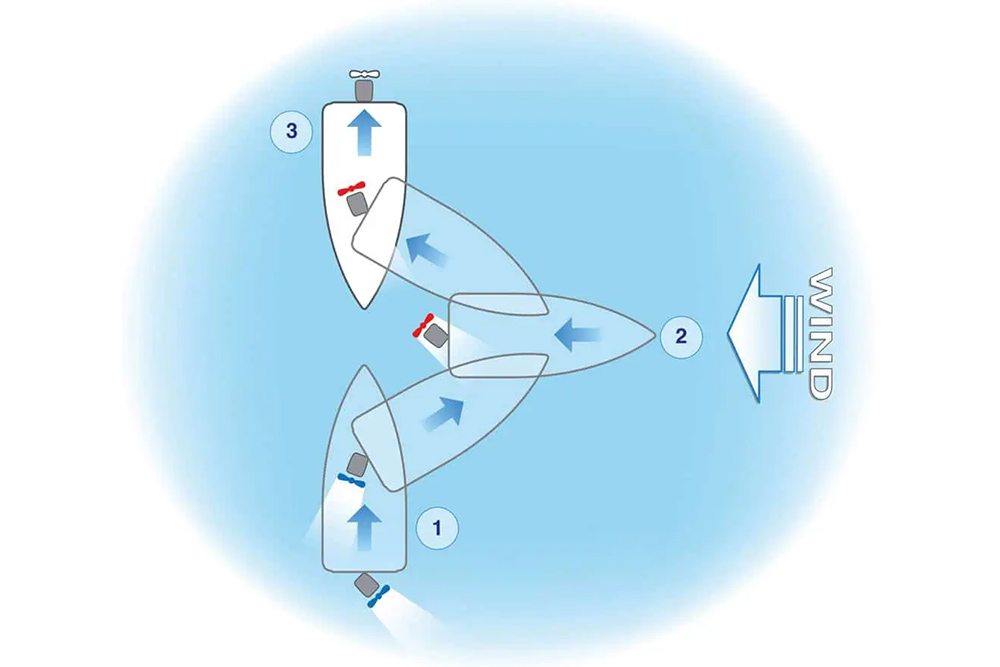
By applying this technique to a turn through 180 degrees, we can break the manoeuvre down into three stages (if it takes more, that’s fine too). Bring the boat to neutral and lose almost all the forward movement. Turn towards the wind – then, in gear forward, neutral; and again, in gear forward, neutral. Each ‘in gear’ should be about half a second, and two or three should get you to about 90 degrees of your turn. Then, while still in neutral, wheel hard over the other way – in gear reverse, neutral; in gear reverse, neutral. You should now be almost round. A final wheel over to the other side and in gear forward and you have achieved the 180.

Step-by-step diagram of 180-degree turn in wind, using steer then gear technique for tight marina manoeuvre.
Fig. 4: Turn in a confined space

A few reminders: keeping a really good lookout all around is key and, especially before you go into gear, make sure you are looking the way that you are going too. Be very aware of your position and the closeness of the bow or stern to other boats – if it starts to go wrong, go to neutral and think it through. Powering out of the problem never ends well! Practise this in bigger spaces, then tighten up the space. (See Fig. 4)

In the next article, we’ll look at applying these techniques and touch on twin-engined set-ups.

Keep safe and have a great time afloat!

Advertisement

South Coast & Green Tech boat show advert showing Book your free tickets
Powerboat and RIB

Paul Glatzel

Tuition Writer | RYA Instructor | Author of RYA Powerboat Handbooks | Powerboat & RIB

Advertisement

Nordkapp_MPU_Dec25
  • Pantaenius insurance advertising banner with No Nonsense, Get a Quote, No policy cancellation fees, No policy admin fees, no monthly instalment fees.
  • Boatfests 2026 advert
South Coast & Green Tech boat show advert showing Book your free tickets

You might also like