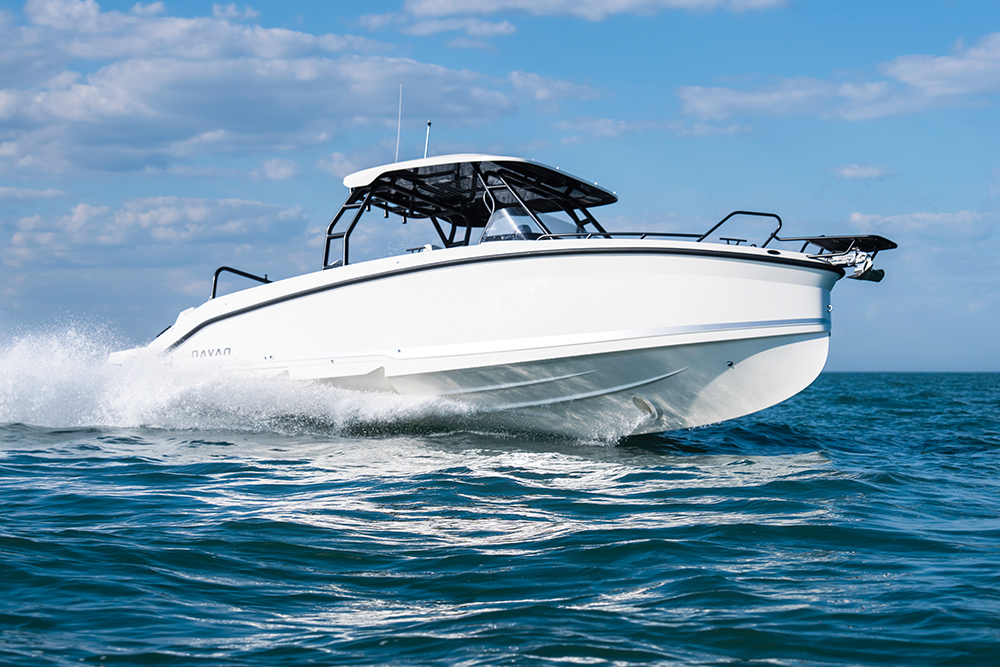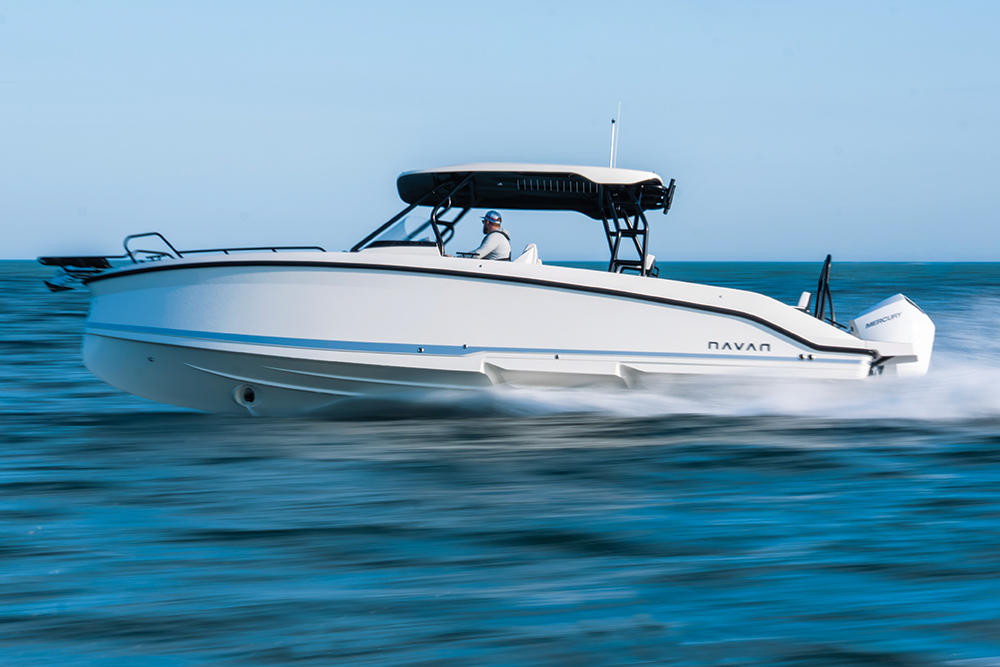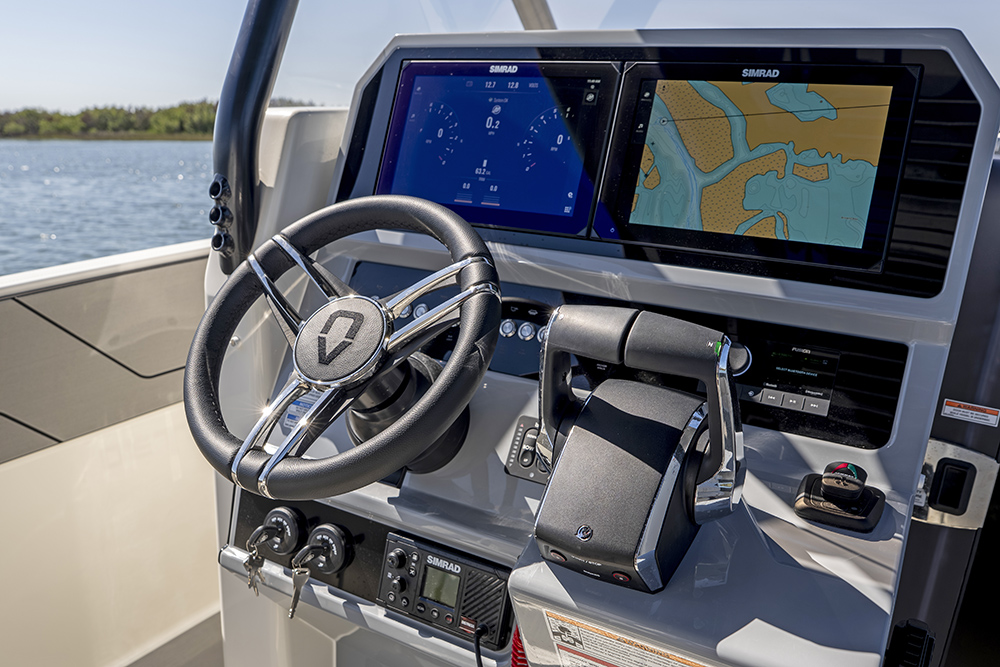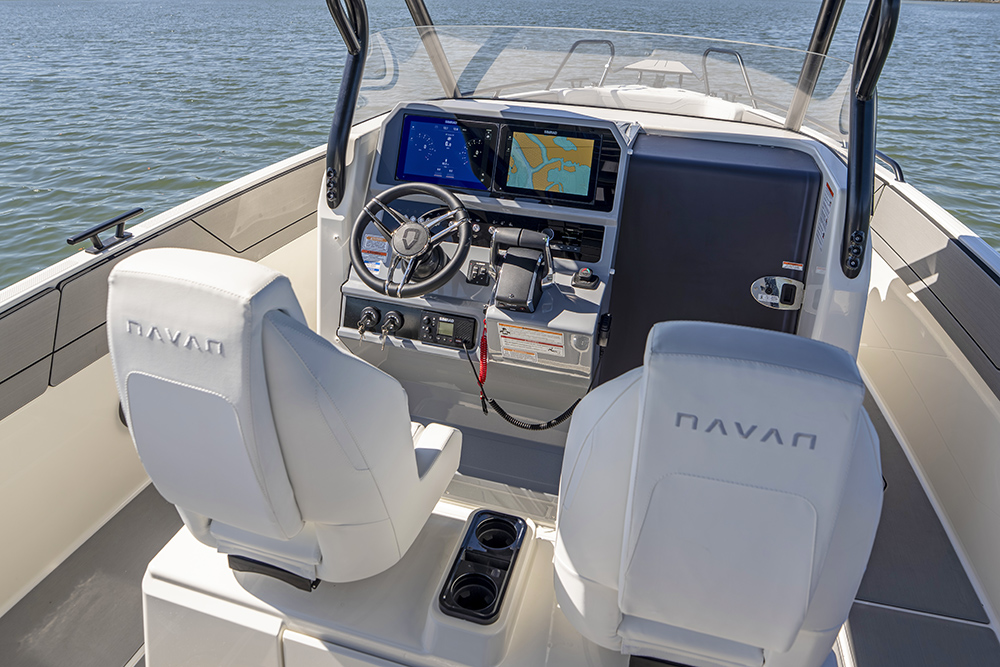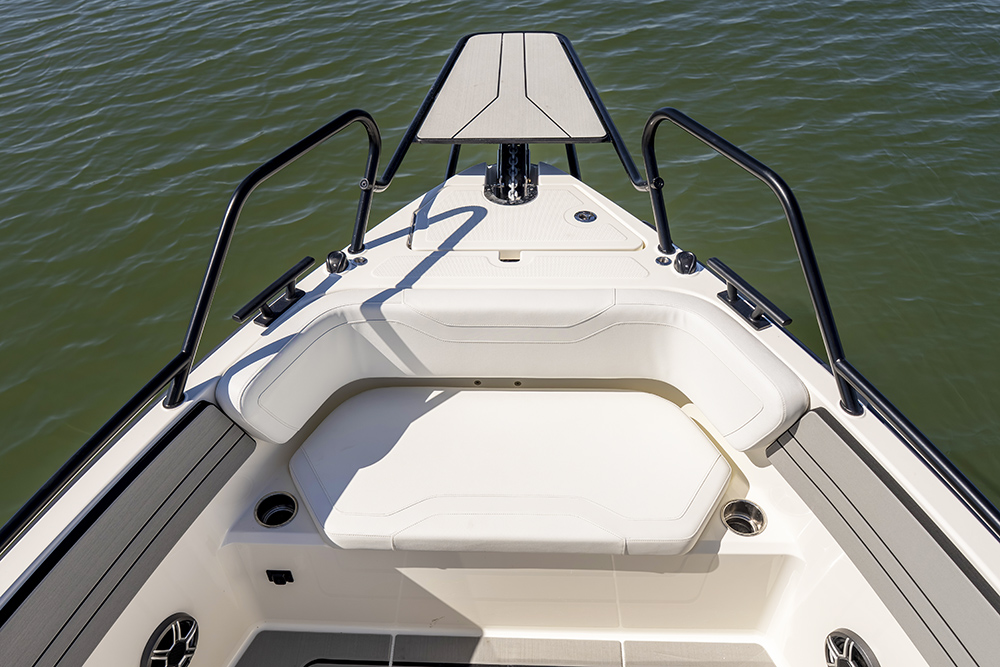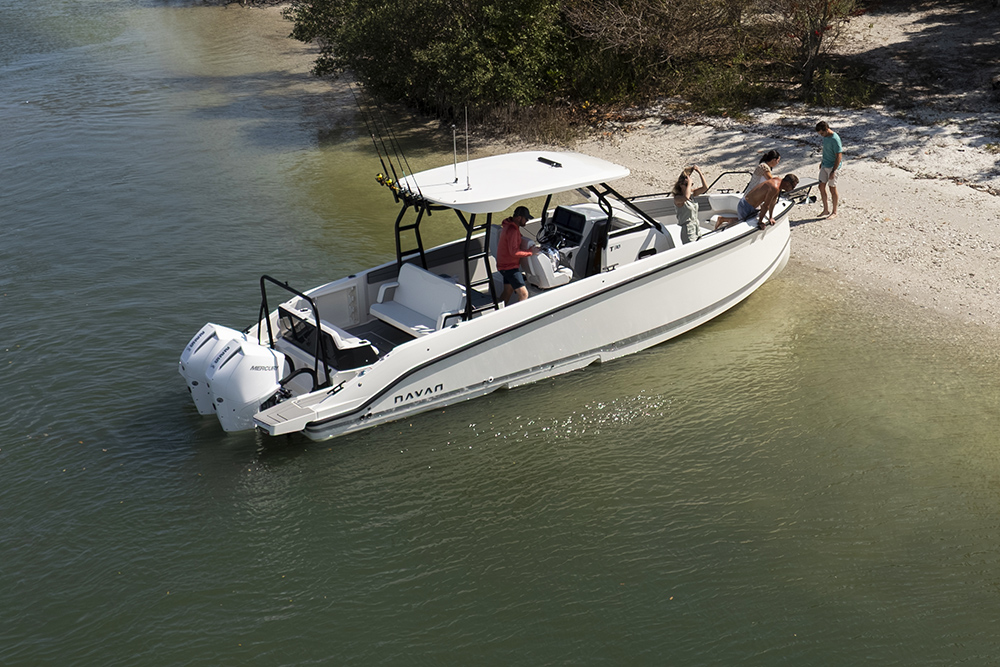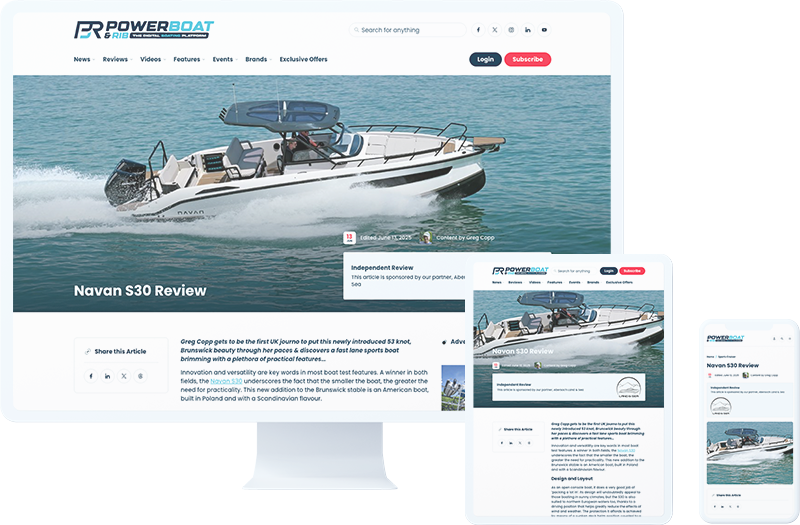



The first thing you notice is that this hull feels properly balanced. The S30 and C30 both carry their weight in slightly different ways, and the T30 sits between them in a way that works. There is no nose-up tendency at planing speeds, no awkward transition through the mid-range, and the centre-console layout puts the helm in exactly the right place for the boat to feel composed rather than flighty or imbalanced.
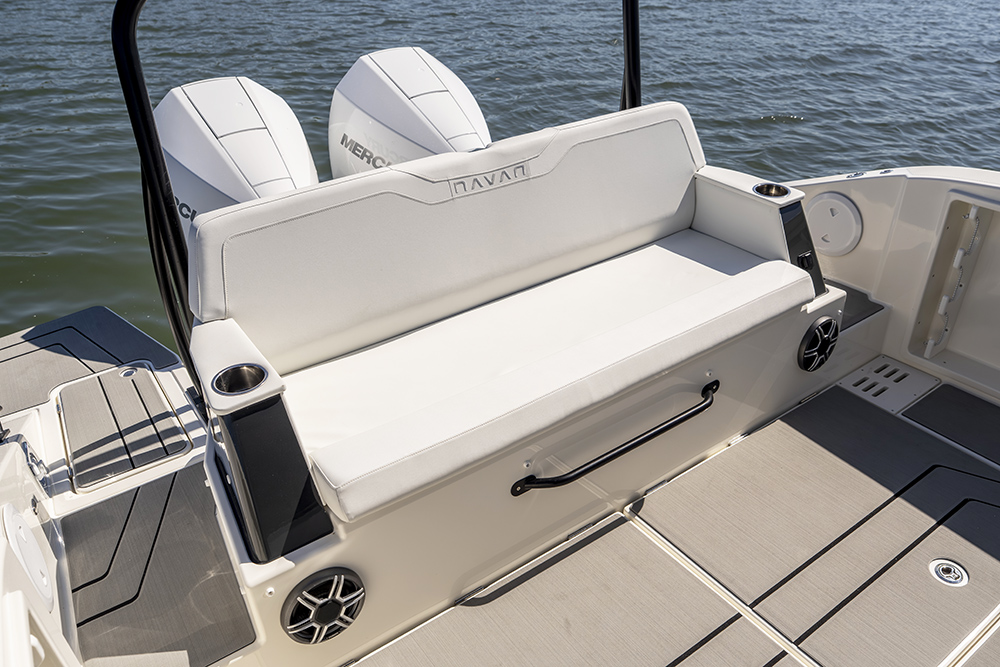
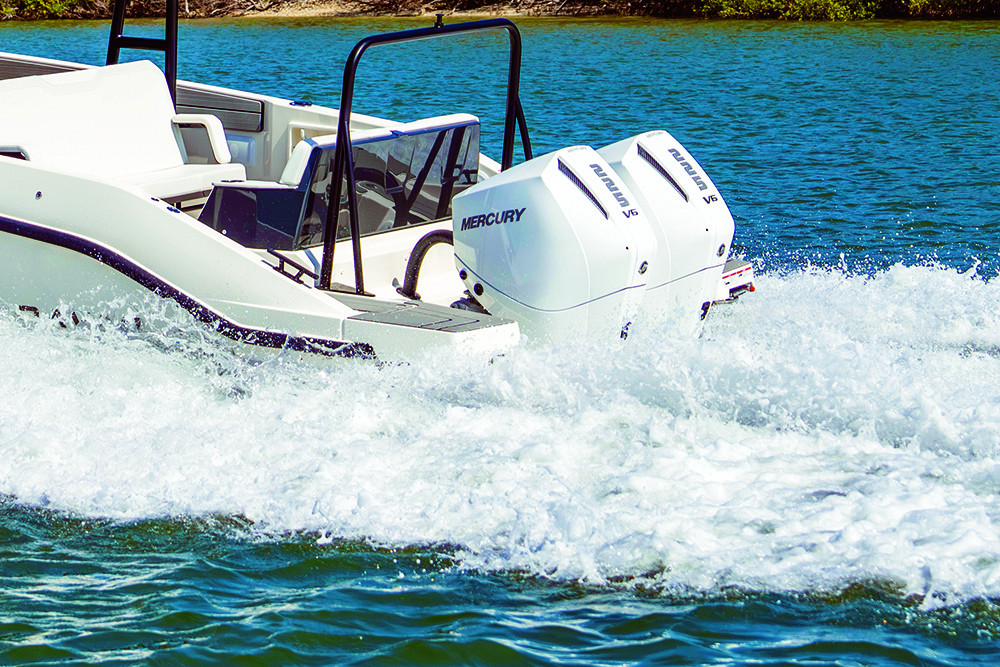
More interesting is what has happened to the hull weight. The T30 feels noticeably lighter than its siblings on the same platform, and that shows. Paired with twin Mercury V6 225hp outboards, holeshot is clean, mid-range pickup is genuine, and the V6 package feels like the sweet spot for European coastal cruising rather than a compromise.
Vibration and ambient hull noise are noticeably reduced compared to the S30 and C30. Whether that is revised lay-up, additional sound deadening, or a change to how the hull liner is bonded, Brunswick is not saying. But it is a real, measurable improvement on the same platform. Conversation at cruise was noticeably easier, the boat is playful but feels safe and secure, and the overall impression is one of a more refined result than the price suggests. Small detail, but it makes a big difference.
The hull is Navan’s patented T-Step design, developed in-house at the Brunswick Boat Group Technology Center. It is a stepped planing form engineered for a flatter running attitude and a drier ride at cruise. Brunswick has not credited an external naval architect, which separates Navan from some of its rivals that trade heavily on their designer names. Based on our time on the helm, the design lives up to its brief.