Handheld VHF radios: which one should you buy?

A handheld VHF is one of the most important pieces of safety kit aboard any boat - and not just as a backup. We compare six models from Icom, Standard Horizon and Cobra, from a £89.99 club favourite to a £309.95 premium unit with built-in AIS, to help you find the right radio for your needs.
19 Jun

Edited June 19, 2026

Ollie Tucker

Content by Oliver Tucker

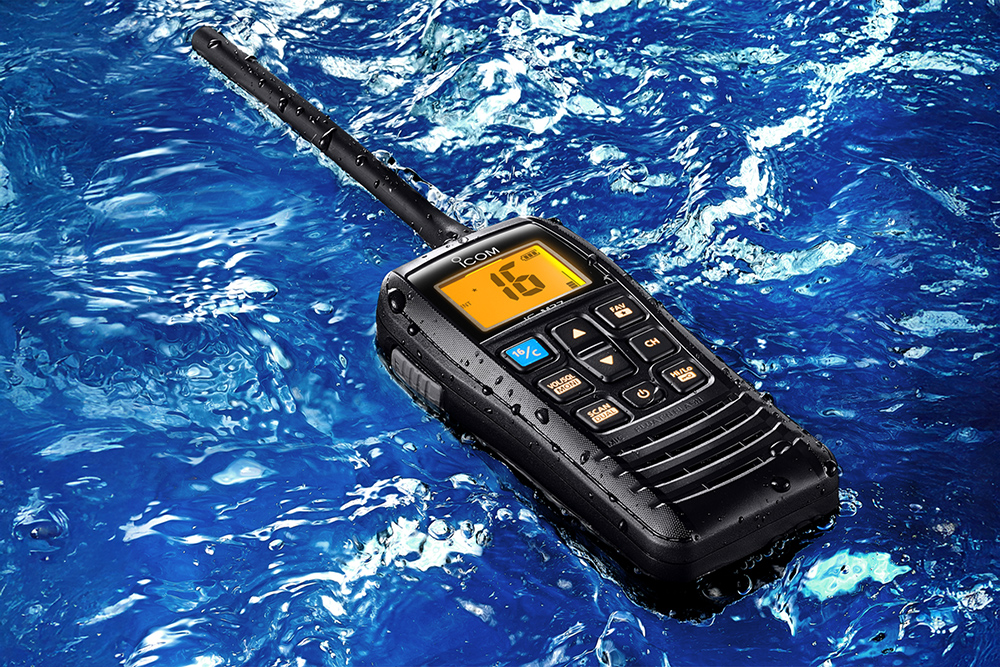
Icom VHF radio floating on sea background

Share this Article

Why carry a handheld VHF when your boat already has a fixed radio?

Many boats sold in the UK come with a fixed VHF. So why also carry a less powerful handheld unit? 

Convenience is a clear factor. A portable radio allows you to maintain a listening watch wherever you are onboard. That matters when you are not at the helm; few situations are more frustrating than leaning over the driver to access the radio, or finding yourself out of communications while on the tender or a paddleboard. 

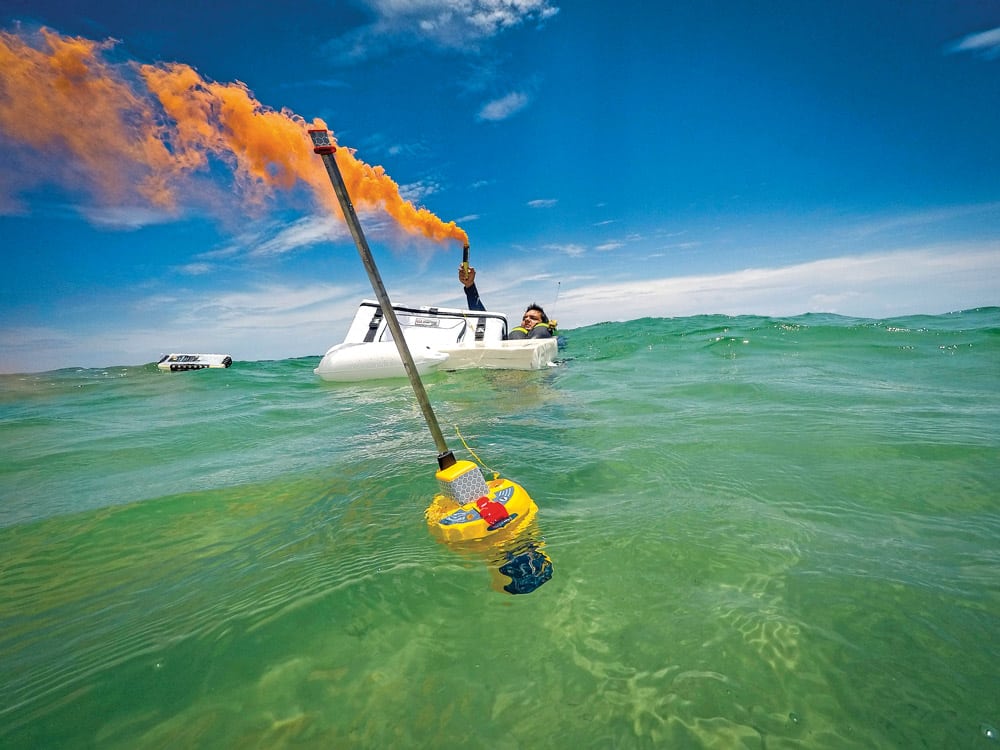
More significantly, a handheld VHF provides critical redundancy. Fixed sets are not immune to failure. Water ingress past external seals is a common issue on wetter boats, while river users will be familiar with the ever-present risk of damaging an antenna under a low bridge. A handheld unit provides a reliable backup, particularly in a worst-case scenario such as falling overboard, where a fixed radio becomes immediately inaccessible.
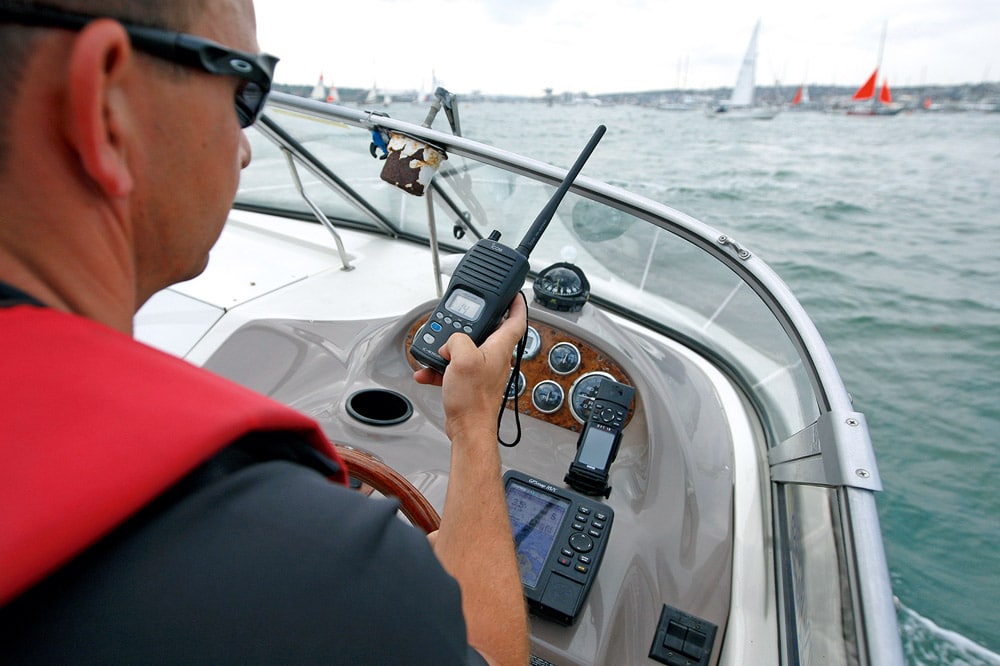
Undertake a VHF check upon departure.
A portable radio allows you to maintain a listening watch wherever you are onboard, and provides a reliable back up.

Watch our VHF Top Tips video

Watch Top Tips Video

Power versus portability: how does range compare?

A fixed VHF, powered by the vessel’s battery, will always outperform a handheld in raw transmission capability. Operating at up to 25W, and paired with a well-positioned antenna, it can achieve ranges of tens of miles.

By contrast, handheld units typically transmit at 5-6W. Combined with a much lower antenna height (height-of-user), range is significantly reduced. Double-digit miles may be achievable in ideal conditions, but in practice, considerably less is typical.

Line-of-sight is a good principle. For most users, this is sufficient for communication, but offshore use may expose the limitations of a handheld unit when attempting to reach the shore. 

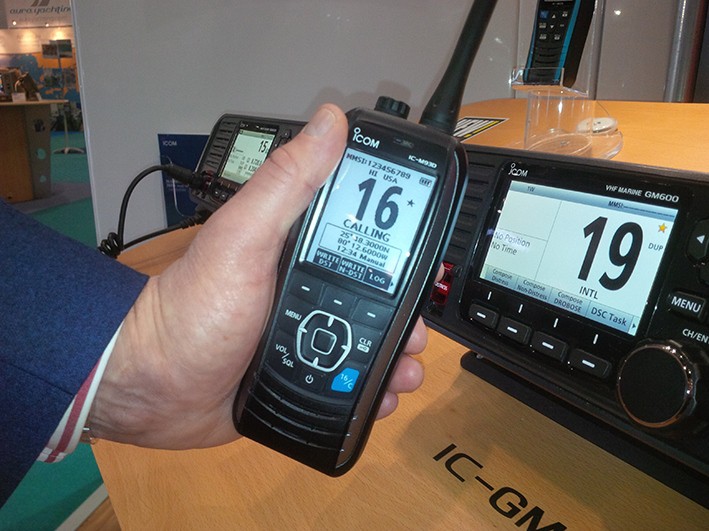
Digital Selective Calling (DSC) complicates this picture slightly. Unlike voice transmissions, DSC sends a short, structured digital alert on VHF Channel 70, including information such as the vessel’s identity and, when connected to GPS, its position. Because DSC alerts are brief digital transmissions monitored automatically by DSC receivers, their functional range is often quoted as being up to around 25% greater than VHF voice, with the Transportation Safety Board of Canada attributing this mainly to the elimination of squelch on the receiving radio.

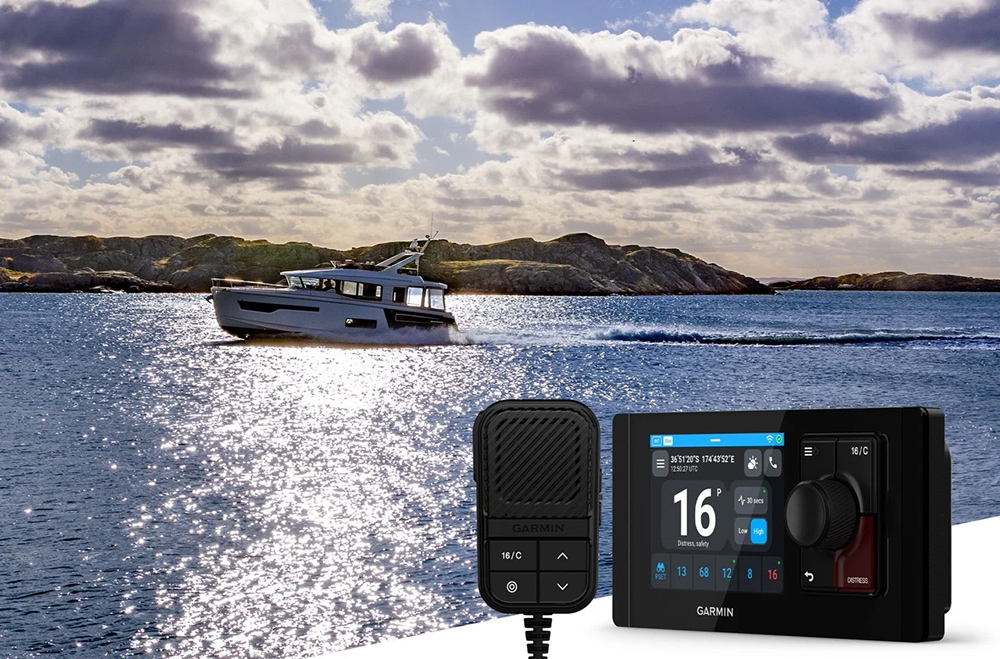
More importantly, DSC enables digital distress alerts (in situations involving grave and imminent danger) as well as routine hailing and position-sharing. Once limited to fixed sets, DSC functionality is now increasingly common in handheld units, making it a feature worth considering. 

What to look for when buying a handheld VHF

In the UK, handheld VHFs can be purchased without restriction. However, transmitting (outside of an emergency) requires a Marine VHF Short Range Certificate, obtained through instruction and a short assessment. For DSC-enabled radios, an MMSI number must also be obtained from Ofcom; this is free and straightforward. 

When selecting a unit, assess it against your intended use: 

  • Transmission power: Lower-powered sets may suffice for inland or sheltered waters, but are less suitable offshore. 
  • Size and ergonomics: Smaller units are easier to carry, but larger designs often accommodate more features and larger controls.
  • Cost: Prices vary widely; assess value relative to your actual requirements, and consider browsing the used market for occasional bargains. 
  • Battery life: Typically measured on a 90% standby, 5% transmit, 5% receive cycle. Real-world performance may vary considerably. 

Advertisement

Advertisement for Navan boats, saying Engineered to perform

Icom IC-94D on a white background
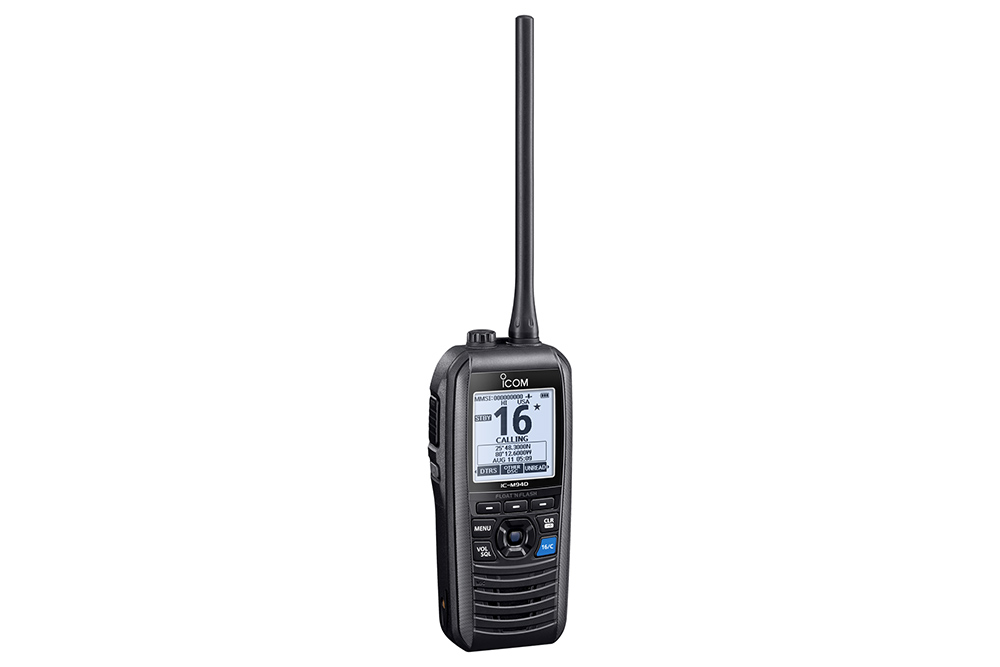
The IC-M94D includes an automatic man-overboard classification if the unit is submerged during activation.

Most premium: Icom IC-M94D

For those seeking a premium handheld with near-fixed-set capability, the IC-M94D sits at the top end of the market. It incorporates DSC, GPS, and, unusually for a handheld, an AIS receiver, allowing users to track nearby vessels directly on-screen and identify targets for DSC calls.

The distress function is well executed, including automatic man-overboard classification if the unit is submerged during activation. Navigation features are also comprehensive, supporting up to fifty waypoints.

Performance is strong across the board. With 6W transmission power, a noise-cancelling microphone, and a powerful speaker, audio clarity is excellent. Battery life is rated at around 10 hours: reasonable given the feature set, though lower than many units.

The trade-offs are size and cost. The unit is noticeably bulkier than most handhelds, and the price reflects its positioning. Whether the additional functionality justifies both will depend on how actively those features are used.

Price from £309.95 

Standard Horizon HX891BT VHF on white background
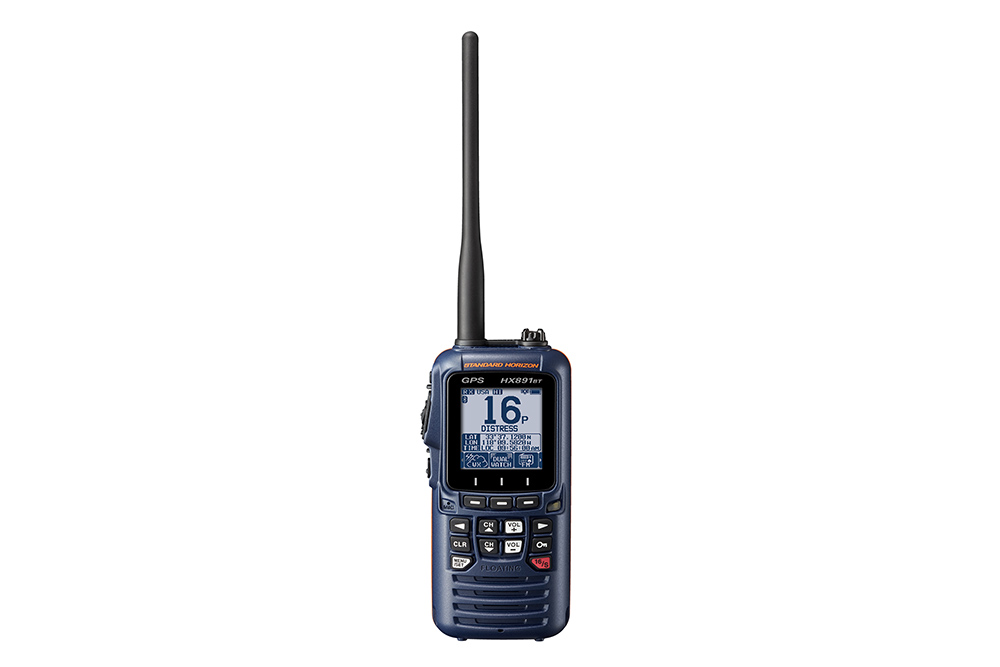
The SH HX891BT can track up to seven vessels via DSC position exchange.

Feature rich: Standard Horizon HX891BT

Standard Horizon’s flagship handheld, the HX891BT, offers a comparable high-end package. DSC and GPS are standard, with support for route navigation and up to 200 waypoints. 

Audio performance is strong, and the unit includes an FM receiver. Its distinguishing feature is Bluetooth connectivity, allowing pairing with a compatible headset. This is particularly useful during close-quarters manoeuvring, where hands-free communication may improve safety and efficiency.

While it lacks AIS, the unit can track up to seven vessels via DSC position exchange, useful for group operations after some initial setup. 

Like the IC-M94D, it is on the larger side, though ergonomic shaping and larger buttons make it easier to handle, especially in cold conditions. 

Price from £210.00 

Advertisement

  • Website banner advertisement for MarineTrac with Protect, Track and Recovery
  • Nordkapp Enduro 830 advertisement banner
Cobra HH600 handheld VHF radio with orange display and Bluetooth DSC controls
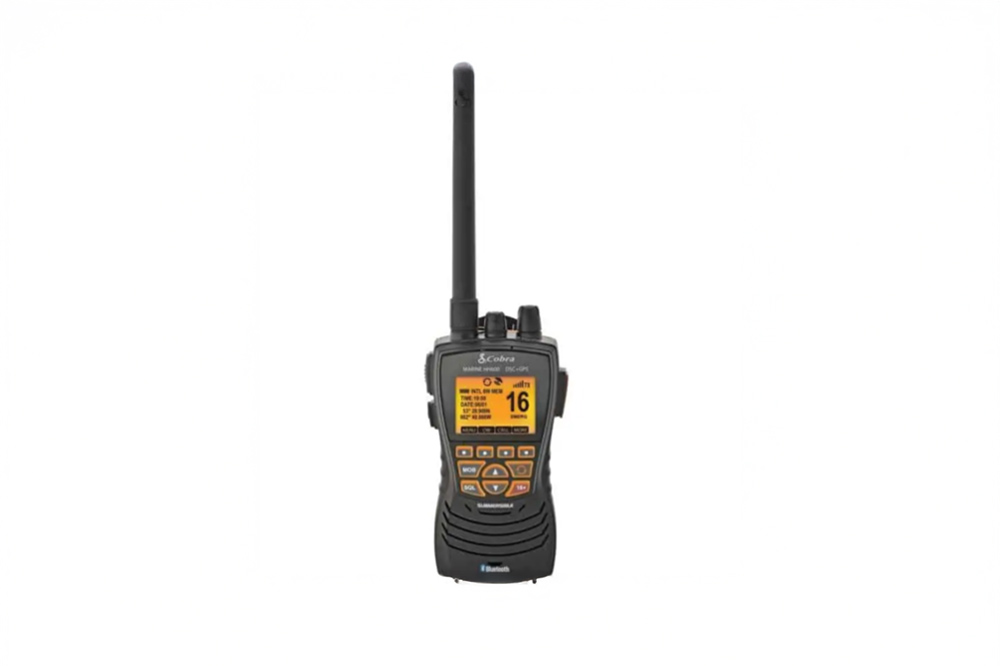
The Cobra HH600 features 'Rewind-Say-Again' audio replay.

Best features at a lower price: Cobra HH600 DSC

Cobra’s HH600 introduces DSC functionality to their handheld range, paired with an integrated GPS for basic navigation and alerting. 

Bluetooth connectivity allows the radio to act as an interface for a mobile phone, enabling calls while keeping the handset protected. The Rewind-Say-Again feature, which replays the last 20 seconds of received audio, is a practical addition in busy or noisy environments. 

Battery life is limited to around 10 hours, placing it at the lower end of the market. A backup AA battery tray provides contingency, but overall endurance is less competitive. 

Price from £179.95 

IC-M73E vhf on white background
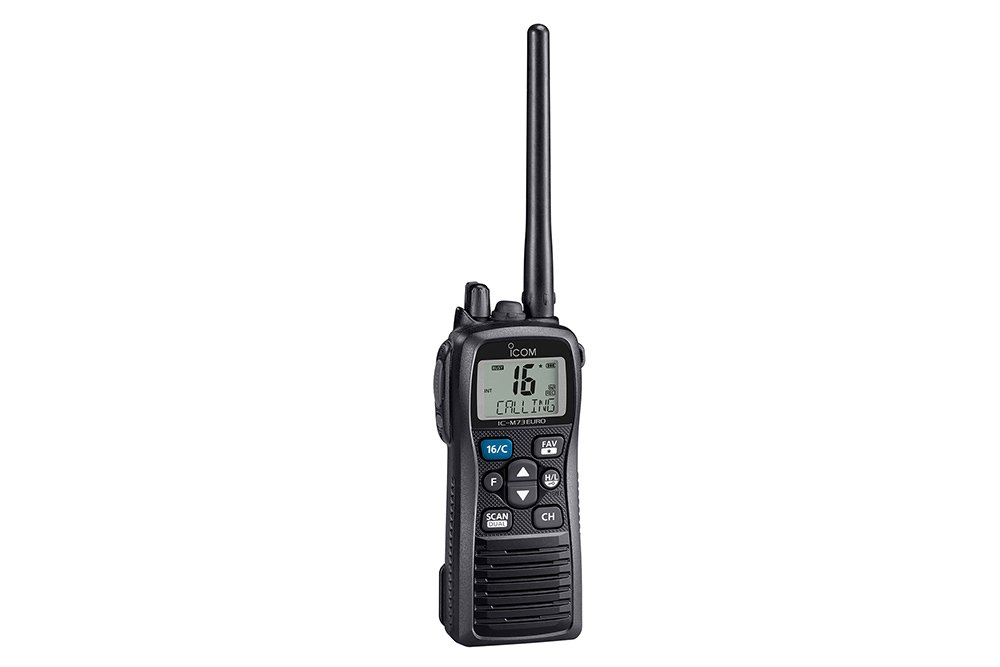
The IC-M73E is compact and has a long battery life of up to 18 hours.

Most compact: Icom IC-M73E

The ICOM M73E prioritises compactness without sacrificing performance. Smaller than most competitors, it is easy to carry and fits comfortably into pockets or under outer layers.

Controls are well considered, with large buttons, programmable favourite channels, and a combined volume/power knob that supports quick adjustments. Battery life is a standout feature at up to 18 hours, though this will reduce in high-traffic environments.

Compromises include lower speaker volume and the absence of buoyancy. It is also relatively expensive given its limited feature set compared to larger alternatives, which may affect its appeal.

Price from £239.95

Icom-MC37E on white background
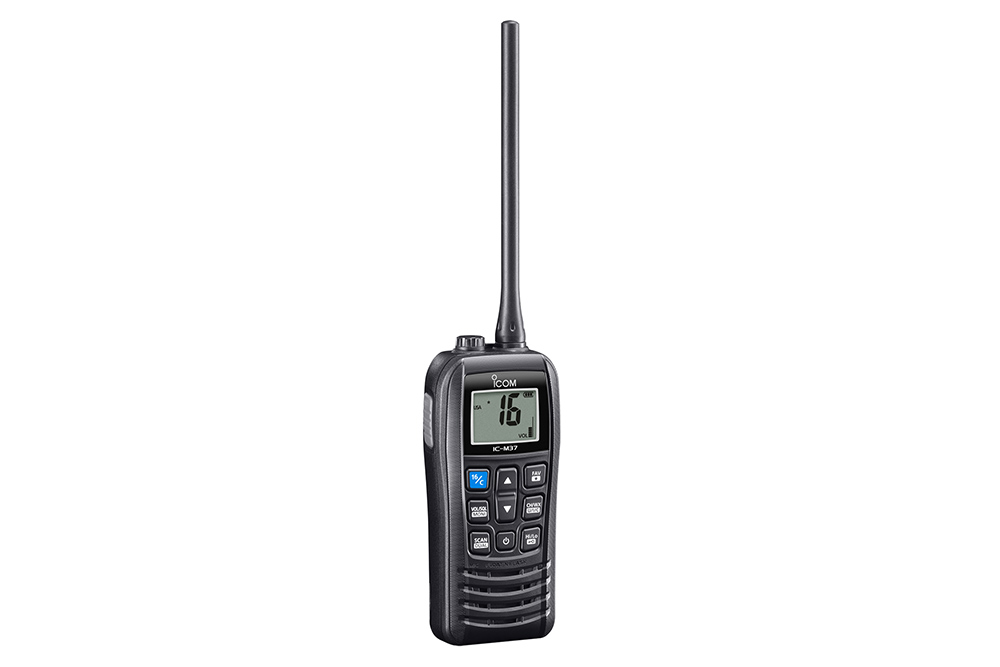
The IC-M37E has a 6W transmission and features micro-USB charging.

Advertisement

  • Nordkapp Noblesse 720 ad banner - Explore the Noblesse 720
  • Advertisement for Navan boats, saying Engineered to perform

Best all-rounder: Icom IC-M37E

A more balanced option, the IC-M37E retains similar core performance while addressing some practical concerns. It is buoyant, adding a layer of security if dropped overboard, and features an automatic strobe light for recovery. 

Transmission power remains at 6W, with good waterproofing and solid audio output. Battery life is slightly reduced at around 12 hours, but still adequate for most users. 

Charging via Micro-USB is a useful addition, particularly for those who prefer not to rely on a dedicated charging cradle. The lower price point makes it a practical choice, especially if purchasing multiple units. 

Price from £179.99 

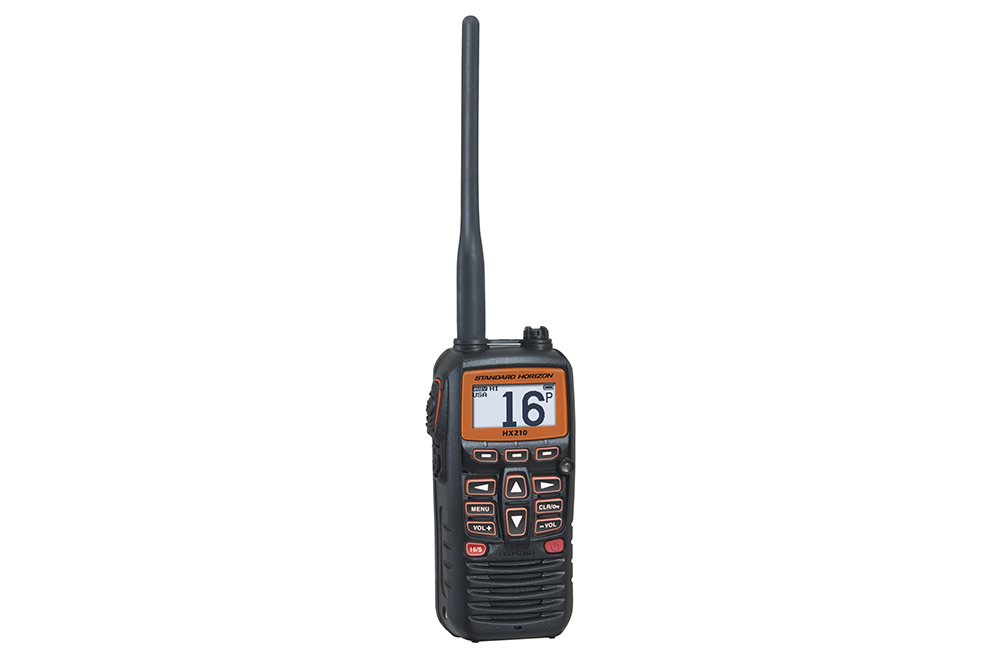
HX210
The SH HX210E is buoyant, waterproof and has high-visibility colouring.

Most affordable: Standard Horizon HX210E

Widely used in sailing clubs and training centres, the HX210E is a cost-effective, straightforward, and durable unit designed for reliability. It offers 6W transmission, clear audio, and intuitive operation.

The radio is buoyant and waterproof, with high-visibility colouring and an integrated strobe light to aid recovery if dropped. In standby/receive mode, with no transmissions, battery life can last up to 21 hours.

The trade-off is size; the unit is relatively bulky and will be noticeable when worn. For many users, however, the battery life and robustness outweigh this drawback.

Price from £89.99 


Frequently Asked Questions: Handheld VHF radios

Do I need a licence to use a handheld VHF radio in the UK, Europe or the USA?
In the UK, you do not need a licence to buy a handheld VHF, but transmitting outside of an emergency requires a Marine VHF Short Range Certificate (SRC). For radios with DSC capability, you must also register a free MMSI number with Ofcom before using the DSC functions. Across Europe, an equivalent qualification to the UK SRC is generally required. The SRC follows CEPT harmonised examination procedures and is broadly recognised across European countries, though requirements can vary and you should check local rules before sailing in foreign waters. In the USA, recreational boaters do not need a licence or operator permit to use a handheld VHF on domestic voyages. However, if you travel to a foreign port – including Canada or Mexico – an FCC ship station licence and operator permit are required. DSC-capable radios used in the USA also require an MMSI number, obtainable free through the FCC or via organisations such as BoatUS or Sea Tow.

What is the range of a handheld VHF radio?
Handheld VHF radios typically transmit at 5–6W, significantly less than a fixed marine VHF at up to 25W. In practice, range is largely line-of-sight. In ideal conditions, double-digit miles may be achievable, but real-world range is often considerably less. Handheld VHFs are generally less suitable for offshore use where reaching the shore may be difficult.

Which handheld VHF radio is best for offshore use?
The Icom IC-M94D (from £309.95) is the strongest option for offshore use, offering 6W transmission, DSC, GPS, and a built-in AIS receiver – unusual for a handheld. For those wanting offshore capability at a lower price, the Standard Horizon HX891BT (from £210.00) offers DSC and GPS without AIS.

What is DSC on a handheld VHF and do I need it?
Digital Selective Calling (DSC) allows a radio to send a digital distress alert, including your GPS position, at the press of a button. It also enables routine hailing and position-sharing with other DSC-equipped vessels. Once found only on fixed sets, DSC is now available on many handheld units and is increasingly recommended as a standard safety feature.

What is the best budget handheld VHF radio?
The Standard Horizon HX210E (from £89.99) is the most affordable option reviewed here. It offers 6W transmission, buoyancy, waterproofing, a built-in strobe, and a battery life rated at up to 21 hours in standby/receive mode. It does not include DSC or GPS, but is widely used in sailing clubs and training environments for its reliability and simplicity.

Which handheld VHF has the best battery life?
The Standard Horizon HX210E leads on battery life, rated at up to 21 hours in standby/receive mode. The Icom IC-M73E is next at up to 18 hours, followed by the Icom IC-M37E at more than 12 hours. The Icom IC-M94D and Cobra HH600 are both rated at approximately 10 hours.

Advertisement

Advertisement for Navan boats, saying Engineered to perform

Join 8,000+ boaters who get our weekly Reader’s Bulletin

Get the latest from Powerboat & RIB Digital Boating Platform delivered to your inbox

• Reviews and features
• Breaking marine news
• Latest videos
• Events & show coverage
• Exclusive offers

Free. No spam. Unsubscribe anytime.

Ollie Tucker

Oliver Tucker

Advertisement

Advertisement for Navan boats, saying Engineered to perform
MDL Marinas advertising MPU saying 'Out of Office' Switch off, Cast off, Save this summer
  • Nordkapp Noblesse 720 ad banner - Explore the Noblesse 720
  • Advertisement for Navan boats, saying Engineered to perform

You might also like