Williams TurboJet 280MX and 320MX review: premium jet tenders at an entry-level pricing
Williams Jet Tenders built its name on small, high-performance high-quality jet tenders. We test the brand's two newest entry-level models,…
Advertisement
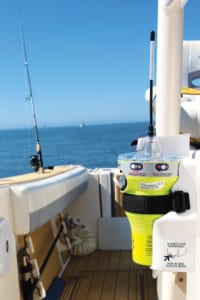
Vessel-mounted beacons are a fact of life for commercial craft.
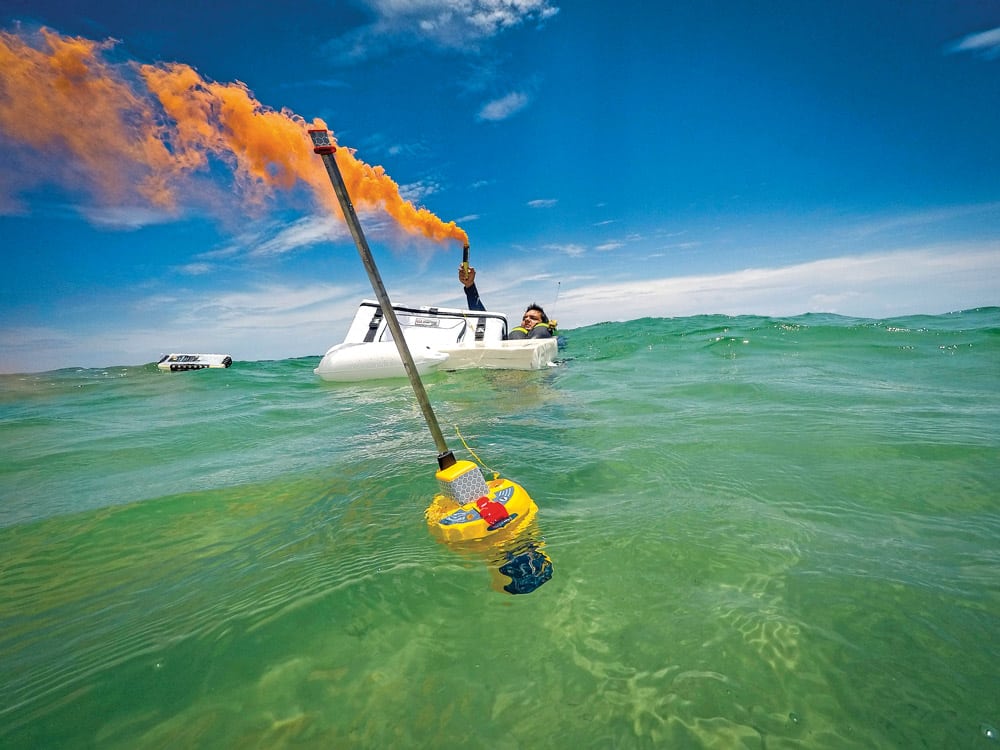
ACR and Ocean Signal will launch these new beacons this year, ahead of the enforcement of new IMO (International Maritime Organisation) Maritime Safety Committee EPIRB regulations. AIS EPIRBs will offer both recreational and commercial users the extra reassurance that other nearby vessels will be notified in an emergency through AIS transmission. This will be in addition to the beacon’s ability to transmit a 406MHz distress signal via the international Cospas-Sarsat satellite system and the 121.5MHz homing signal.
Effective from 1st July 2022, the new IMO rules state that vessels under SOLAS regulations will have to fit a new EPIRB with an internal AIS locating signal and an internal GNSS receiver, along with the 406MHz and 121.5MHz transmitters, when current devices are due for replacement. Recreational boats and other non-SOLAS vessels can continue to install and use the existing generation of EPIRBs for the time being; however, it is expected that within two years, many countries will require AIS-enabled EPIRBs for all passage-making craft.
The IMO updated its EPIRB requirements in June 2019 to instigate essential improvements in performance and design, in what has become the most important safety device carried on board. EPIRBs (emergency position-indicating radio beacons) have saved thousands of lives due to the global dimension that they offer, which VHF, DSC and even HF can’t provide due to range limitations. However, recovery by rescue services can be delayed in certain remote ocean areas, which is where AIS can be a lifesaver, as all vessels and aircraft equipped with AIS in the vicinity will be able to respond with immediate assistance. Further new standards enforced by the IMO make a GNSS receiver now mandatory in all EPIRBs to improve location accuracy, while also requiring an infrared light, as well as visible light. These new EPIRBs will be ready for the July 2022 deadline, while ACR’s existing EPIRBs will continue to be approved and available for use in applications that do not have to comply with the new IMO requirements for the time being.

This content was created by the Powerboat & RIB editorial team.

Williams Jet Tenders built its name on small, high-performance high-quality jet tenders. We test the brand's two newest entry-level models,…
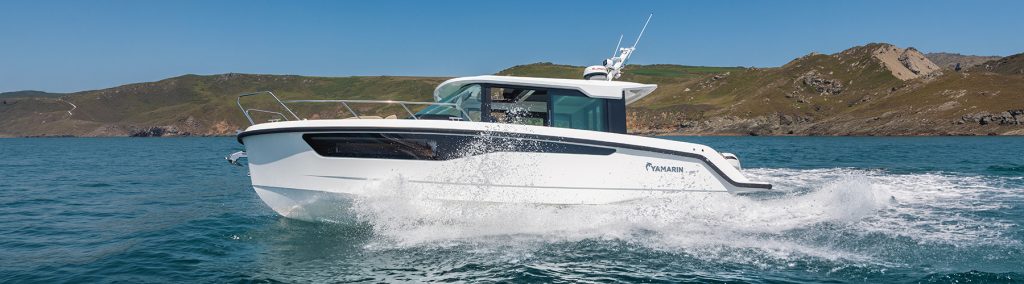
Yamarin's largest model yet brings serious build quality, a beautifully finished wheelhouse and confident sea-keeping to the all-weather cruiser class.…

We put the Beneteau Antares 12 through its paces on twin 425hp Mercury V10 power, to see how this offshore…

We sea trial the Axopar 38 XC Cross Cabin Brabus Line off Palma, testing both Mercury V8 and V10 power…