

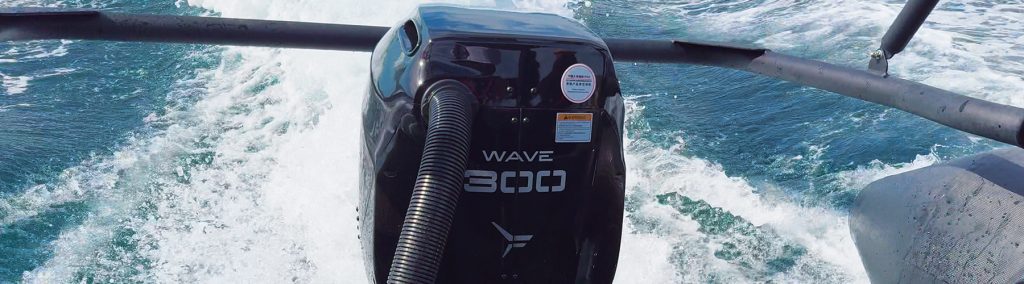
Can a 300hp electric outboard power a heavy RIB? ExploMar Wave 300 tested

Hugo Montgomery-Swan sea trials the ExploMar WAVE 300 electric outboard on a Gemini Waverider 880 RIB at the 2026 Cannes Yachting Festival. He looks at speed, running time from a 180 kWh battery, and why electric boats need hulls designed for the job.
03 Nov

Edited November 3, 2026

Powerboat and RIB

Content by Hugo Montgomery-Swan

About this review

This review is editorially independent: our journalist's testing, opinions and conclusions are entirely their own. Its promotion only is supported by ExploMar

Powerboat and RIB
ExploMar 300

Share this Article

ExploMar WAVE 300 electric outboard review: a new name in a crowded market

‘Expanding Access to High-Performance Electric Boating’, is how ExploMar describe their entry into the electric outboard market. In light of recent developments, it’s perhaps not surprising, particularly in the smaller power sector, that this blossoming market is already becoming a competitive space, with players both well-established and new to the fold, all vying for attention and market share.
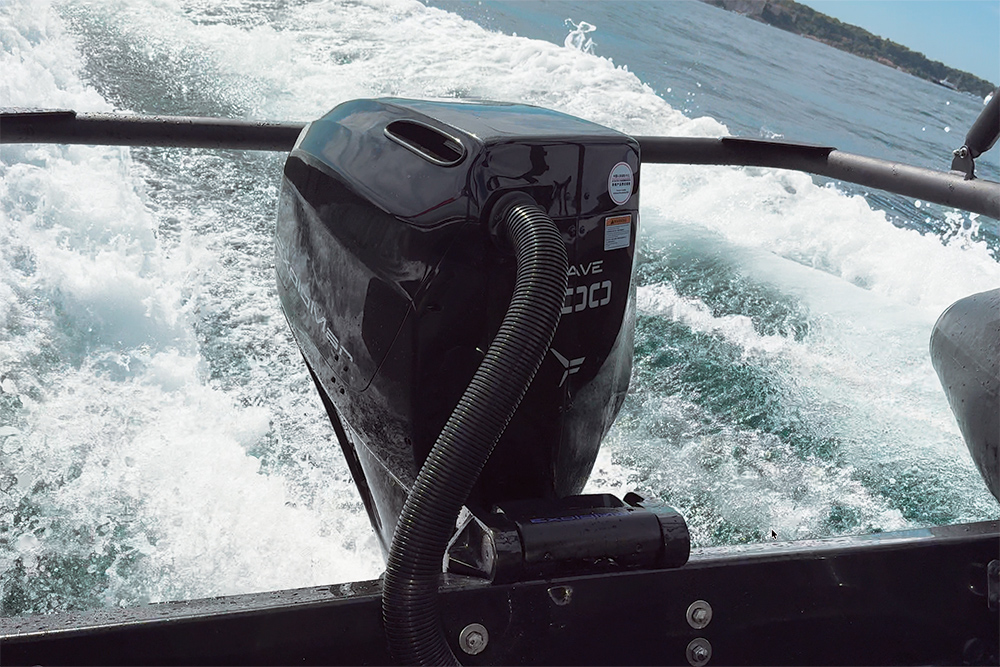
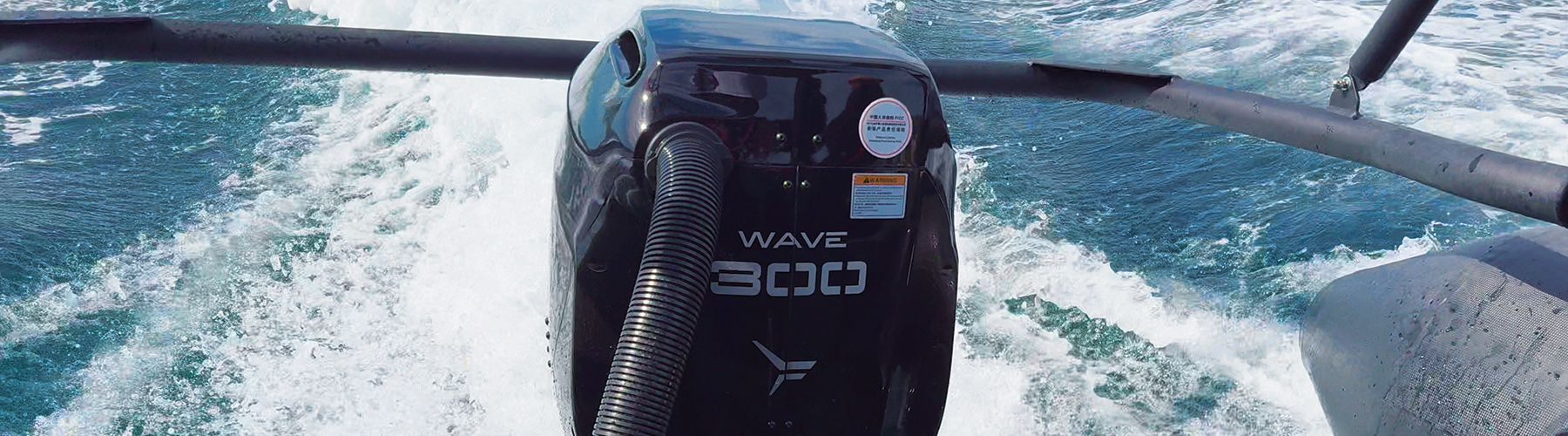
Explomar 300 Wave electric outboard on transom with white wake astern
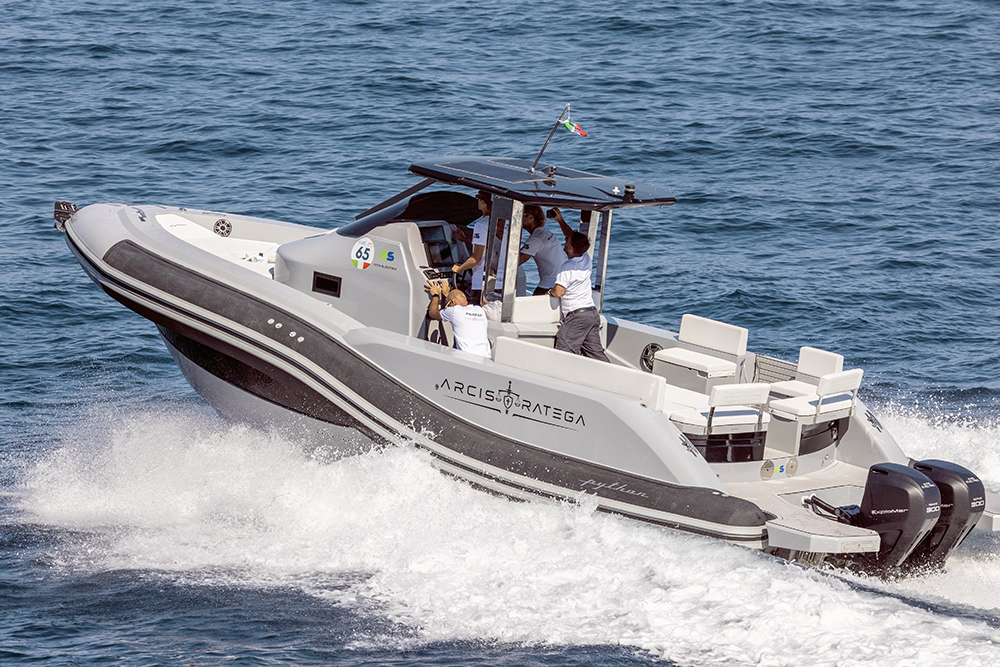
Explomar WAVE 300hp fitted to Gemini 880 Waverider RIB.

Who is ExploMar and how quickly has the company grown?

So, who are ExploMar and when did their technology-based company journey begin? Founded in August 2021, ExploMar developed from an electric propulsion technology start-up into a company that within a quite short period of time was delivering product into more than 20 countries and regions across Europe, Africa, Asia-Pacific, and South America, (the latest being the Maldives, UAE). Its development journey began with the WAVE 300 A-sample, in August 2022, followed by laboratory testing and the company’s first European order in December of the same year. In 2023, ExploMar completed the WAVE 300 B-sample, for onboard testing, debuted at international exhibitions, and expanded its portfolio with the introduction of the WAVE 150+ and WAVE 70+.

Find out more

Interested in electric power? Find out more about the ExploMar range of electric outboards from 70hp to 300hp.

Powerboat and RIB

Find out more about ExploMar during this exclusive interview.

When did ExploMar start mass production of the WAVE 300?

In January 2024, ExploMar completed its intelligent manufacturing base in Changshu, finalized the WAVE 300 C-sample, and commenced mass production. European deliveries of the WAVE 300 began in August 2024 and in March 2025, the company made its first appearance at the Shanghai Boat Show, marking the launch of its domestic market operations and product deliveries in China. Then, in 2026, ExploMar’s China ‘experience centre’ at Changshu UWC Innovation Island became operational, adding to its growing network of locations for electric boating experiences. In other words, ExploMar, have been on a rapid ascent and by anyone’s book, clearly mean business.

How did the Wave 300 perform on the Gemini Waverider 880 at Cannes?

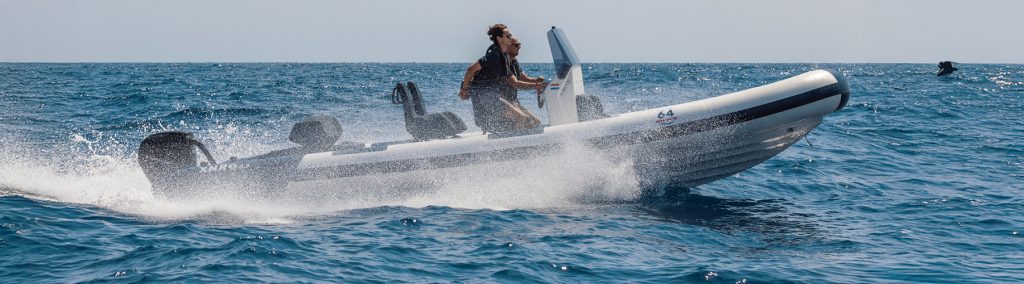
At the recent 2026 Cannes Yachting Festival, PBR had the opportunity of sea trialling a commercially spec’d, Gemini 880 Waverider RIB powered by a single ExploMar WAVE 300. (The ‘300’ reference relating to the fact ExploMar rate this motor as being equivalent to a 300hp 4-stroke). In terms of the test boat made available to us by ExploMar France, the WAVE 300 motor was powered by a single 180 kWh battery system. ExploMar’s recommended retail price for the WAVE 300 starts from €59,800 excluding VAT.

Watch as HMS tests the Explomar WAVE 300 on the Gemini 880 Waverider RIB.

How fast is the Gemini Waverider 880 with a single WAVE 300?

As for the boat itself, this was a Gemini 880 Waverider, which as many of you will know, is a substantial, commercially orientated RIB of some 1050kg. Something of a strange choice as a ‘testbed’ for a power system of this type. After all, the Waverider model was never developed as a prospect for electric power. On the contrary, the Waverider’s substantial layup, deep-vee hull, even its additionally heavy T-Top, have all been designed with the intention of having a pair of big petrol ‘guzzling’ outboards powering this all-weather, ‘mile muncher’ through the ocean. Nevertheless, in its initial test configuration, the WAVE 300 being demonstrated employed a 30-inch shaft and a 15.75 × 15-inch three-blade propeller, which, under best conditions and minimum load, ExploMar state is capable of pushing the 880 Waverider along at a top speed of 29 knots. But with 5 people up on the day of test, in settled conditions, flat seas, and of course, almost zero tide, we achieved closer to 22 knots. This was estimated, however, as the vessel was neither fitted with a speedo or a GPS to calculate speed.

“with 5 people up on the day of test, in settled conditions, flat seas, and of course, almost zero tide, we achieved closer to 22 knots”

How long does the ExploMar WAVE 300 run at 15 knots?

ExploMar themselves recommend a cruising speed of 15 knots as being the economical pace to run this particular boat/engine combination, and indeed, I would agree. Although in terms of a boat of this stature that means, in reality, you’re only really just up on the plane. Plus, if one happened to encounter a seaway of any consequence at all, then you’d be needing to apply quite a lot more power again. This of course would mean the approximate 1 hour, and 30 minutes of running time granted by the test boat’s 180 kWh battery, would be reduced quite sharply. And as we discovered during our sea trial which entailed approximately 30 mins of high-end throttle time, after 30 mins of putting the rig through its paces, the motor went into ‘get you home’ power save to automatically conserve its remaining 20% energy reserve.

Powerboat and RIB
Twin ExploMar Wave 300s fitted to a 11m RIB

Will better batteries boost WAVE 300 speed and endurance?

ExploMar told us that further optimization of the shaft length, motor mounting height, and propeller selection is expected to improve both speed and endurance and that their current development target is a top speed of approximately 35 knots, with up to 3 hours of endurance at 15 knots. (Since our test, ExploMar have told us that raising the height of the outboard has already lifted the Gemini’s top speed to 34 knots.) In terms of this 880 Waverider coupling though, I think ExploMar are likely being somewhat over-optimistic. But at the end of the day, this is all down to battery technology, of which the likes of the WAVE 300 are dependent upon. But who knows where battery advancements will lead? Maybe, the shift away from traditional liquid lithium-ion batteries towards solid state, sodium-ion, and advanced lithium manganese rich cells might provide the solution..? But, meantime, this leads me to my next point.

Find out more

Interested in electric power? Find out more about the ExploMar range of electric outboards from 70hp to 300hp.

Powerboat and RIB

Does the boat matter as much as the electric outboard?

Right now, at least, in terms of France being a key territory for the brand, the Gemini 880 represents ExploMar’s approach to electric boating: combining big motor electric propulsion with battery, control, and charging technologies to deliver what ExploMar, understandably, hope will demonstrate a practical and engaging electric powered on-water experience.

But here’s the point I really want to stress; simply marrying two good products together, as good as they may be in isolation, doesn’t necessarily mean the joint result will be as good as the individual parts. In my view, as excellent a boat as the Gemini Waverider 880 is, (and I for one can bear personal testimony to that claim,) nonetheless, it is completely the wrong make and model for the likes of the WAVE 300 electric outboard to be properly and fairly assessed. In short, the Waverider is too heavy and features a deep-vee hull design that simply isn’t suited to this type of power.

“But here’s the point I really want to stress; simply marrying two good products together, as good as they may be in isolation, doesn’t necessarily mean the joint result will be as good as the individual parts”

Rigid bouyancy boat branded as whale tourism craft making way off the island of Sao Miguel in the Azores with tourists on board
ExploMar 300hp being used as electric propulsion for a tourist boat in the Azores.

Electric propulsion in recreational and commercial applications

ExploMar's global deployments include both recreational boating and commercial marine transport. Here are some of the examples:

In Nigeria, a 12-metre passenger ferry powered by twin WAVE 300 systems and a 250-kWh battery system has been developed to support a full day of transportation operations. The project demonstrates the potential of high-performance electric propulsion for passenger transport on local waterways, offering an alternative mobility solution in an environment where road congestion presents a significant challenge.

In Hungary's Lake Balaton region, a Parker 850 powered by WAVE 150+ and a De Antonio D36 powered by twin WAVE 70+ systems demonstrate the application of electric propulsion across different recreational vessel sizes. At ExploMar's German sea trial centre on Lake Chiemsee, the company's systems have also been applied to a range of boats, including the ZAR 6.5 powered by WAVE 150, as well as Parker 720, Parker 800, and Parker 850 boats equipped with WAVE 70 and WAVE 300 systems.

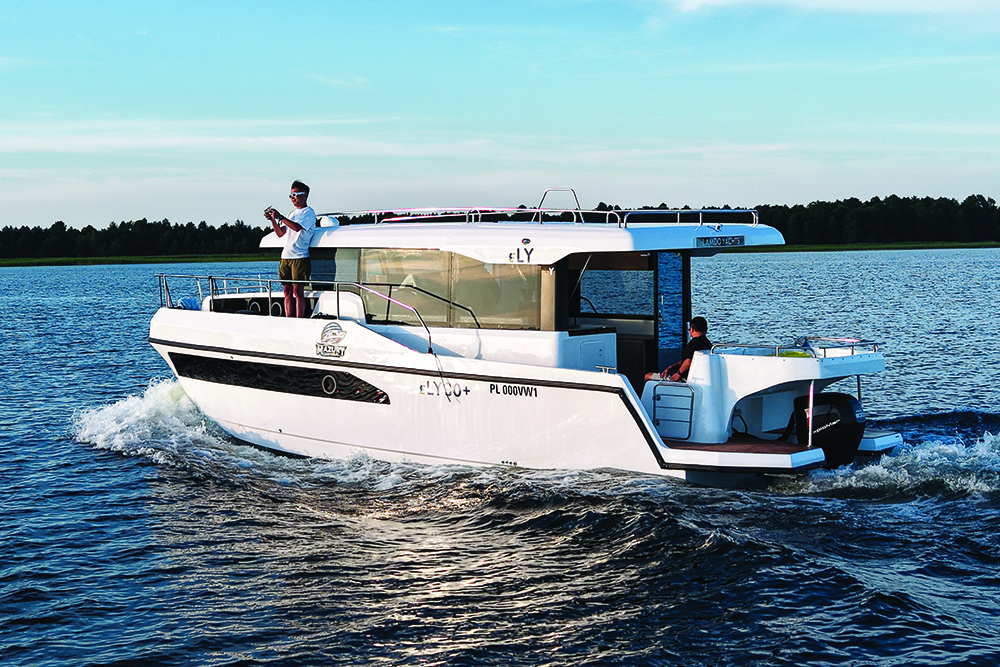
In Poland, three LAMDO eLY30+ houseboats powered by ExploMar's 70HP-300HP electric propulsion systems are now officially operating on the Masurian Lake District. The deployment adds to ExploMar's growing presence in leisure and tourism-oriented boating, demonstrating the application of electric propulsion in inland waterway environments.

As ExploMar continues to expand its international network, the company tells us that they're focusing on making high-performance electric propulsion more accessible through local partners, sea trial centres, and real-world vessel applications.

Why should electric boats be designed for electric power from the outset?

The matter of electric propulsion needs to be approached holistically. Other than those used for ship-to-shore duties perhaps, or vessels whose prime role involves low speed operation, it’s critical that boats coupled to electric outboards must be designed from the outset specifically with this form of power in mind. A ‘general’ approach does not work. Unless care is taken and understanding is employed, it could even represent a costly mistake for the likes of a well-intentioned boat owner seeking to be more eco-sympathetic.

Powerboat and RIB
In Poland, three LAMDO eLY30+ houseboats are powered by ExploMar electric outboards.

Should electric outboard makers partner with boat builders?

To avoid such an outcome, all the critical elements of the vessel’s design and make up, including such things as its dry weight, its maximum payload, battery placement, construction materials and crucially, its fluid dynamics, including the hull’s deadrise and chine system, must all be designed with the sole objective of ensuring the boat is truly electric power friendly. But if the electric outboard manufacturers take this matter seriously, we might well see what in my view needs to be done, to join these two needs up. In other words, for boats to be specifically, 100% designed for this form of power. This would entail forming alliances with design houses and naval architects, and where boat builders and boat brands would become genuine working partners of the electric outboard makers. Makers just like ExploMar for instance… And wouldn’t it be great if we saw the likes of ExploMar at some point in the future, launching a range of branded craft themselves, perhaps under licence? After all, ExploMar’s recent participation and successes in the Monaco Energy Challenge, might just give them an added appetite for such a move.

Where can you sea trial an ExploMar electric outboard?

Today, ExploMar’s sea trial and experience network spans China, Thailand, Germany’s Lake Chiemsee, Hungary’s Lake Balaton, and France. These locations support product demonstrations and provide opportunities to evaluate electric propulsion in different boating environments and applications. If one of these locations is near you, I encourage you to take up the opportunity to go and try one of these motors yourself. I think you’ll be impressed by the quality of ExploMar’s engineering and the motor’s ergonomics. Qualities, which would suggest to me, that we are going to be hearing a lot more from this forward-thinking Chinese technology entity in the months and years to come.

Verdict

ExploMar WAVE 300 | Test Verdict

ExploMar have been on a rapid ascent and clearly mean business. As excellent a boat as the Gemini Waverider 880 is, it is completely the wrong make and model for the WAVE 300 electric outboard to be properly and fairly assessed: it is too heavy and features a deep-vee hull design that simply isn’t suited to this type of power.

With five people aboard in flat seas, the WAVE 300 pushed the 880 Waverider to an estimated 22 knots, against ExploMar’s 29-knot figure, with around 1 hour 30 minutes of running time at 15 knots from the 180 kWh battery. Try one yourself at one of ExploMar’s sea trial centres and you’ll be impressed by the quality of ExploMar’s engineering and the motor’s ergonomics.

What we like?

Quality of engineering

Motor ergonomics

Automatic 'get you home' mode protects a 20% reserve

Growing network of sea trial centres

What we don't like?

Heavy deep-vee test boat not suited to electric power

Around 1 hour 30 minutes running time at 15 knots

Range drops sharply in a seaway or at high throttle

Find out more

Interested in electric power? Find out more about the ExploMar range of electric outboards from 70hp to 300hp.

Powerboat and RIB

Specification | ExploMar WAVE 300 on Gemini Waverider 880

Motor ExploMar WAVE 300 electric outboard
Power rating Equivalent to a 300hp four-stroke (ExploMar rating)
Output 150 kW continuous, 225 kW peak
Motor weight 218kg
Shaft length 30-inch
Propeller 15.75 x 15-inch three-blade
Battery 180 kWh ExploMar SI-180 (2 x 90 kWh NMC packs, 540V), 1080kg
Test boat Gemini Waverider 880 RIB, commercial specification, T-top
Test boat LOA 8.80m
Test boat weight 1050kg
Top speed, ExploMar figure 29 knots in initial configuration; 34 knots since raising the outboard
Top speed as tested About 22 knots (estimated: five aboard, flat sea, no GPS fitted)
Recommended cruising speed 15 knots
Running time at 15 knots About 1 hour 30 minutes
Reserve 20%, held by automatic 'get you home' power save
ExploMar development target About 35 knots top speed; up to 3 hours at 15 knots
Price WAVE 300 from €59,800 ex VAT (ExploMar RRP); battery price to be confirmed

Battery Specification | SI-180 (90kWh*2)

Battery system ExploMar SI-180 (2 x 90 kWh packs)
Energy capacity 180 kWh
Weight 1080kg
Cell type NMC
Nominal voltage 540V
Pack energy density 165 Wh/kg or more
Working temperature -20°C to 55°C
Pack material Stainless steel
Cooling system Closed systematic cooling solution
Protection IP67
Dimensions (W x D x H) 1660 x 710 x 300mm per pack (two packs)
Charging rate 1C
Discharging rate 1-2C
Charging 7kW DC; 40kW DC (fully charged in about 4.5 hours); 120kW DC (fully charged in about 1.5 hours); max. 180kW

ExploMar WAVE 300: FAQs

Join 8,000+ boaters who get our weekly Reader’s Bulletin

Get the latest from Powerboat & RIB Digital Boating Platform delivered to your inbox

• Reviews and features
• Breaking marine news
• Latest videos
• Events & show coverage
• Exclusive offers

Free. No spam. Unsubscribe anytime.

Powerboat and RIB

Hugo Montgomery-Swan

Editor | Powerboat & RIB

You might also like