
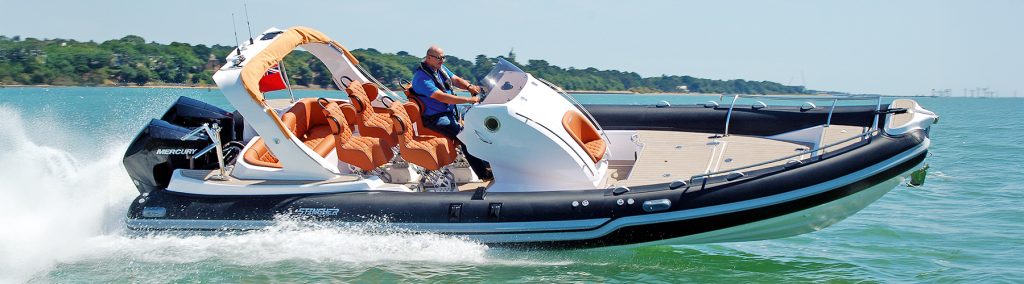
Mercury 225hp V6 vs 200hp Verado: Back-to-back fuel consumption test on the Stingher 900GT

A controlled back-to-back comparison of Mercury's new 225hp V6 outboard against the outgoing 200hp supercharged Verado, tested on twin identical Stingher 900GT RIBs in Southampton Water. Greg Copp reports.
07 Dec

Edited December 7, 2018

Powerboat and RIB

Content by Greg Copp

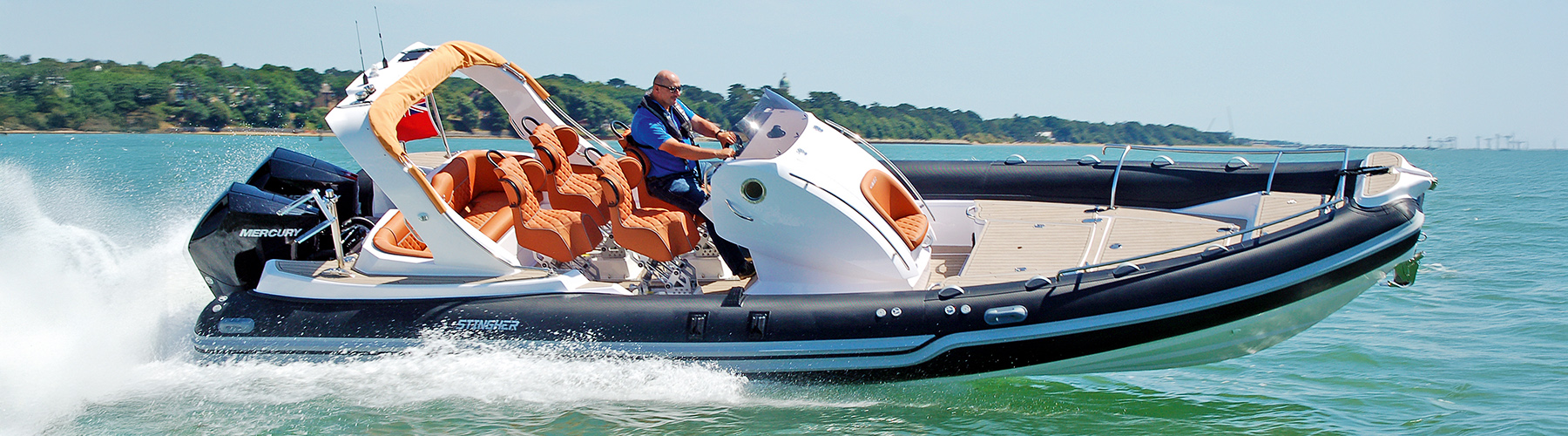
Twin Mercury 200hp powering Stingher 900GT rib

Share this Article

Why is back-to-back testing the only meaningful way to compare marine engines?

It is never easy to quantify exactly how efficient a marine engine really is. Every boat is slightly different from its nearest competitor. Weather and tidal conditions are variables that cannot be ignored. Even the latest factory fuel flow meters, using pulse metering technology, are still only as accurate as the software within. Like for like, back-to-back testing is the only way to see how comparable engines truly perform, and for this you need two identical test boats.
Powerboat and RIB
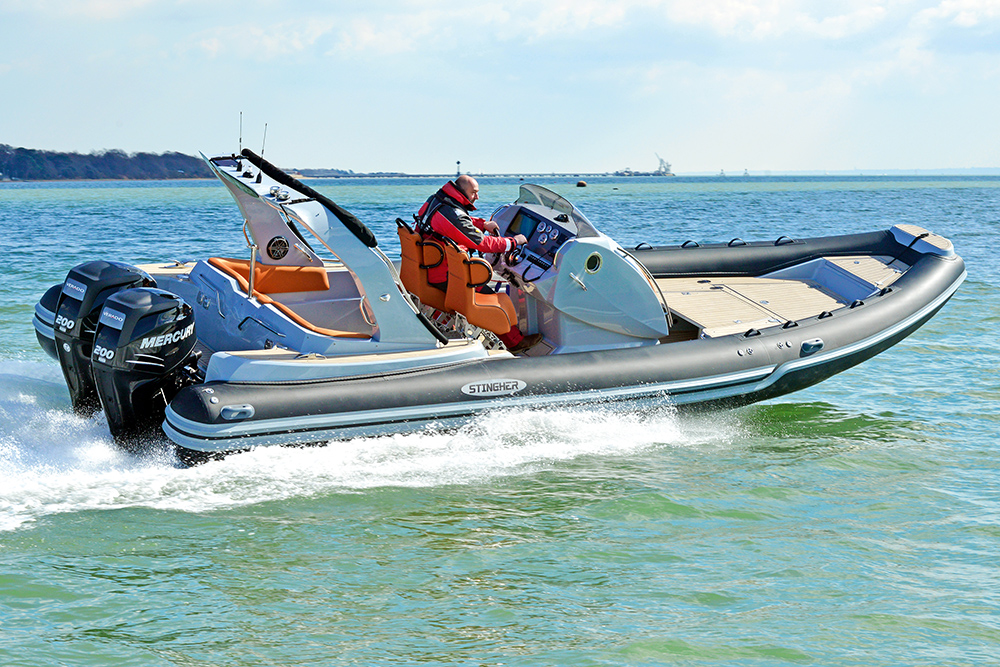
The 900GT fitted with twin 200hp Verados.
Powerboat and RIB
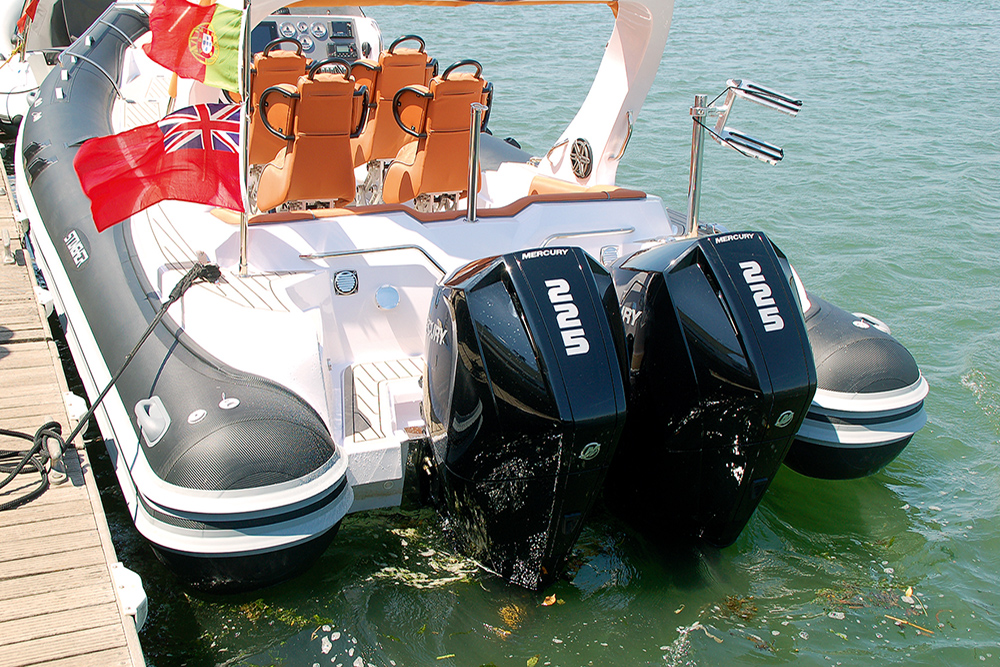
The 900GT fitted with twin 225hp V6's.

How were the two Stingher 900GT test boats set up for a fair comparison?

Thanks to MRL Marine having rigged two 9m 900GTs – one with the outgoing 200hp supercharged Mercury Verado and the other with Mercury’s latest 225hp V6 (as featured in the last issue) – we were able to see how Mercury‘s claims for their new engine stack up. Having tested the 900GT with twin 200hp Verados, I know they work very well on this boat. I have also tested two of the new 225hp V6s on the back of an XO 270, which impressed with the broad spread of power these motors put out. However, the Stingher 900GT and the XO 270 are very different boats.

Our back-to-back test was as near clinical as a marine engine test could be. The boats were identical, bar the fact that the boat fitted with the new V6s had an extra pair of seats and an extra 100 litres of fuel over the Verado-powered boat. As the pictures show, the sea conditions in Southampton Water were as identical as you could get them. All performance runs were two-way averages to account for tidal conditions. MRL Marine are meticulous in their propeller testing, with the assistance of Neil Holmes. After the best part of a week trying different propellers, they finally settled on the optimum propeller for the new V6, as they had previously done with the Verado engines fitted to the 900GT.

How does the Mercury 225hp V6 perform off the mark compared with the 200hp Verado?

The first impression of any boat is generally how quickly it gets up onto the plane. That initial low-down grunt felt when you push the throttles home is generally a good indication of how things are going to progress. In this department, the 900GT powered by the new V6 is very quick off the mark, with a relentless spread of power all the way up to 6,000rpm. The only comparable engine I have experienced that competes in low-down power is the two-stroke 200hp BRP E-TEC G2. By the nature of being a two-stroke, this engine will always be hard to beat in torque terms.

Having said that, the Verado boat is also quick, but the figures recorded on both boats show that the new engines push a Stingher 900GT up to 30mph (26 knots) about half a second quicker than a pair of 200hp Verados. You may well say this is splitting hairs and nigh on impossible to gauge accurately, but this half-second margin increased to 2 seconds when we recorded a zero to 50mph (43 knots) time. When we did a rolling run from 26 knots to 43 knots, the naturally aspirated V6-powered Stingher was 1 second quicker.

What makes the Mercury 225hp V6 noteworthy in terms of engineering and noise?

Another interesting aspect that was thrown up is that the V6-powered boat could hold planing speed down to 15 knots, while the other boat dropped off the plane at just over 16 knots. One thing is for sure, the new engine is relatively quiet. However, when you really want to hear it – when accelerating hard – it has a healthy V6 growl. Multi-chamber mufflers keep the noise down, and routing the exhaust down through the middle of the 64-degree V gives the engines a slim profile, enabling them to be mounted just 26 inches (66cm) centre to centre. A simple but very effective feature is the service hatch in the top of the cowl. This enables quick oil checks and refilling, as well as providing a single-lever catch to facilitate removal of the top cowl.

Advertisement

Advertisement for Navan boats, saying Engineered to perform

Is the Mercury 225hp V6 genuinely more fuel-efficient than the Verado?

The biggest issue is always fuel efficiency. Mercury make big claims in this department regarding their new V6, as well as the rest of their latest range. This is always par for the course with any engine manufacturer, and in Mercury’s case they attribute these gains to their advanced electronic engine control – in simple terms, proactive ECU-controlled fuelling, which effectively delivers specific fuel needs while enhancing torque in the process. The findings of our fuel tests, listed below, give a clear thumbs-up for the new V6.

What do the performance figures show for both engine options?

Test conditions – Mercury 225hp V6

Propellers: 21″ pitch Tempest Plus (no vent holes) | Load: 220L fuel, 20L fresh water, one crew


Mercury 2 × 225hp V6 – Performance Data

RPMSpeed (mph)Speed (kts)Fuel burn (Lph)NMPG
6003.73.24.03.6
1,0005.85.08.22.8
1,5008.37.214.22.3
2,00011.510.020.62.2
2,50021.018.324.83.4
3,00028.725.033.23.4
3,50036.131.443.23.3
4,00041.536.060.22.7
4,50048.041.776.62.5
5,00052.145.394.42.2
5,50057.850.3135.01.7
6,000 (WOT)64.556.1152.41.7


Slowest speed on the plane: 17.4mph (15.1 knots)

Hole shot: 2.9 seconds

0–30mph: 4.7 seconds

0–50mph: 8.3 seconds

30–50mph: 4.8 seconds


Test conditions – Mercury 200hp Verado

Propellers: 23″ pitch Tempest Plus (no vent holes) | Load: 120L fuel, 20L fresh water, one crew


Mercury 2 × 200hp Verado – Performance Data

RPMSpeed (mph)Speed (kts)Fuel burn (Lph)NMPG
6504.13.63.35.0
1,0006.75.85.84.5
1,5008.97.710.03.5
2,00011.910.316.12.9
2,50018.916.422.93.2
3,00026.022.632.83.1
3,50031.927.737.93.3
4,00037.432.550.72.9
4,50044.238.467.62.6
5,00047.341.183.32.2
5,50052.545.6121.01.7
6,036 (WOT)59.952.1151.01.6


Slowest speed on the plane: 18.7mph (16.3 knots)

Contact

The UK Dealer for Mercury product is EP Barrus.

Join 8,000+ boaters who get our weekly Reader’s Bulletin

Get the latest from Powerboat & RIB Digital Boating Platform delivered to your inbox

• Reviews and features
• Breaking marine news
• Latest videos
• Events & show coverage
• Exclusive offers

Free. No spam. Unsubscribe anytime.

Advertisement

Trailer Boating from MDL advertisement
Powerboat and RIB

Greg Copp

Technical Editor | Powerboat & RIB

Advertisement

Advertisement for Navan boats, saying Engineered to perform
Trailer Boating from MDL advertisement
  • Nordkapp Noblesse 720 ad banner - Explore the Noblesse 720
  • Advertisement for Navan boats, saying Engineered to perform

You might also like