
Nordkapp Airborne 5.4 and 6.3 review: two compact family RIBs tested in Norway

The two smallest RIBs in Nordkapp's four-boat Airborne range, the 5.4 and the 6.3, put through their paces on the Norwegian fjords. Soft-riding, easy to tow and light on fuel with Mercury power, do they deserve to be called class leaders?
19 Oct

Edited October 19, 2026

Powerboat and RIB

Content by Hugo Montgomery-Swan

About this review

This review is editorially independent: our journalist's testing, opinions and conclusions are entirely their own. Its promotion only is supported by Nordkapp Boats

Powerboat and RIB
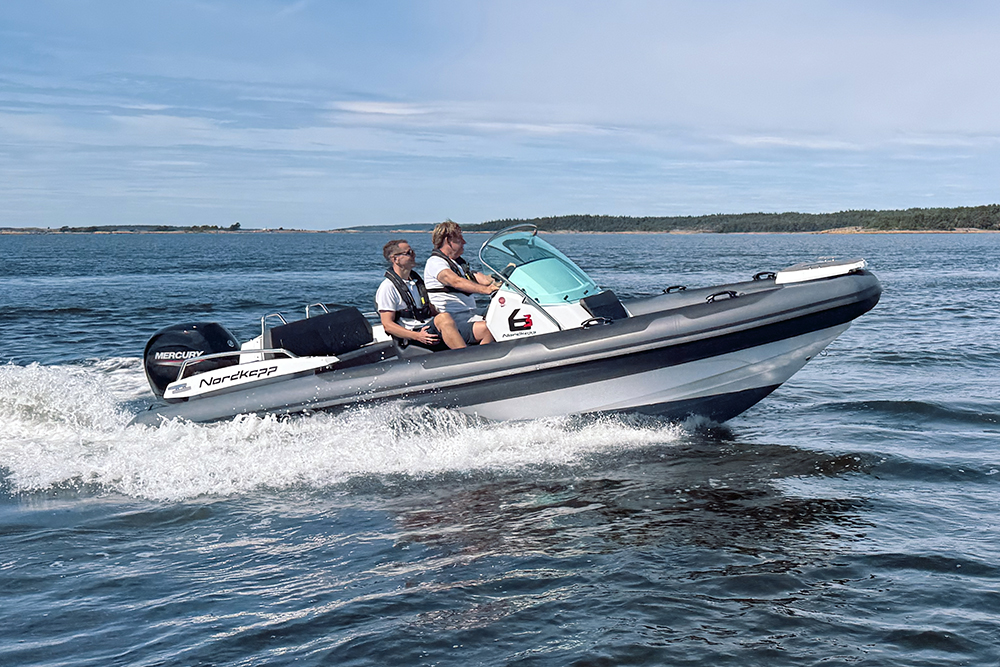
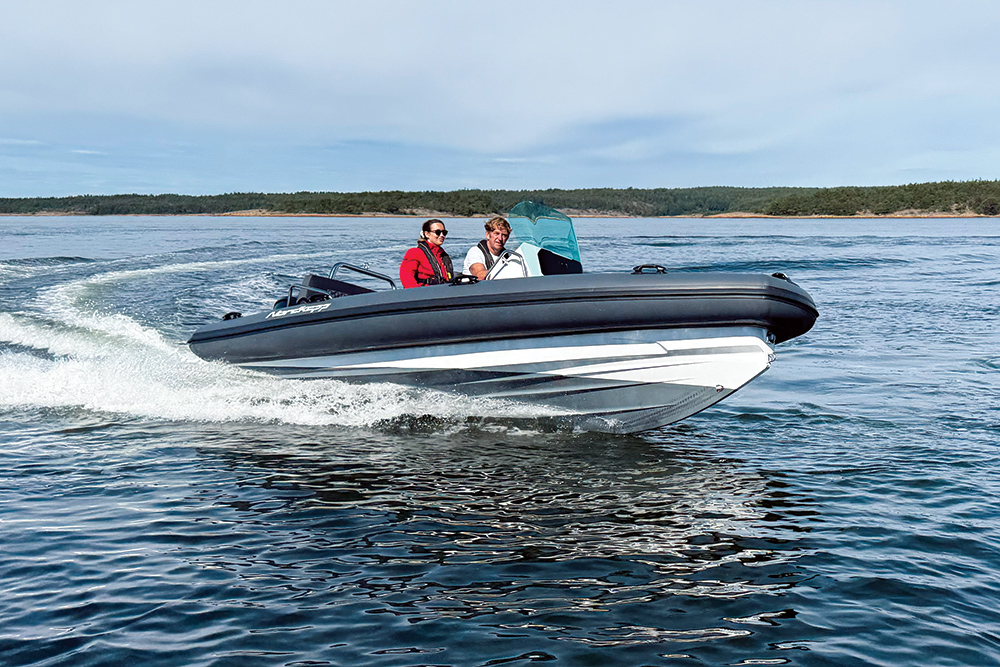
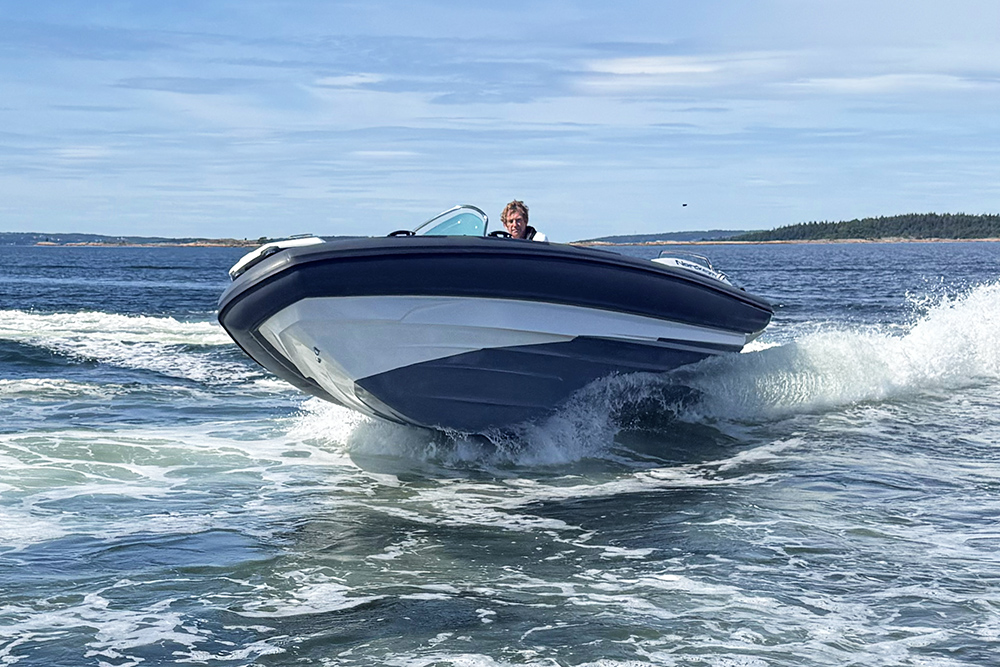
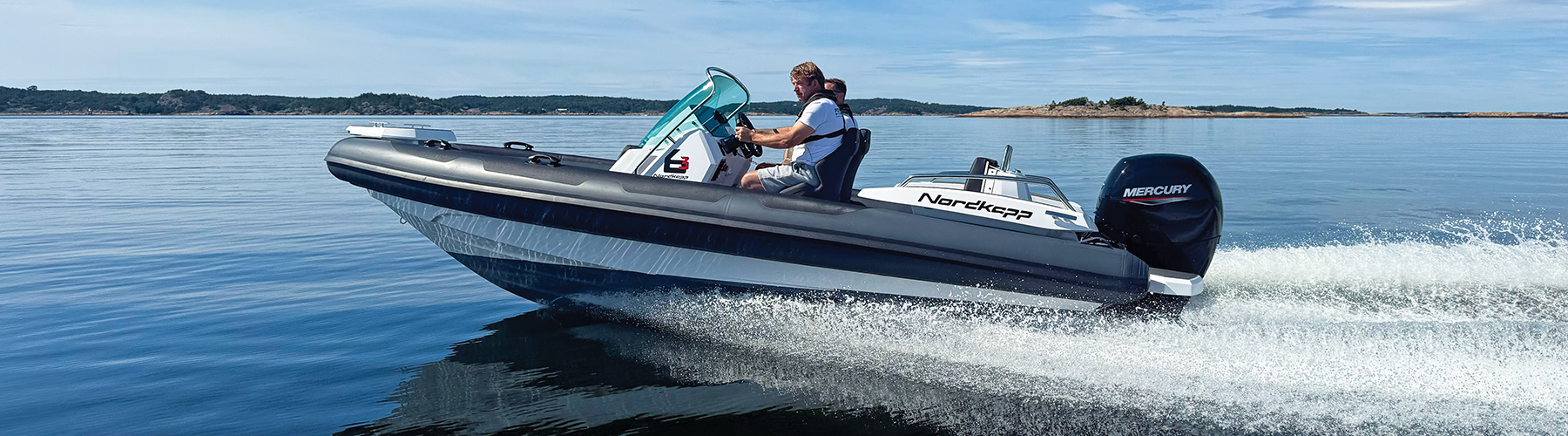
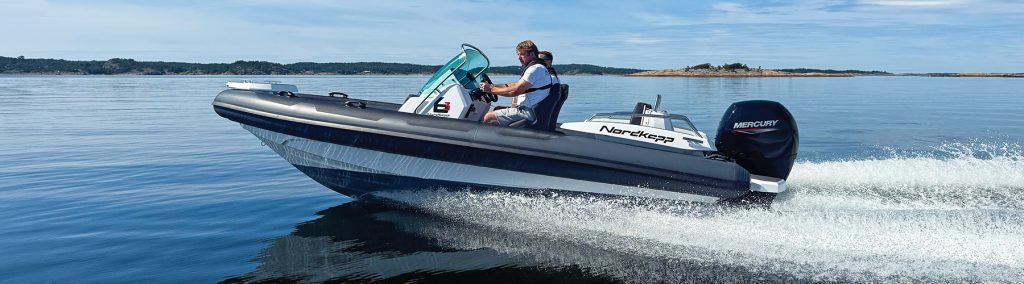
Nordkapp 6.3m Airborne RIB underway on a flat sea with two persons onboard

Share this Article

Nordkapp Airborne 5.4 and 6.3 review: the quick summary

Tested: The two smallest Airbornes in Nordkapp’s four-boat RIB range. Namely, the Airborne 5.4 and Airborne 6.3 models. Thanks to Mercury’s latest, highly efficient 4-stroke technology and the hydrodynamic efficiency of their hulls, these easy-to-handle, family sports-orientated RIBs are very economical to run. Easy to launch and recover and tow behind a family SUV, if you’re looking for a comfortable, well-appointed, super soft-riding RIB that’s as capable a sports boat as it is an offshore adventure craft, then either of these models are worth checking out.
The Airborne 5.4 is nominated for Best of Boats Award 2026 (Best RIBs) and European Powerboat of the Year (RIB Category)

Powerboat and RIB

Ed Hickling

HMS at the helm of the Nordkapp Airborne 5.4

Testing the Nordkapp Airborne RIB range in Norway

Over the last three or more decades, I have likely tested more RIBs than anyone else on the planet. That’s not a boast, it just emphasizes how long in the tooth I am! Down through the years, I’ve witnessed the good, the bad, and the downright ugly. Some of these craft have, commendably, scored highly in some areas, but frustratingly failed in others, and upon reflection, I would say it’s a rare thing indeed to find a craft, let alone a model range, that genuinely scores 100% right across the board.

I had tested the Airborne 7 RIB from Nordkapp in isolation a couple of years prior, but on PBR’s recent visit to Norway this August, not only did I have the opportunity to revisit familiar territory in the form of the Airborne 7, but also, test all four Airborne models and thereby get to experience the model range in context. Something that in the scheme of things one hardly ever gets to do. More than that, I was able to meet and interview the man responsible for the design of the entire Nordkapp range, Espen Thorup.

In this article, we’ll focus on just the Airborne 5.4 and Airborne 6.3 models alone, before bringing you the results of our updated Airborne 7 test and our views on the largest boat in Nordkapp’s RIB repertoire, the Airborne 8. So, let’s get underway with these two smaller RIBs in the range.

Sign up for the Powerboat & RIB weekly newsletter.

Advertisement

At a glance

Nordkapp Airborne 5.4

Comfortable, well-appointed, super soft-riding family RIB that is easy to tow, launch and recover, and very economical to run.

About this boat

  • Type:

    Family sports RIB; coastal adventure craft

  • Hull:

    Deep-vee, non-stepped hull designed by Espen Thorup

  • Power:

    Single Mercury 115hp 4-stroke outboard

What is the boat used for?

Family sports and adventure boating. Easy to handle, easy to launch and recover, and can be towed behind a family SUV. Thanks to Mercury's efficient 4-stroke outboard and the efficiency of its hull, it is also very economical to run.

How much does it cost?

Starting price Airborne 5.4 (80hp Mercury): 41,800 EUR, ex VAT Test price Airborne 5.4 (115hp Mercury): 49,660 EUR, ex VAT

Powerboat and RIB

Patrik Westli

Learn more about the Nordkapp Airborne 5.4

Want to find out more? Check out the product information from Nordkapp on the Airborne 5.4.

Powerboat and RIB

Patrik Westli

Powerboat and RIB

Patrik Westli

How is the design of the Airborne 5.4 and 6.3 different?

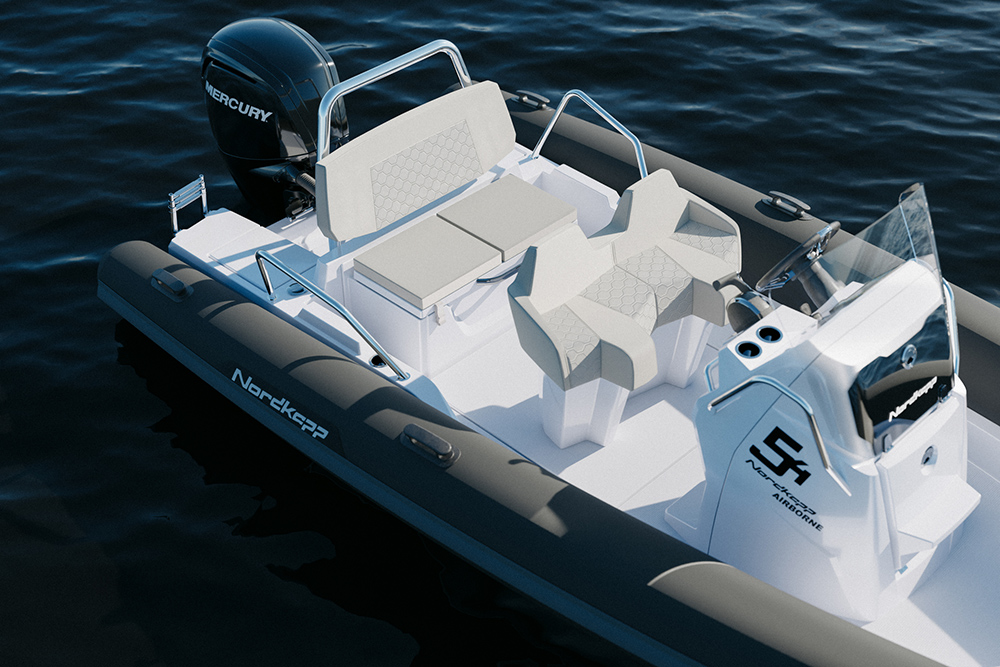
First up, these two smaller craft in the range are as aerodynamic as they are hydrodynamic, both in form and design. Before even assessing how these attributes contribute to their performance, what is abundantly clear is how modern these craft look. They do not, in any way, follow a trend. Rather, they set it! Their lines are sleek, purposeful, and utterly striking. And another thing, unlike some of their peers, when you come down the Airborne model range from the largest to the smallest, everything remains in proportion. What do I mean by that? Well, very often, when a manufacturer designs a smaller model, components from larger models will be utilized for cost reasons, which means the likes of helm consoles and seating pods can look oversized and out of proportion to the rest of the craft as a result. With this in mind, the smallest in the four-boat range, the Airborne 5.4, is quite literally a miniaturized version of its larger stablemates with everything having been designed specifically for the particular hull/deck length in question. This is the case with the Airborne 6.3 model too.

Advertisement

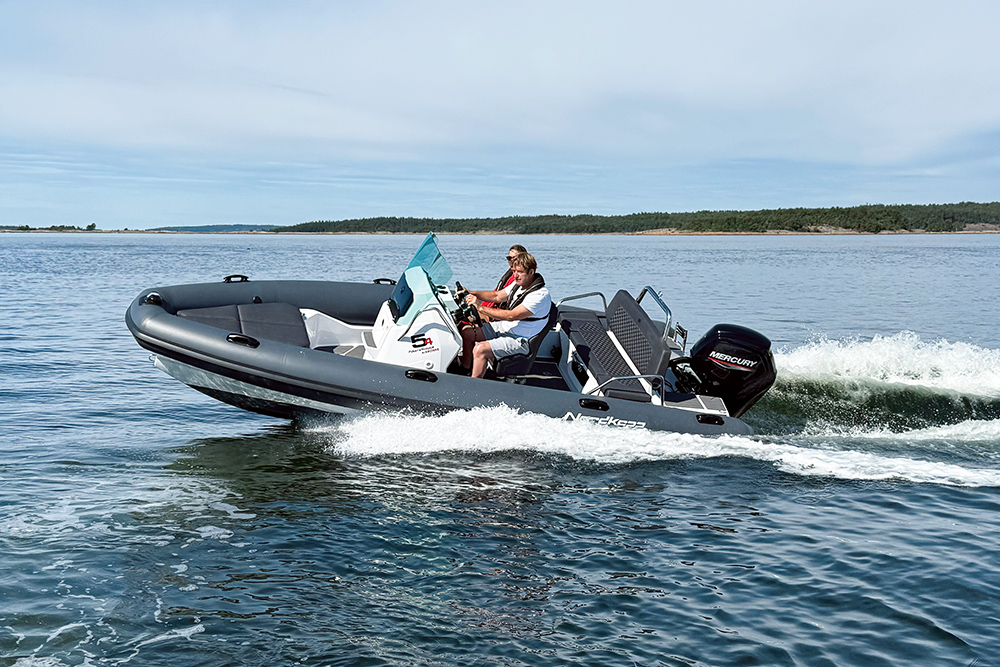
Nordkapp Airborne 6.3 RIB underway with white spray

Ed Hickling

Driving the Airborne 6.3 in Norway

At a glance

Nordkapp Airborne 6.3

The larger of the two compact Airbornes: a comfortable, well-appointed, super soft-riding family RIB that is easy to tow, launch and recover, and very economical to run.

About this boat

  • Type:

    Family sports RIB; coastal adventure craft

  • Hull:

    Deep-vee, non-stepped hull designed by Espen Thorup

  • Power:

    Single Mercury 150hp 4-stroke outboard

What is the boat used for?

Family sports and adventure boating. Easy to handle, easy to launch and recover, and can be towed behind a family SUV. Thanks to Mercury's efficient 4-stroke outboard and the efficiency of its hull, it, like it's younger sibling is also very economical to run.

How much does it cost?

Starting price Airborne 6.3 (115hp Mercury): 48,800 EUR, ex VAT Test price Airborne 6.3 (150hp Mercury): 55,470 EUR ex VAT

Powerboat and RIB
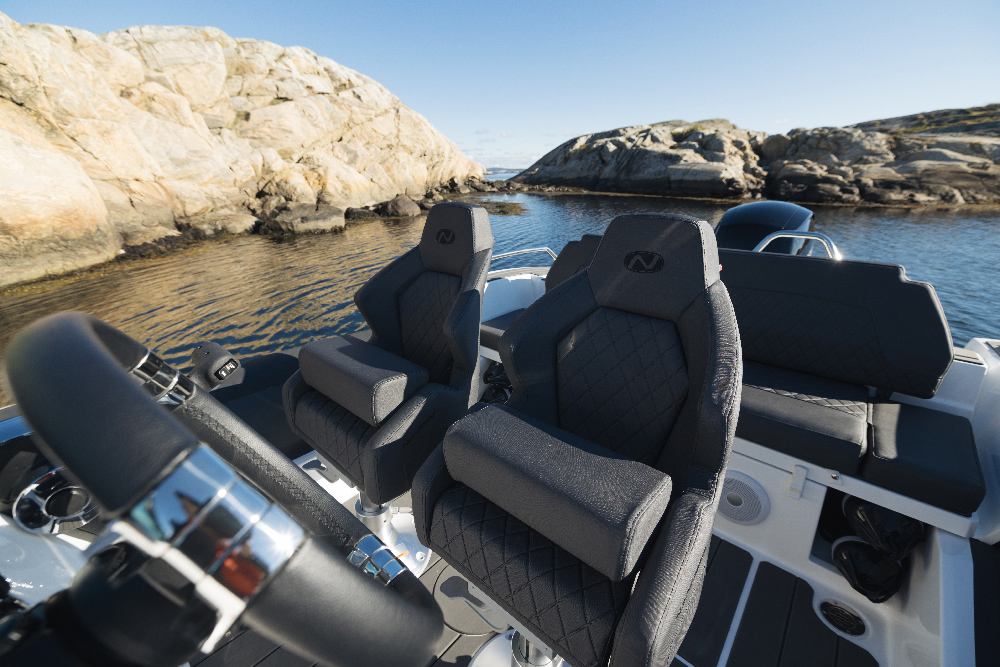
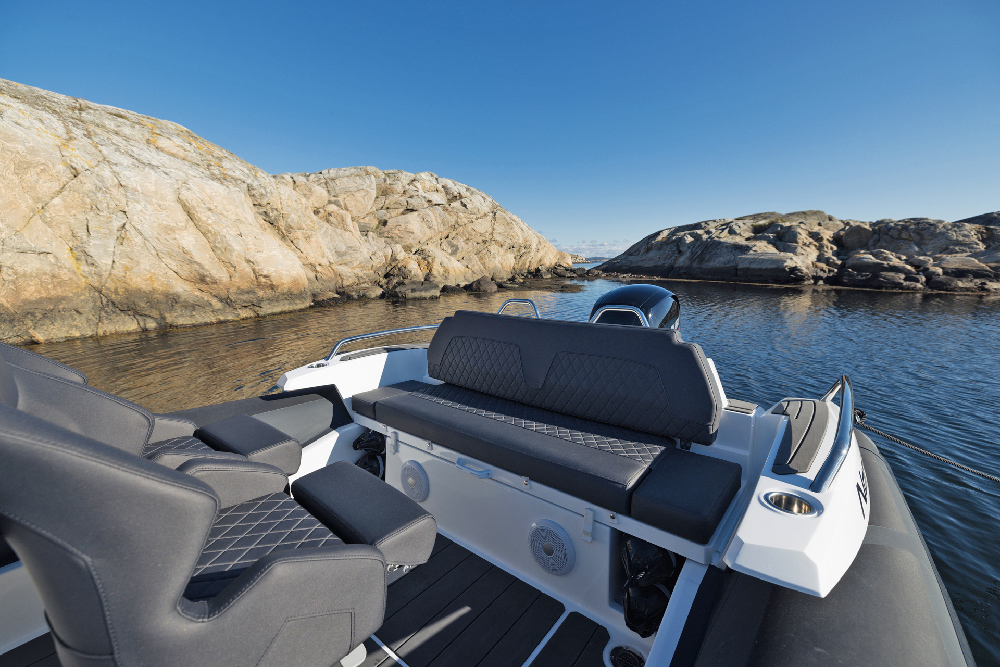
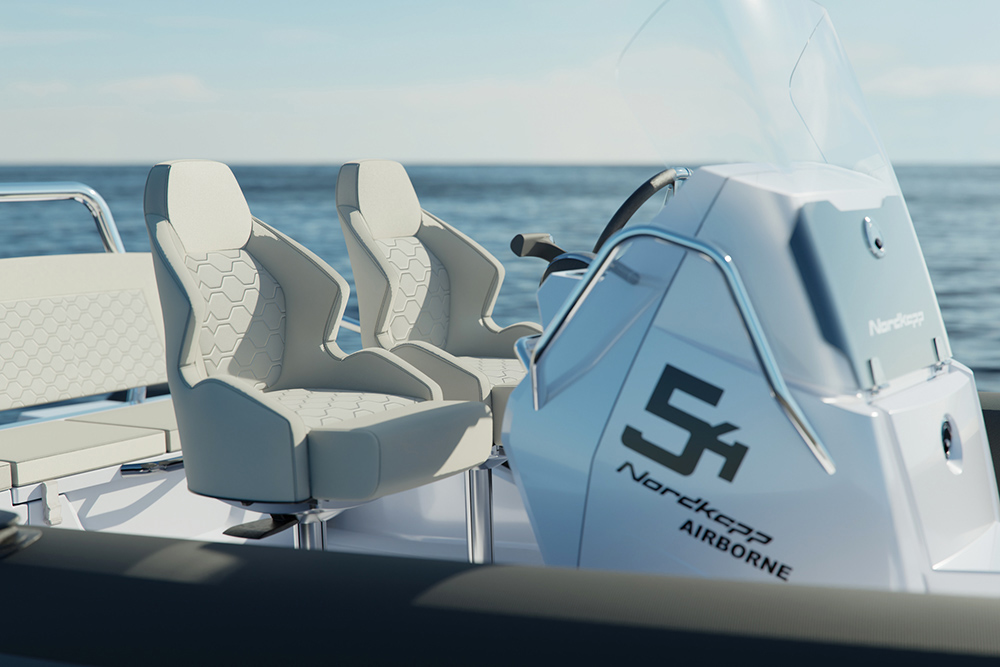
Airborne 6.3’s helm bucket seats are designed so they can rotate 180 degrees to face the rear bench seat.
Powerboat and RIB
When facing aft it allows the cockpit to become a welcoming social area.
Powerboat and RIB
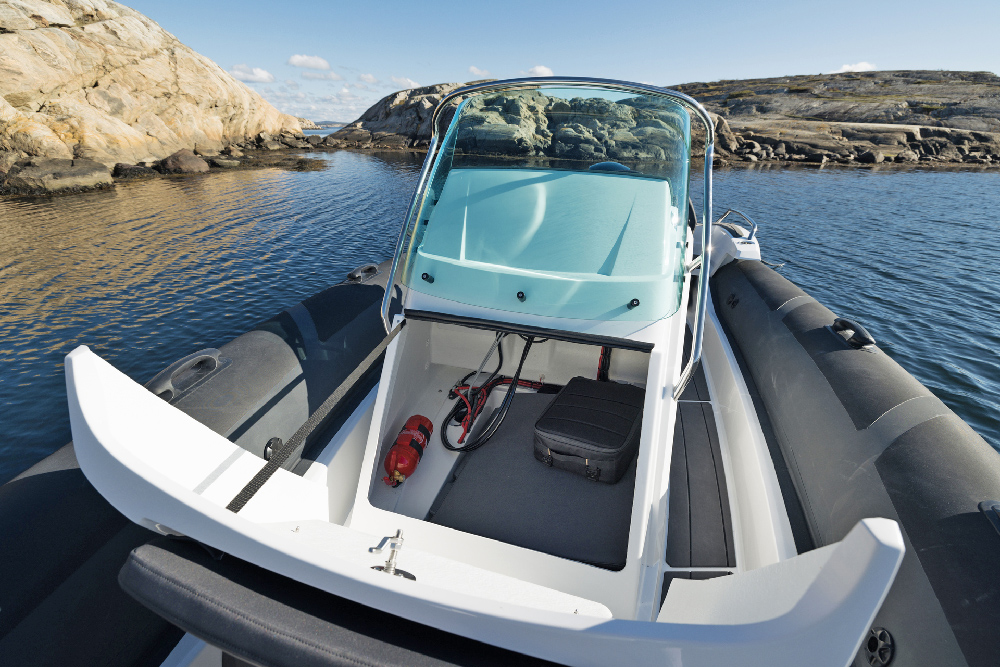
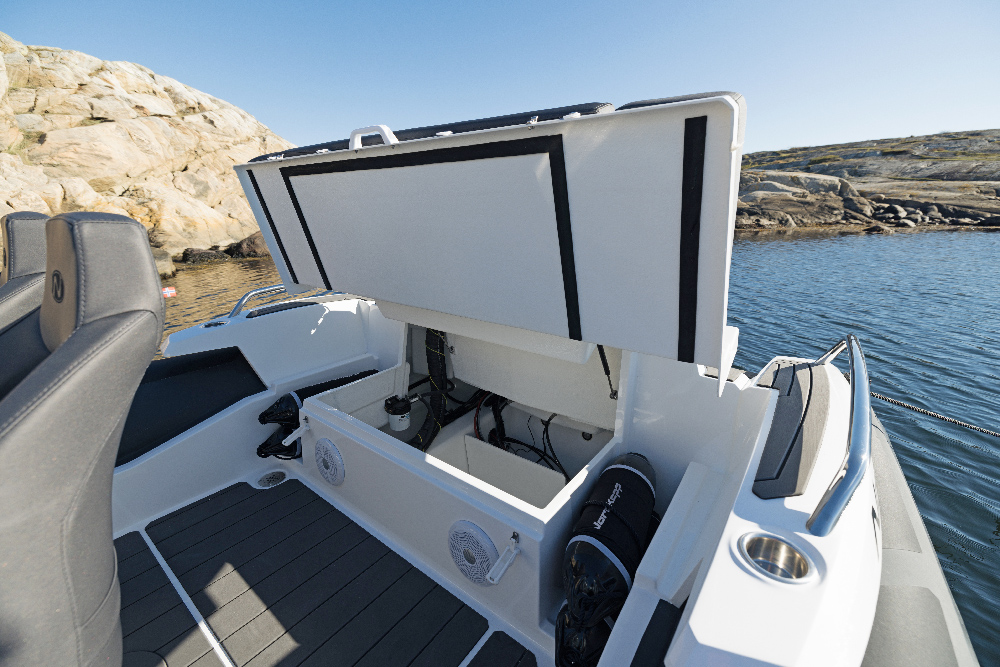
Lots of storage in the steering console.
Powerboat and RIB
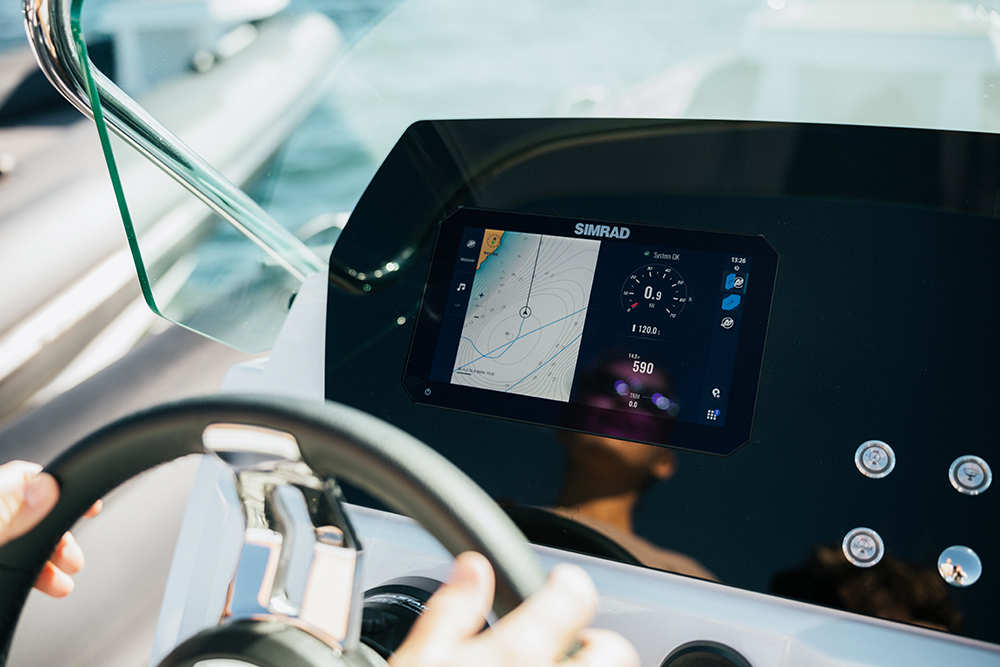
Each of the Airborne models can be fitted with Simrad MFDs.

What is included in the Nordkapp Airborne specification?

The thoroughness of the Airborne specification listing is very comprehensive. If you go for Nordkapp’s ‘highline’ spec choice for example, then it’s pretty much a ‘turnkey package’ that includes all manner of benefits, both standard items and custom extras. These feature the Airborne’s adaptable social seating and superior Silvertex upholstery, dry lockers and stowage compartments, cubby holes and drink holders, iPhone chargers, grab handles, modern synthetic deck-surfacing, integrated, forward-facing navigation lights, high-quality stainless steelwork, generously sized bathing platforms, as well as a host of other features and niceties, not forgetting the convertible sun-lounger of course that even features on the spec of the Airborne 5.4. Plus, from the biggest to the smallest, each of the total four models in the Airborne range can be fitted with one of Simrad‘s latest MFD units. And in terms of the latter’s features, such as the C-Map cartography used, the MFD’s upload speed and definition, safety alerts and easy routing, they don’t come much better than those developed by Simrad. Likewise, the Mercury outboard technology these Airbornes are paired to, they’re arguably the meanest and leanest 4-strokes money can buy, both in terms of power output as well as weight. For these reasons and more, they’re ideally matched to these boats as they are also very economical to run.

I think you get the idea these boats are exceptionally well spec’d, but they also provide a masterclass in how a boat should be rigged as well. Besides their flawless production finish, when inspecting the bowels of these craft, I found not a sign of a rushed job, poor workmanship, or the cutting of any corners. In this way the attention to detail at factory floor level is commendably high and is further evidenced again by the tidiness of the electrics and the wiring loom within the helm consoles of these two craft.

Advertisement

“besides their flawless production finish, when inspecting the bowels of these craft, I found not a sign of a rushed job, poor workmanship, or the cutting of any corners”

Powerboat and RIB
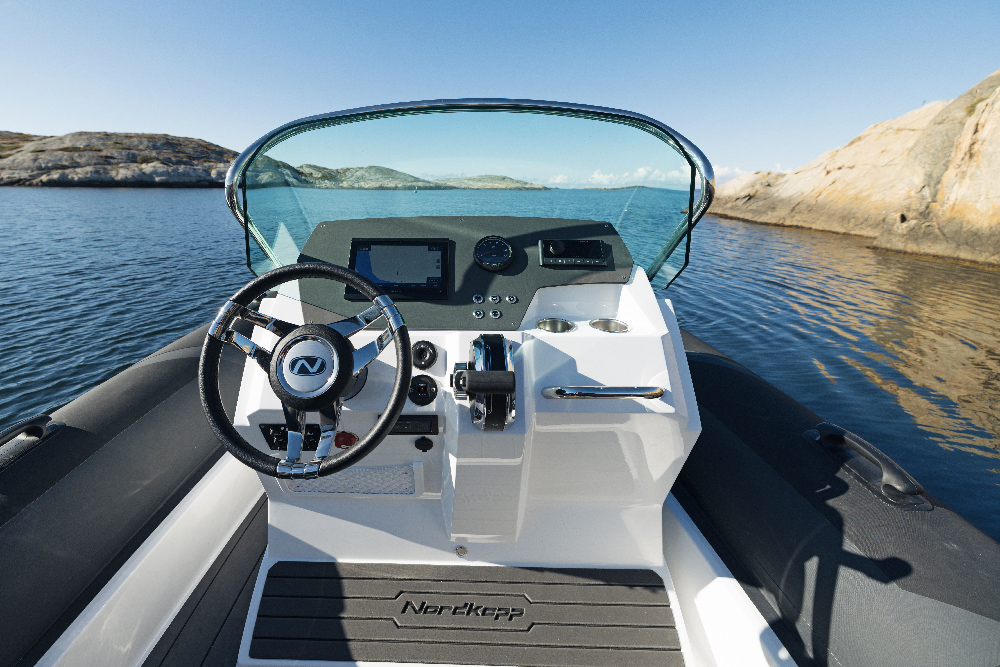
Airborne 6.3 steering console with tinted windscreen, and wraparound stainless rail.
Powerboat and RIB
Storage under the aft seat bench.
Powerboat and RIB
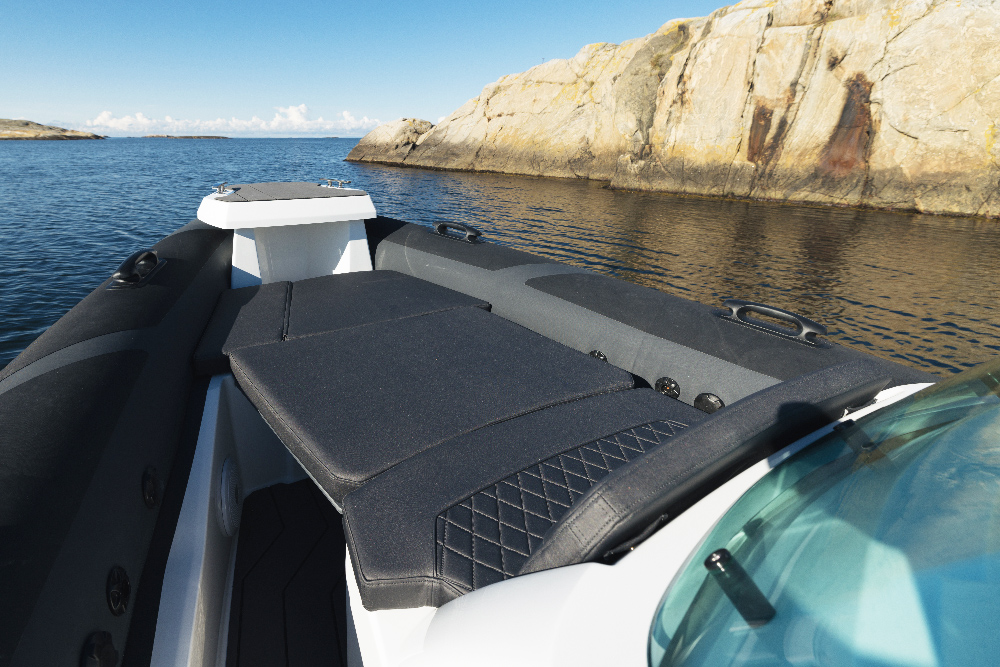
Both RIBs feature a customizable sun bed, here shown on the 6.3.

What features do the Nordkapp Airborne 5.4 and 6.3 offer?

Both models utilize Nordkapp’s signature Espen Thorup-designed asymmetric hull and tube design, which features tubes set a little higher than the waterline to help further reduce hydrodynamic drag.

The Airborne 5.4’s foldable windscreen is a great innovation and sets it apart from the Airborne 6.3 with its fixed screen. The chief thinking behind this design feature, though, is to aid in the business of garage and low-clearance storage, as well as reducing windage when towing.

The Airborne 5.4 uses a traditional centre-console configuration, which allows for access either side of the console fore and aft. The Airborne 6.3, on the other hand, transitions to an asymmetrical starboard console layout, which allows wide access on deck to the port side of the helm console.

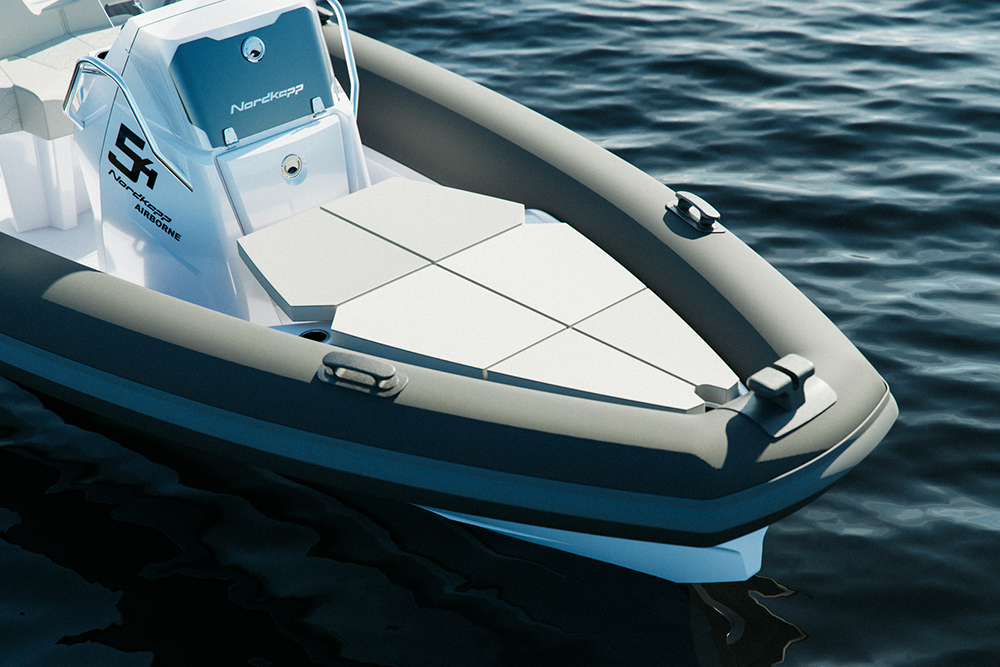
While both feature customizable sunbed layouts to their foredecks, the Airborne 6.3 particularly focuses on social functionality in its aft area. Complementing this, the Airborne 6.3’s helm bucket seats are designed to rotate 180 degrees to face the rear aft bench, which allows the cockpit to become a welcoming social area. It’s a great use of space and works very comfortably. On the other hand, you could say, the Airborne 5.4 relies on a more traditional fixed helm layout with an optional extended aft bench with easy-access storage.

Powerboat and RIB
We ran these boats for a full morning of testing and fjord exploring and burned little more than 12 litres of fuel.

Advertisement

Learn more about the Nordkapp Airborne 6.3

Want to find out more? Check out the product information from Nordkapp on the Airborne 6.3.

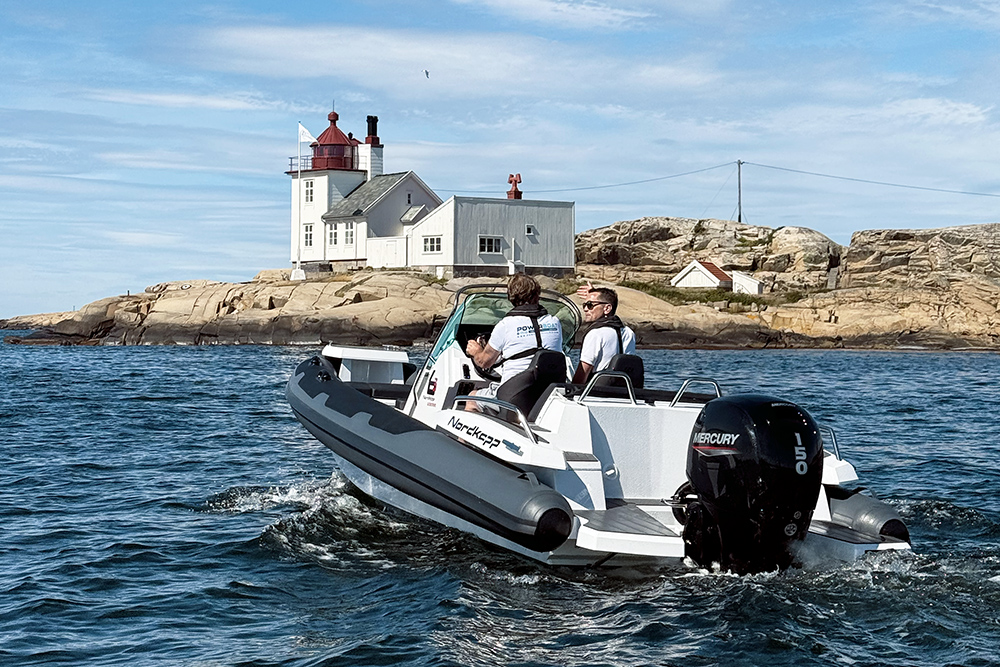
The 6.3 being put through her paces during our test in Norway.

How do the Nordkapp Airborne 5.4 and 6.3 drive?

So, how do they drive? There’s an old expression which says, “if something looks right, it probably is right”. In the case of these smaller Airbornes, they epitomize the truthfulness of this saying, with their functionality living up to their appearance. From an ergonomic perspective, whether it be the adjustable driving positions, the helm and console layouts, or the provisions made for the passengers to travel in outdoor comfort and safety, these craft possess many of the same attributes normally associated with the automotive industry. As a result, the Airborne’s commendable ergonomics contribute to the driving experience enormously.

Having no need to be tricked up with trim tabs or stabilizing actuators, the Airborne 5.4 and Airborne 6.3 models, like their larger cousins, run as straight as an arrow and as level as a die. Espen Thorup’s ethos is that if you design a good enough hull, when it comes to family-orientated boating at least, you simply don’t need stepped hulls, nor are they suited to all-round leisure use. And in my view, he’s absolutely right. Steps have become a trendy ‘bandwagon’ too many manufacturers have jumped upon, yet in reality, stepped hulls are a hull design suited to high-performance use, and they need to be approached with care and a degree of aptitude. Coupled to this, Nordkapp purposely don’t overload their boats with excessive amounts of horsepower either. Their view, and it’s one I subscribe to myself, is that for family boating, 50mph or thereabouts is perfectly fast enough. Hence, the 115hp Mercury outboard fitted to the Airborne 5.4 and the 150hp Mercury to the Airborne 6.3, in both instances, complement these craft to just the correct degree. These motors provide lots of sporty power, great acceleration with good amounts of power in reserve, and they’re super-economical to run. As respects fuel economy, we ran these boats for a full morning of testing and fjord exploring and burned little more than 12 litres apiece! These boats aren’t just great fun to drive, but they are also kind on the pocket too.

“Espen Thorup’s ethos is that if you design a good enough hull, when it comes to family-orientated boating at least, you simply don’t need stepped hulls, nor are they suited to all-round leisure use. And in my view, he’s absolutely right”

Powerboat and RIB
The hull performance of both the 5.4 and 6.3 models is superb.

Advertisement

How do these RIBs handle hard turns and rough water?

Both the Airborne 5.4 and the Airborne 6.3 models will, if required, handle a hard lock turn at full throttle without the slightest hint of misbehaviour. They maintain their composure impeccably, with their hulls releasing to just the right degree – enough to glide, but never enough to slip away beneath one. But what’s really impressive about these craft is their ability to perform in a testing chop.

The Airborne hull is super soft-riding and because these boats are so perfectly balanced fore and aft, they land true, so you get the absolute maximum out of the deep-vee hull. Punching into a head sea, therefore, becomes an exhilarating experience, as if the boat is just itching to show you what it’s truly capable of. In a following sea, despite these boats’ zero-sheer and projectile-shaped bow profile, thanks to the hull’s efficient series of chines, the lift in the forward section of these hulls is truly impressive as well as confidence-giving. And this is a point in particular worth noting; because a lot of RIB designs feature a distinct upward sheer to their bow to help overcome the tendency a vessel might otherwise have to stuff its bow in a following sea. The fact is, Thorup’s hull design is so good it doesn’t rely on this second line of defence because the lift is being created exactly where it’s needed, right there in the fore section of the hull itself. Plus, with the addition of a large, angled chine to the upper section of the stem, the water is deflected downward even further, which means you stay dry too!

Watch how capable the Airborne 5.4 is being put through her paces in Norway.

How fast are the Nordkapp Airborne 5.4 and 6.3?

The top speed of the Airborne 5.4 model with a 115hp is anything between 30 and 35 knots, depending on conditions and payload. Responding as well as she does to the trim, you can really feel her flying at these speeds, but commendably, she tracks as true as a die and remains beautifully stable. As for the Airborne 6.3, she hit 40 knots with the 150hp on our test boat. If she was coupled to the optional 175hp, I’m sure she would comfortably achieve 45 knots. Impressive indeed. But again, she also handles like a dream at such speeds, with her aerodynamic profile aiding her to run both level and true. With these boats and their amidships under-deck fuel tanks holding 100 and 120 litres respectively, when driven at speeds of 22 to 25 knots, their cruising ranges will allow for long days out on the water and the opportunity to cover plenty of miles without any issue.

Powerboat and RIB
Nordkapp advocate a non-stepped hull for family use craft.

“I would regard each of these Nordkapp Airbornes as class leaders in their respective size and type categories. Two genuinely outstanding craft that punch well above their weight

Advertisement

What improvements would I make to the Airborne 5.4 and 6.3?

If I had to really critique these craft, the only points I might raise would be that they should at least have a steering compass fitted as standard. Ideally a fixed VHF too. Beware also, that these boats only have forward-facing port and starboard navigation lights. The Airborne windscreen design is certainly effective, but the addition of a similar stainless-steel rail to that featured on the Airborne 6.3 would be good on the Airborne 5.4 too, as it would serve as an additional grab rail and act as a guard to the screen’s leading edge.

If I was to be really picky, I would swap out the tinted windscreens for clear view screens. Although they look good of course, I find tinted screens can be a bit troublesome to navigate through. But barring these minor issues, as you can probably tell, these two models have my vote. In fact, I would regard each of these Nordkapp Airbornes as class leaders in their respective size and type categories. Two genuinely outstanding craft that punch well above their weight.

How do the Nordkapp Airborne 5.4 and 6.3 compare to their rivals?

Without question, there certainly are some good-looking leisure RIBs being sold on the market at this time. But where these Nordkapp Airborne RIBs score so highly is their combined excellence in terms of build quality and outstanding seakeeping. ‘Pound for pound’, I haven’t tested better and would therefore rate them as ‘class leaders’.

Verdict

Nordkapp Airborne 5.4 and 6.3 | Test Verdict

Two genuinely outstanding craft that punch well above their weight. I would regard each of these Nordkapp Airbornes as class leaders in their respective size and type categories. Where they score so highly is their combined excellence in terms of build quality and outstanding seakeeping.

The 115hp Mercury on the Airborne 5.4 and the 150hp Mercury on the Airborne 6.3 provide lots of sporty power and great acceleration, and they are super-economical to run. If I had to critique these craft, they should at least have a steering compass fitted as standard, and ideally a fixed VHF too.

What we like?

Outstanding build quality and finish

Modernistic, aggressive look

'Best in class' handling and performance

Super soft-riding hull

Very economical to run

What we don't like?

Lack of steering compass and VHF fitted as standard

Tinted windscreen aesthetics versus clear screen functionality

Nordkapp Airborne 5.4 | Specification

LOA 5.44m
Beam 2.40m
Height 1.76m
Net weight 827kg
Fuel capacity 100 litres
Maximum power 115hp
Engine as tested 115hp Mercury 4-stroke outboard
Shaft length L (long shaft)
Persons 6
CE Category C
Price To be confirmed

Learn more about the Nordkapp Airborne 5.4

Want to find out more? Check out the product information from Nordkapp on the Airborne 5.4.

Advertisement

Nordkapp Airborne 6.3 | Specification

LOA 6.25m
Beam 2.50m
Fuel capacity 120 litres
Maximum power 150hp
Engine as tested 150hp Mercury 4-stroke outboard
Shaft length L (long shaft)
Persons 8
CE Category C
Price To be confirmed

Learn more about the Nordkapp Airborne 6.3

Want to find out more? Check out the product information from Nordkapp on the Airborne 6.3.

Nordkapp Airborne 5.4 and 6.3: frequently asked questions

Join 8,000+ boaters who get our weekly Reader’s Bulletin

Get the latest from Powerboat & RIB Digital Boating Platform delivered to your inbox

• Reviews and features
• Breaking marine news
• Latest videos
• Events & show coverage
• Exclusive offers

Free. No spam. Unsubscribe anytime.

Advertisement

Powerboat and RIB

Hugo Montgomery-Swan

Editor | Powerboat & RIB

You might also like